
To understand the return of Serena Williams to the lawns of Wimbledon at the age of forty-four, after a four-year self-imposed exile from the professional tour, is to confront the terrifying allure of the tennis court as a site of existential gravity. It is not merely a comeback; it is a physical interrogation of time itself. The tennis ball, moving at speeds that defy ordinary human visual processing, does not care about retirement or the quiet domesticity of the last four years. It demands an immediate, almost pre-cognitive response, a kinetic dialogue between the racket face and the low-skidding grass.
Listen to the Second Serve Podcast
Get our daily AI-synthesized audio briefings and match reviews on the go.
The Phenomenological Return of a Forty-Four-Year-Old Wildcard
Williams, having accepted the final available singles wildcard, enters a draw that is both hyper-specialized and deeply fragile. Her return, which we previously contextualized during Djokovic and Williams's high-profile practice reunion, represents a deliberate rejection of the narrative arc that society demands of its aging champions. The grass surface, with its unpredictable bounces and slick, moisture-retentive blades, is famously unforgiving to lateral movement that lacks absolute, split-second conviction.
To watch her step onto the court is to witness a struggle against the entropy of the athletic body. The serve, once a biomechanical marvel of shoulder-rotation and wrist-snap, must now find its rhythm without the benefit of recent match play. Her presence on the lawn is a living monument, yes, but on the grass, monuments can easily be bypassed by a flat, cross-court return that catches the line before the brain can send the signal to the knees to bend.
As she prepares to face a field populated by athletes who were toddlers when she won her first major, the question is not whether she can win seven matches, but how her body will respond to the sudden, violent deceleration required by the modern grass-court game. The sheer physics of her return make this the most compelling psychological experiment in modern sports history.
The Bagel Paradox and Sabalenka's Third-Set Dissolution
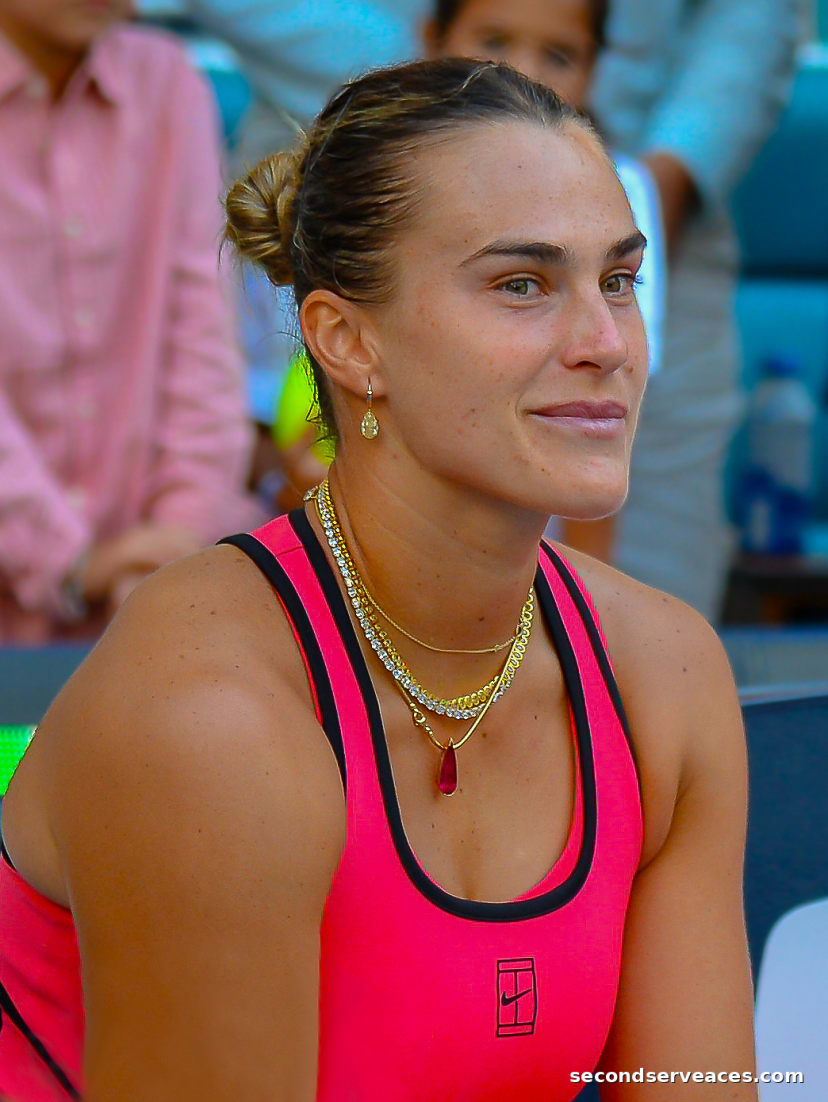
While Williams seeks to re-establish her relationship with the baseline, Aryna Sabalenka is currently locked in a deeply psychological battle with her own scorelines. According to the latest WTA rankings, Sabalenka remains a titan of the sport, yet her recent performance in Berlin—a 6-4, 6-7 (4), 6-0 loss to Jessica Pegula—reveals a puzzling vulnerability. She has achieved the unenviable distinction of becoming the first female world No. 1 to suffer consecutive final-set 6-0 defeats.
This "bagel paradox" is not a failure of physical conditioning; rather, it is a sudden, catastrophic loss of Match Momentum. In tennis, when the margin of error is measured in millimeters, a minor shift in neurological confidence can lead to a complete breakdown of technique. The topspin that once dipped safely inside the baseline suddenly flies long, and the second serve becomes an invitation for disaster.
Sabalenka’s struggle highlights the delicate mental ecosystem of elite tennis. When a player of her caliber loses a tight second-set tiebreak, the subsequent third set can sometimes feel like a slow-motion slide into competitive catatonia. On the slick grass of London, where matches can turn on a single Break Point, this tendency to surrender consecutive games without a fight is a tactical liability that her opponents will undoubtedly seek to exploit.
Sinner's Kinetic Rebound and the Djokovic Shadow
On the men's side, Jannik Sinner arrives at SW19 with a burning need to reassert his dominance over a field that has recently found ways to neutralize his heavy baseline strikes. The chief architect of Sinner's recent frustration is Novak Djokovic, who performed the astonishing feat of reaching the semifinals of all four Grand Slams in 2025, before defeating Sinner en route to the 2026 Australian Open final.
Djokovic’s continued excellence at the highest level is a masterclass in defensive geometry. While Sinner relies on explosive topspin and raw court coverage, Djokovic plays a game of suffocating depth and redirection, using his opponent's own pace against them. For Sinner, the challenge at Wimbledon is to find a way to break through this defensive wall without overhitting and committing unforced errors.
The grass court behaves as a natural dampener of high-looping topspin, meaning Sinner must adjust his contact point to catch the ball earlier on the rise. If he cannot establish early control of the rallies, he risks being dragged into the kind of grueling, multi-shot exchanges where Djokovic's superior tactical patience almost always prevails.
Zverev's Roland Garros Windfall and Raducanu's Booted Reality
Adding further complexity to the draw is Alexander Zverev, who enters the grass-court season buoyed by his maiden major title at Roland Garros. Zverev's triumph in Paris was undeniably aided by a series of fortunate events, including the early elimination of five of the top 12 seeds and the sudden withdrawal of Carlos Alcaraz due to a wrist injury. Whether Zverev can translate this clay-court success to the lawns remains one of the tournament's most compelling subplots.
Meanwhile, the British hope, Emma Raducanu, faces a much more immediate and physical obstacle. After a promising run to the Queen's Club final, her campaign has been clouded by the sight of her walking in a protective medical boot. As we detailed in our analysis of Raducanu's latest physical setback, her career continues to be defined by this agonizing cycle of competitive promise followed by physical breakdown.
The contrast between Zverev's sudden fortune and Raducanu's physical fragility underscores the brutal, mercenary nature of professional tennis. One player capitalizes on a cleared draw to claim tennis's highest honor, while another is left to contemplate the limits of her own skeletal integrity. As the gates of SW19 open, these intersecting narratives of return, collapse, and recovery will play out on the green lawns, where the grass waits to judge them all.
What Jannik Sinner Plays With
Head Speed MP 2024
Head Hawk Touch 1.25
Head Prime Tour (12-Pack)
Nike GP Challenge 1
Analyze Serena Williams vs. Jannik Sinner
Predict tactical adjustments, momentum swings, and serve strategy options for this match-up using our AI simulator.
The Aces Tactical Panel
This report was curated and edited by Bhaskar Goel. Tactical analysis and technical insights were provided by our specialized panel of expert correspondents.
Julian Price
Senior Tactical Correspondent
Stuffy, pedantic British academic and historian specializing in match momentum and historical context.
Elena Cruz
Director of Analytical Research
Data scientist specializing in court surface physics and movement patterns.
Bhaskar
The Editor & Fan
Passionate tennis player and site editor bringing everyday amateur insights and relatable fan commentary.
Arthur Vance
Senior Existential Analyst
Deep, eccentric, and DFW-inspired. Models court metaphysics, kinetic beauty, and player psychology.
Leo Sterling
High-Performance Consultant
Hard-nosed ex-trainer from Melbourne with a no-nonsense view on tour fitness.
Related Reports

Quick Answers
How old is Serena Williams for her Wimbledon 2026 comeback?+
Serena Williams is 44 years old and returning to professional competition after a four-year retirement.
What historic record did Aryna Sabalenka set in her recent losses?+
Sabalenka became the first female world No. 1 to lose 6-0 in the final set in consecutive defeats, including her loss to Jessica Pegula in Berlin.
Why is Emma Raducanu's Wimbledon status under scrutiny?+
Despite reaching the Queen's Club final, Raducanu was recently seen walking in a protective medical boot, raising concerns about her physical fitness.