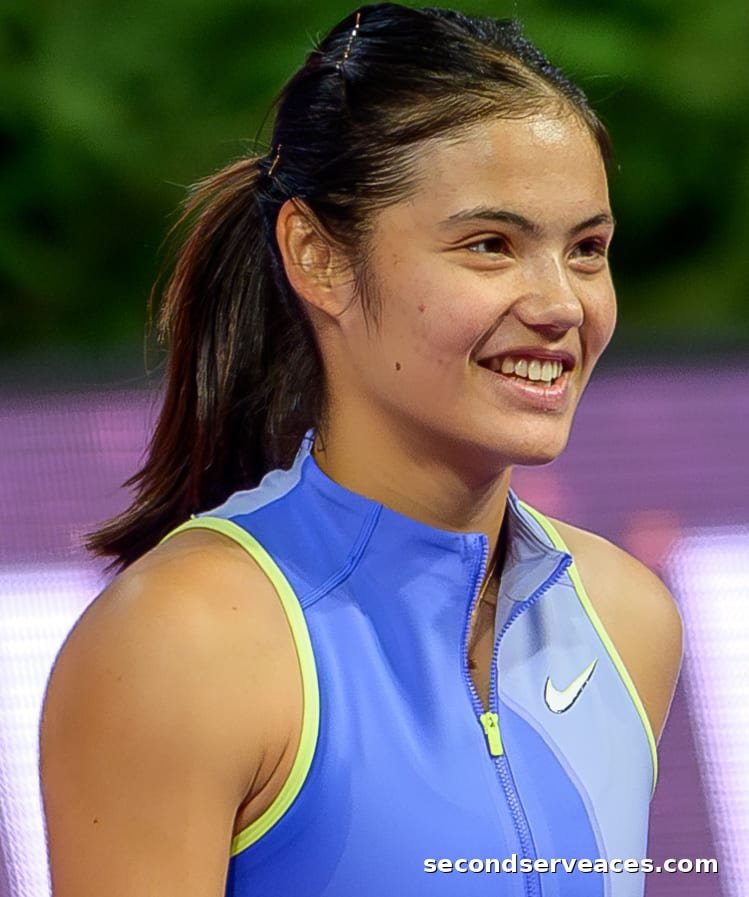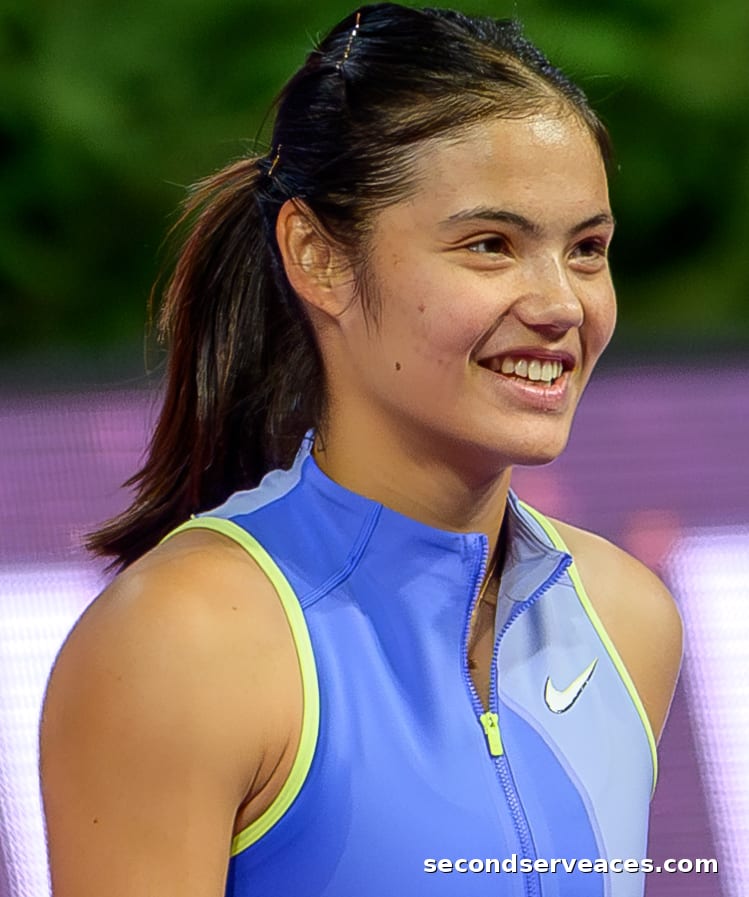
Tennis at the highest level is a brutal trade-off. Your body is a high-performance machine, but it is also an open book, telegraphing every strain and micro-tear to a watchful public. On Wednesday evening, the alarm bells rang loud across West London when Emma Raducanu was spotted wearing a protective boot. It was a stark reminder of how quickly the momentum of a grass-court campaign can shift from hope to survival.
Listen to the Second Serve Podcast
Get our daily AI-synthesized audio briefings and match reviews on the go.
The physical reality of the sport caught up with her again on Thursday. She missed her scheduled practice session, sending shockwaves through the grounds as fans and journalists watched the empty court. Her representatives quickly moved to quiet the rising panic, confirming that she is currently managing a niggle. But in our sport, a niggle is rarely just a minor inconvenience; it is a mental hurdle that tests your resolve before you even strike a ball.
To step onto the lawns without absolute confidence in your movement is a terrifying prospect. Every slide, every sudden change of direction on grass requires a foundation of pure trust. When that trust is fractured by a physical setback, the mental grind begins. You find yourself fighting your own anatomy long before you face an opponent across the net, searching for that elusive feeling of physical freedom.
The Price of the Queen's Club Run
This latest setback comes just as Raducanu seemed to be finding her rhythm on the turf. Her last competitive match saw her reach the final of the HSBC Championships at Queen's Club a week and a half ago. It was a run that showed flashes of her brilliant timing and clean ball-striking, reminding everyone of the ceiling she possesses when her body cooperates. Yet, the physical toll of that deep run is now being paid in full.
In an effort to preserve her physical state, she chose not to play in the warm-up tournaments at Nottingham or Eastbourne. We recently discussed the competitive landscape of those grass-court tune-ups in our Eastbourne WTA Preview, noting how crucial these match repetitions are for finding your footing on this unique surface. By skipping these events, Raducanu prioritized recovery, hoping to arrive at the All England Club with a full tank of gas.
But the grass season is short, unforgiving, and relentless. Skipping warm-up events is a double-edged sword; it saves the joints from immediate wear and tear, but it deprives the mind of the competitive edge needed to navigate tight moments. Now, without those matches under her belt, she must rely on sheer instinct and memories of past triumphs to carry her through the early rounds of the third Grand Slam of the year.
The Post-Viral Shadows of the Early Season
To understand the gravity of this moment, we have to look back at the long road she has traveled this year. Earlier in the season, Raducanu missed two and a half months due to a post-viral illness that began in February. That kind of prolonged absence does more than just sap your physical strength; it drains your competitive stamina and disrupts the daily rhythm of the professional tour.
Coming back from a systemic illness requires a patient rebuilding of the aerobic base. You cannot just jump back into intense training without risking a crash. Every practice session becomes a delicate calculation of energy expenditure, where pushing too hard can trigger a relapse. For a young athlete, this constant self-monitoring is exhausting, turning what should be a joyful pursuit of excellence into a stressful exercise in damage control.
This post-viral shadow has lingered over her entire season, making every match a test of endurance. According to the official WTA Tour Home, maintaining a consistent ranking requires a steady stream of tournament appearances, something Raducanu has struggled to put together. The lack of continuous match play makes it incredibly difficult to build the kind of match momentum that carries players through grueling three-set battles.
The Mental Grind of the SW19 Countdown
Now, the clock is ticking down to the start of play at Wimbledon, and the pressure is mounting. The home crowd expects magic, but the reality of professional tennis is that magic is built on a foundation of grueling, unglamorous fitness. To step out onto the court while managing a physical limitation is a supreme test of mental toughness, requiring you to block out the pain and focus entirely on the next ball.
Every player knows the feeling of entering a tournament at less than one hundred percent. You try to convince yourself that the adrenaline of the crowd will carry you through, that you can find a way to win ugly. But grass is a surface that exposes any physical vulnerability. The low bounces force you to bend deeper, and the slick surface demands perfect balance, making any lower-body niggle a critical liability.
As the draw ceremony approaches, Raducanu and her team face a crucial decision. Pushing through the pain might satisfy the immediate desire to compete, but it risks long-term damage to a career that still has so many chapters left to write. In the end, the ultimate opponent is not across the net; it is the voice inside your head telling you to push past the breaking point when your body is screaming for rest.
Essential Matchday Add-Ons
Tournament-tested accessories and high-frequency consumables every competitive player keeps in their bag.
Tourna Grip Original Dry Feel Overgrip (10-Pack)
4.8 ★ (12,000+ reviews)
The gold standard for sweaty hands. Proprietary dry feel absorbs moisture better as play intensifies.
Luxilon ALU Power 125 Silver String Set
4.9 ★ (3,500+ reviews)
Unrivaled control and spin potential used by over 50% of the ATP Top 100 players.
Babolat Custom Damp Vibration Dampener (2-Pack)
4.7 ★ (4,200+ reviews)
Customizable dampening with removable central O-ring for fine-tuning court feedback and sound.
Penn Championship Extra Duty Tennis Balls (4-Can Pack)
4.7 ★ (8,900+ reviews)
Official ball of USTA League Tennis with extra-duty felt designed for abrasive hard courts.
Simulate Emma Raducanu Match Scenarios
Simulate high-pressure scenarios, score leverage points, and tactical responses for ATP and WTA players.
The Aces Tactical Panel
This report was curated and edited by Bhaskar Goel. Tactical analysis and technical insights were provided by our specialized panel of expert correspondents.
Julian Price
Senior Tactical Correspondent
Stuffy, pedantic British academic and historian specializing in match momentum and historical context.
Elena Cruz
Director of Analytical Research
Data scientist specializing in court surface physics and movement patterns.
Bhaskar
The Editor & Fan
Passionate tennis player and site editor bringing everyday amateur insights and relatable fan commentary.
Arthur Vance
Senior Existential Analyst
Deep, eccentric, and DFW-inspired. Models court metaphysics, kinetic beauty, and player psychology.
Leo Sterling
High-Performance Consultant
Hard-nosed ex-trainer from Melbourne with a no-nonsense view on tour fitness.