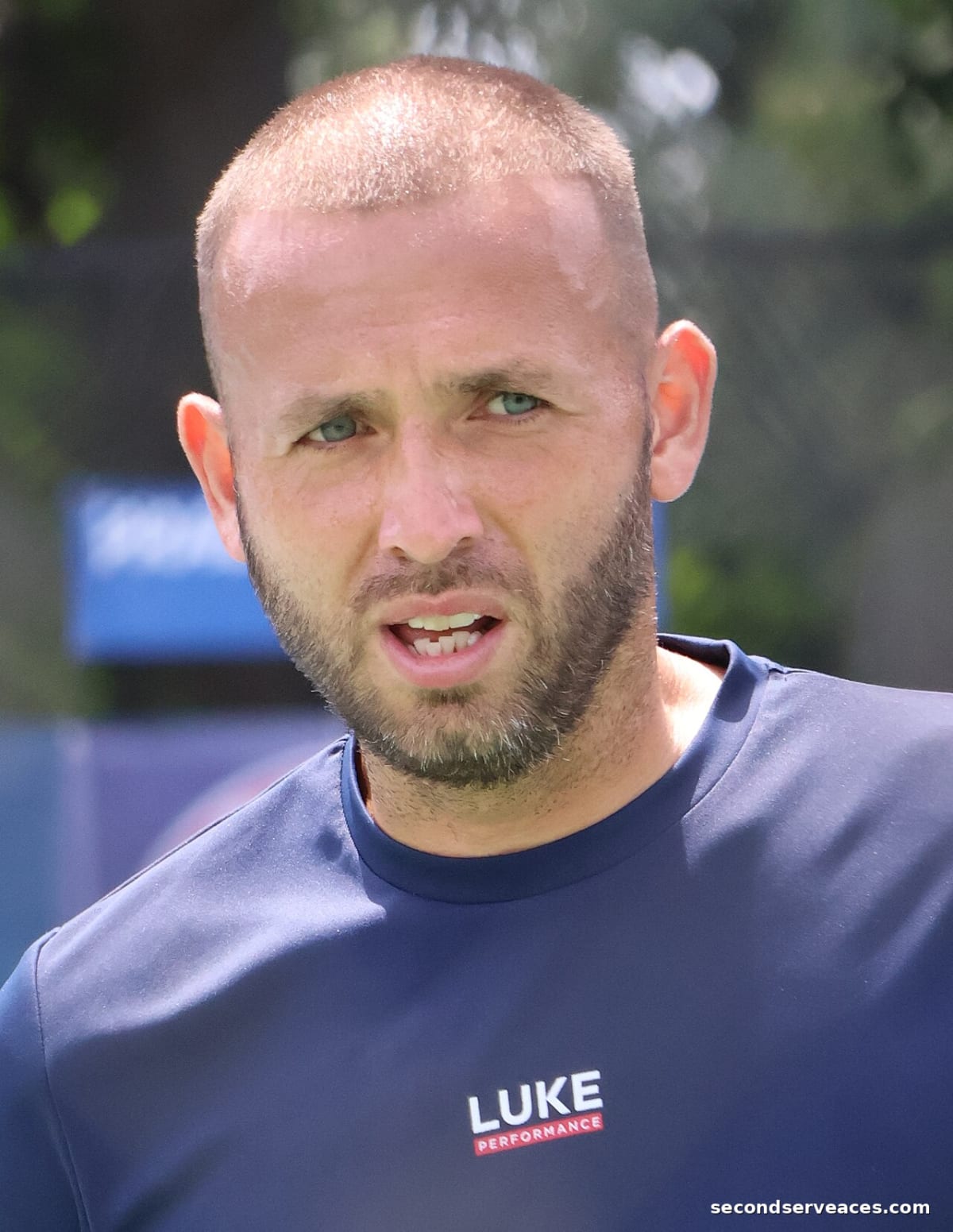
There is a particular, deeply melancholic geometry to the end of a singles career, especially when it occurs not on the pristine, meticulously manicured lawns of the All England Club itself, but on the slightly more democratic, wind-swept outposts of the Wimbledon Qualifying and Community Sports Centre in Roehampton. Here, on the third day of qualifying for Wimbledon 2026, we witnessed the final, agonizing singles chapter of Dan Evans, a player whose entire aesthetic has always been predicated on a sort of gritty, slice-heavy defiance. The finality of the 7-5, 6-0 scoreline against 25-year-old Australian Tristan Schoolkate did not just represent a loss; it felt like a sudden, kinetic evaporation of competitive oxygen.
Listen to the Second Serve Podcast
Get our daily AI-synthesized audio briefings and match reviews on the go.
The Kinetic Dissolution of a British Icon in the Roehampton Heat
The first set possessed a deceptive competitive parity, a sequence of baseline skirmishes where Evans attempted to deploy his signature low-skidding backhand slice to disrupt the younger Australian’s rhythm. Schoolkate, however, refused to be baited into the soft, rhythmic rallies that Evans has spent a career orchestrating. Instead, the Australian relied on heavy, high-topspin forehands that jumped off the parched grass, forcing the 36-year-old Briton to bend his knees deeper than his veteran joints comfortably allowed, culminating in a late break of serve that took the opening set 7-5.
What followed in the second set was a stark, almost cruel demonstration of match momentum’s absolute decay. Evans, physically spent and perhaps emotionally cognizant of the impending curtain, won not a single game, his movement growing increasingly upright and his tactical options narrowing to a series of low-percentage drop shots. When the final point landed, Schoolkate’s progression was secured, and Evans’ singles career was rendered historical—a quiet, unceremonious exit from the solo stage under a blistering suburban sun.
For those who have followed Evans from his early days of rebellious promise to his status as a stalwart of British tennis, this final singles outing was a painful reminder of time's undefeated record. The slice that once frustrated the world's elite sat up just a fraction higher today, and the footwork that once covered every blade of grass seemed just half a step slow against Schoolkate's aggressive modern baseline game.
When the Grid Fails: Eighteen Courts Plunged into Analog Limbo
To understand the sheer physical ordeal of this particular Wednesday, one must look beyond the scorelines and into the oppressive microclimate of Roehampton, where temperatures climbed to a punishing 95 degrees Fahrenheit. The air was thick, almost soup-like, turning the grass courts into high-humidity ovens. But the true existential crisis of the afternoon arrived not from the heavens, but from the local electrical grid, which suffered a sudden, catastrophic power outage that instantly paralyzed the tournament's technological nervous system.
In an instant, the electronic line-calling system went dark across all 18 competition courts, forcing an immediate, bizarre regression to an era of pure human subjectivity. For over an hour, matches were suspended as players stood stranded on the burning lawns, seeking whatever shade could be found under umbrellas and towels. The sudden silence of the digital bleeps and the subsequent confusion among officials highlighted just how deeply dependent the modern game has become on its silicon scaffolding.
This hour-long hiatus did more than just delay the schedule; it completely disrupted the physical rhythm of competitors who had spent hours warming up their highly tuned kinetic machinery. Returning to the court after such an abrupt freeze in 95-degree heat requires a profound mental recalibration, as muscles tighten and the psychological edge honed during the match's early stages threatens to dissolve entirely in the sweltering locker rooms.
The Temporal Sanctuary of Off-Site Qualifying and the Coming AELTC Expansion
There is an ongoing, almost romantic tension between Wimbledon’s traditionalist soul and its modernizing impulses, a tension best exemplified by the very existence of Roehampton. Wimbledon remains the absolute outlier among the four Grand Slams as the only major tournament that continues to conduct its qualifying rounds entirely off-site. This separation creates a distinct, parallel universe where the sport's working class fights for survival in a setting that feels more like a local club tournament than a multi-million-dollar entertainment product.
Yet, this charming anomaly is rapidly approaching its expiration date. In March 2026, the All England Lawn Tennis Club (AELTC) cleared its most significant legal obstacle to triple the size of its historic grounds, a massive infrastructural triumph that will eventually allow the qualifying rounds to be hosted on-site starting in the 2030s. This expansion will inevitably streamline the tournament, bringing the raw drama of the qualifying draw under the direct shadow of Centre Court.
While the corporate benefits of on-site qualifying are obvious, there is a palpable sense of impending loss among purists who view Roehampton as a sacred, unpretentious sanctuary. The intimacy of the venue, where fans can stand mere feet from players battling for their professional livelihoods, offers a raw, unvarnished look at the sport that the grander, highly securitized main site simply cannot replicate. The transition to the 2030s will mark the end of an era of accessibility that has defined the grass-court buildup for decades.
Korneeva’s Grit and the Next Generation’s Ascent in the Shadow of the Past
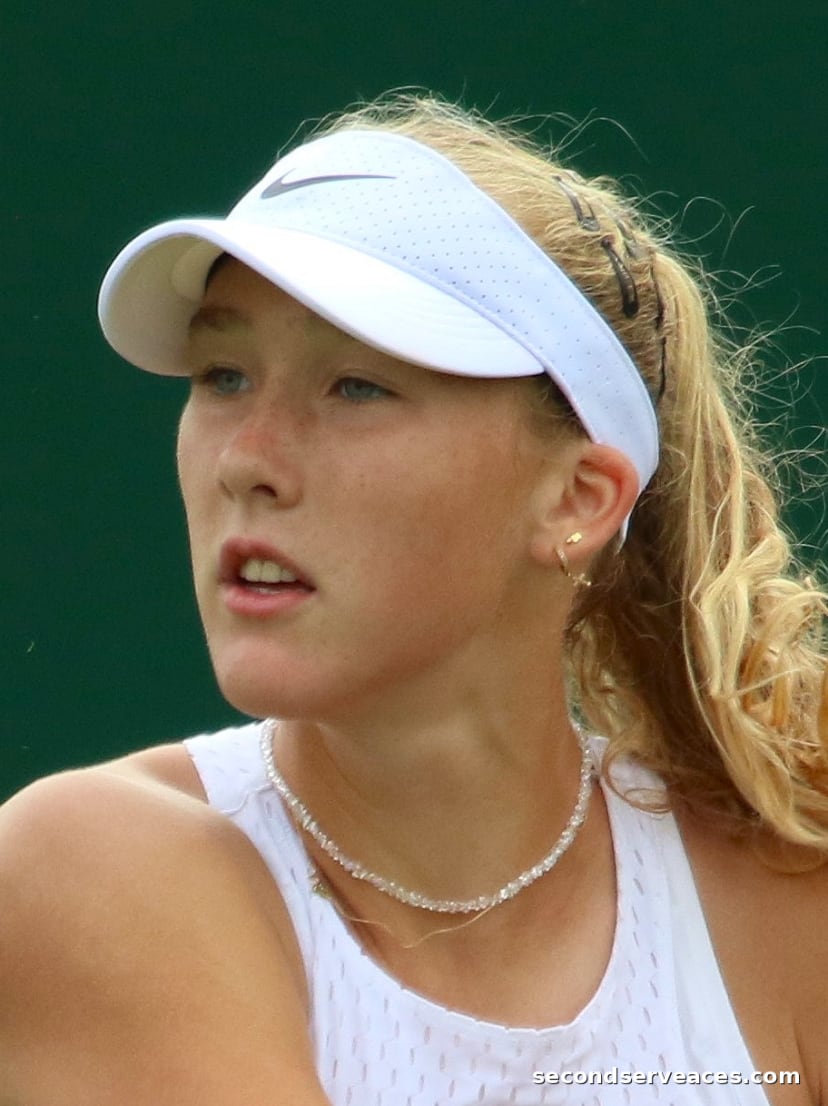
Amid the nostalgia of departures and the chaos of power failures, the relentless conveyor belt of youth continued its march forward. The standout performance of the afternoon belonged to 19-year-old Alina Korneeva, who displayed a level of competitive maturity that belied her teenage status. Facing Spain's experienced Andrea Lázaro García, Korneeva navigated a highly volatile three-set encounter, showing a remarkable ability to reset her tactical parameters after losing the second set.
Korneeva’s victory sets up a highly anticipated final-round qualifying duel against American Fiona Crawley, a matchup that promises to be a fascinating study in contrasting baseline philosophies. While Korneeva relies on heavy, deep groundstrokes to push her opponents behind the baseline, Crawley is known for her crafty court positioning and relentless defensive scrambling. This younger generation's rise is reminiscent of the rapid ascent of other teenage prodigies we have covered, such as the tactical breakthroughs discussed in our analysis of the Andreeva sisters' recent grass-court performances.
As the qualifying draw narrows to its final, high-stakes matches, the contrast between the departing veterans and the incoming youth has never been more pronounced. While the singles career of Dan Evans reaches its quiet conclusion in the Roehampton heat, players like Korneeva are just beginning to write their own histories on the slick, unforgiving lawns. It is this perpetual cycle of renewal, played out on the burning grass of a suburban sports club, that gives the Wimbledon qualifiers their enduring, tragic magic.
What Coco Gauff Plays With
Head Boom MP 2024
Head Lynx Tour 1.25
Head Prime Tour (12-Pack)
Analyze Dan Evans vs. Tristan Schoolkate
Predict tactical adjustments, momentum swings, and serve strategy options for this match-up using our AI simulator.
The Aces Tactical Panel
This report was curated and edited by Bhaskar Goel. Tactical analysis and technical insights were provided by our specialized panel of expert correspondents.
Julian Price
Senior Tactical Correspondent
Stuffy, pedantic British academic and historian specializing in match momentum and historical context.
Elena Cruz
Director of Analytical Research
Data scientist specializing in court surface physics and movement patterns.
Bhaskar
The Editor & Fan
Passionate tennis player and site editor bringing everyday amateur insights and relatable fan commentary.
Arthur Vance
Senior Existential Analyst
Deep, eccentric, and DFW-inspired. Models court metaphysics, kinetic beauty, and player psychology.
Leo Sterling
High-Performance Consultant
Hard-nosed ex-trainer from Melbourne with a no-nonsense view on tour fitness.
Related Reports
Quick Answers
Who defeated Dan Evans in his final singles match at Wimbledon qualifying?+
Dan Evans was defeated 7-5, 6-0 by 25-year-old Australian Tristan Schoolkate on the third day of qualifying.
Why were matches suspended during the third day of Wimbledon 2026 qualifying?+
A power outage disabled the electronic line-calling system across 18 courts, forcing an hour-long suspension in 95-degree heat.
When will Wimbledon qualifying move on-site to the All England Club grounds?+
Following legal clearance in March 2026 to triple its grounds, the AELTC plans to host qualifying on-site starting in the 2030s.