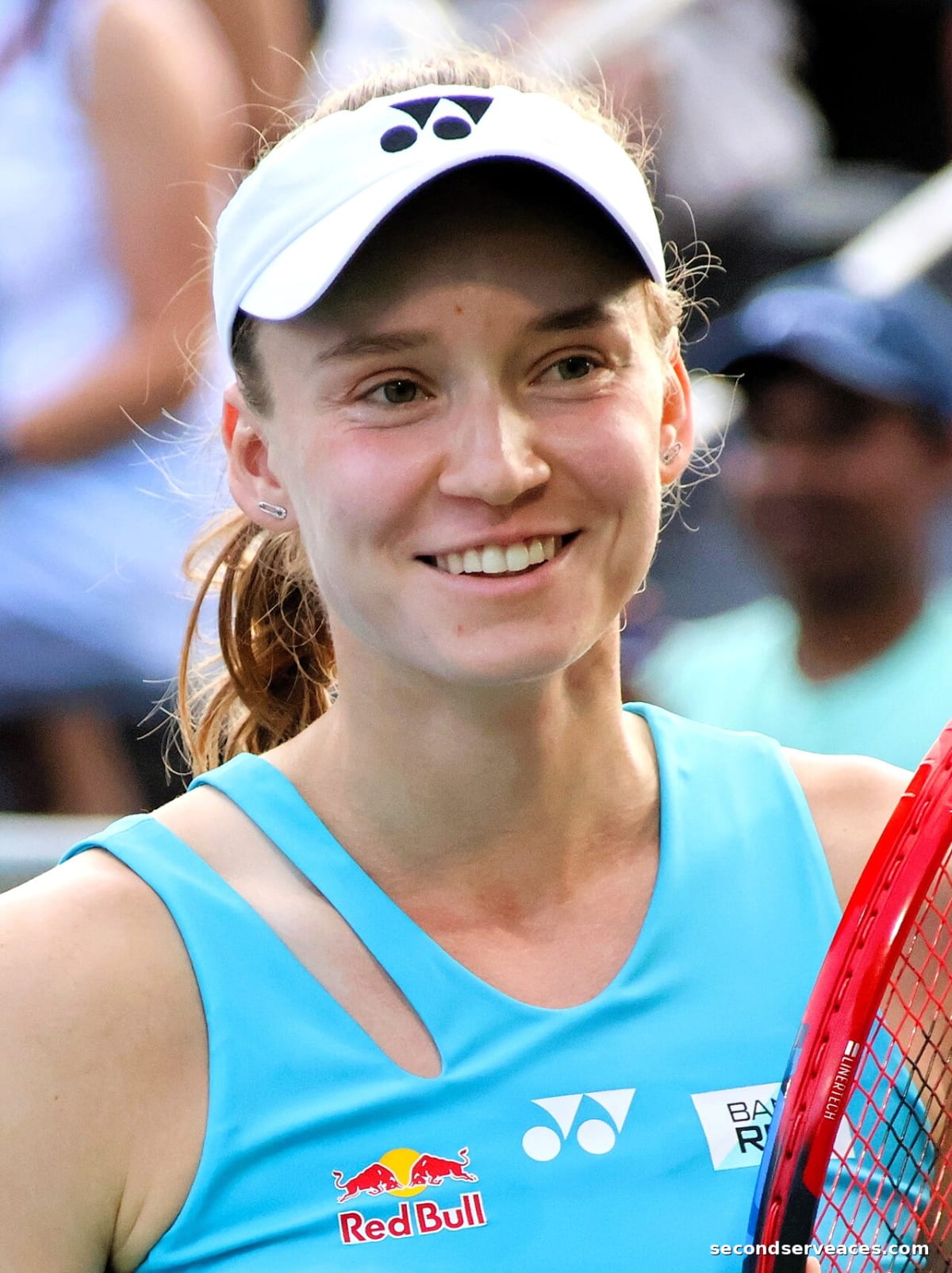
The modern baseline game is a battle of inches and impact, and the quarterfinal clash at the Toronto Masters delivered a masterclass in heavy-weight hitting. Elena Rybakina overcame a set and a break deficit to defeat Naomi Osaka 4-6, 7-6 (7/5), 6-4 in a grueling 2 hours and 33 minutes. The victory not only propels the Kazakh star into the semifinals but also positions her on the cusp of a major ranking milestone.
Listen to the Second Serve Podcast
Get our daily AI-synthesized audio briefings and match reviews on the go.
Osaka Fires First with Heavy Crosscourt Forehands
In the opening set, Naomi Osaka established immediate dominance by controlling the center of the court. She consistently targeted Rybakina’s backhand wing, utilizing heavy topspin to push her opponent behind the baseline. Rybakina struggled early with her timing, failing to find the sweet spot on her return of serve and allowing Osaka to dictate play with aggressive, first-strike tennis.
Osaka’s tactical plan was clear: prevent Rybakina from stepping into the court. By keeping her groundstrokes deep and flat, the Japanese star secured an early break. Rybakina, currently ranked number 2 in the WTA rankings, looked rushed on her lateral movement, dropping the first set 4-6 as Osaka's serve proved too formidable to crack.
Rybakina Shifts Court Position to Force the Second-Set Tiebreak
The momentum began to turn midway through the second set when Rybakina adjusted her return position. Moving half a step closer to the baseline, she began taking Osaka's second serves on the rise, taking away the Japanese player's recovery time. This adjustment paid immediate dividends, allowing Rybakina to claw back from a break down and force a critical tiebreak.
In the pressure-packed tiebreak, Rybakina's tactical discipline shone. She targeted Osaka’s forehand on the run, forcing errors from a wing that had previously been rock solid. Closing out the tiebreak 7-5, Rybakina leveled the match, shifting the psychological weight entirely to Osaka's side of the net.
Unplayable Serving: Rybakina Rules the Final Set Decider
The final set was an exhibition of serving perfection from the Kazakh. Elena Rybakina hit 13 aces over the course of the match, but her performance on her first serve in the decider was nothing short of flawless. She won all 18 of her first-serve points in the third set, denying Osaka any opportunity to build momentum or look at a break point.
This serving masterclass allowed Rybakina to play with immense freedom on her return games. She broke Osaka's serve once in the final set, which was all she needed to wrap up the match 6-4. It was a masterclass in closing out a high-stakes match, showing exactly why Rybakina remains one of the most dangerous hard-court players in the world.
The Toronto Semifinal Horizon and Ranking Implications
With this hard-fought victory, Rybakina sets up a highly anticipated semifinal clash against Coco Gauff. Gauff reached the semifinals after Belinda Bencic was forced to withdraw from their quarterfinal match due to a hip injury, as detailed in our coverage of Gauff's early-round performance.
The stakes in Toronto are incredibly high for Rybakina. If she goes on to win the Toronto title, she will move to within just four ranking points of Aryna Sabalenka in the world standings. On the other side of the draw, fans are anticipating another stellar matchup as Svitolina's tactical shift sets up a Swiatek Toronto semifinal.
Rivalry Matchup & Player Profiles
| Metric | Elena Rybakina | Naomi Osaka |
|---|---|---|
| Rank | 2 | 13 |
| Country | Kazakhstan | Japan |
| Age | 27 | 28 |
| Height | 1.84 m (6 ft 0 in) | 1.80 m (5 ft 11 in) |
| Handedness | Right-handed | Right-handed |
| Play Style | Aggressive baseliner | Aggressive baseliner |
| Career Titles | 13 | 7 |
Elena Rybakina now leads Naomi Osaka 1-0 in their head-to-head rivalry. This first-ever professional meeting between the two Grand Slam champions in Toronto lived up to the billing, showing a fascinating contrast in how two elite aggressive baseliners construct points.
While Osaka relied on heavy topspin and raw power to dictate the early exchanges, Rybakina's superior serve and clutch play under pressure ultimately decided the outcome. Rybakina's ability to adjust her return positioning mid-match proved to be the turning point in neutralizing Osaka's formidable service games.
What Coco Gauff Plays With
Head Boom MP 2024
Head Lynx Tour 1.25
Head Prime Tour (12-Pack)
Analyze Elena Rybakina vs. Naomi Osaka
Predict tactical adjustments, momentum swings, and serve strategy options for this match-up using our AI simulator.
The Aces Tactical Panel
This report was curated and edited by Bhaskar Goel. Tactical analysis and technical insights were provided by our specialized panel of expert correspondents.
Julian Price
Senior Tactical Correspondent
Stuffy, pedantic British academic and historian specializing in match momentum and historical context.
Elena Cruz
Director of Analytical Research
Data scientist specializing in court surface physics and movement patterns.
Bhaskar
The Editor & Fan
Passionate tennis player and site editor bringing everyday amateur insights and relatable fan commentary.
Arthur Vance
Senior Existential Analyst
Deep, eccentric, and DFW-inspired. Models court metaphysics, kinetic beauty, and player psychology.
Leo Sterling
High-Performance Consultant
Hard-nosed ex-trainer from Melbourne with a no-nonsense view on tour fitness.
Related Reports


Quick Answers
How did Elena Rybakina defeat Naomi Osaka at the Toronto Masters?+
Rybakina defeated Osaka 4-6, 7-6 (7/5), 6-4 by rallying from a set and a break down, aided by winning all 18 of her first-serve points in the final set.
Who will Elena Rybakina play in the Toronto semifinals?+
Rybakina will face Coco Gauff, who advanced to the semifinals after Belinda Bencic withdrew due to a hip injury.
What ranking milestone can Elena Rybakina reach if she wins the Toronto title?+
If Rybakina wins the tournament, she will move to within four ranking points of Aryna Sabalenka in the WTA singles rankings.