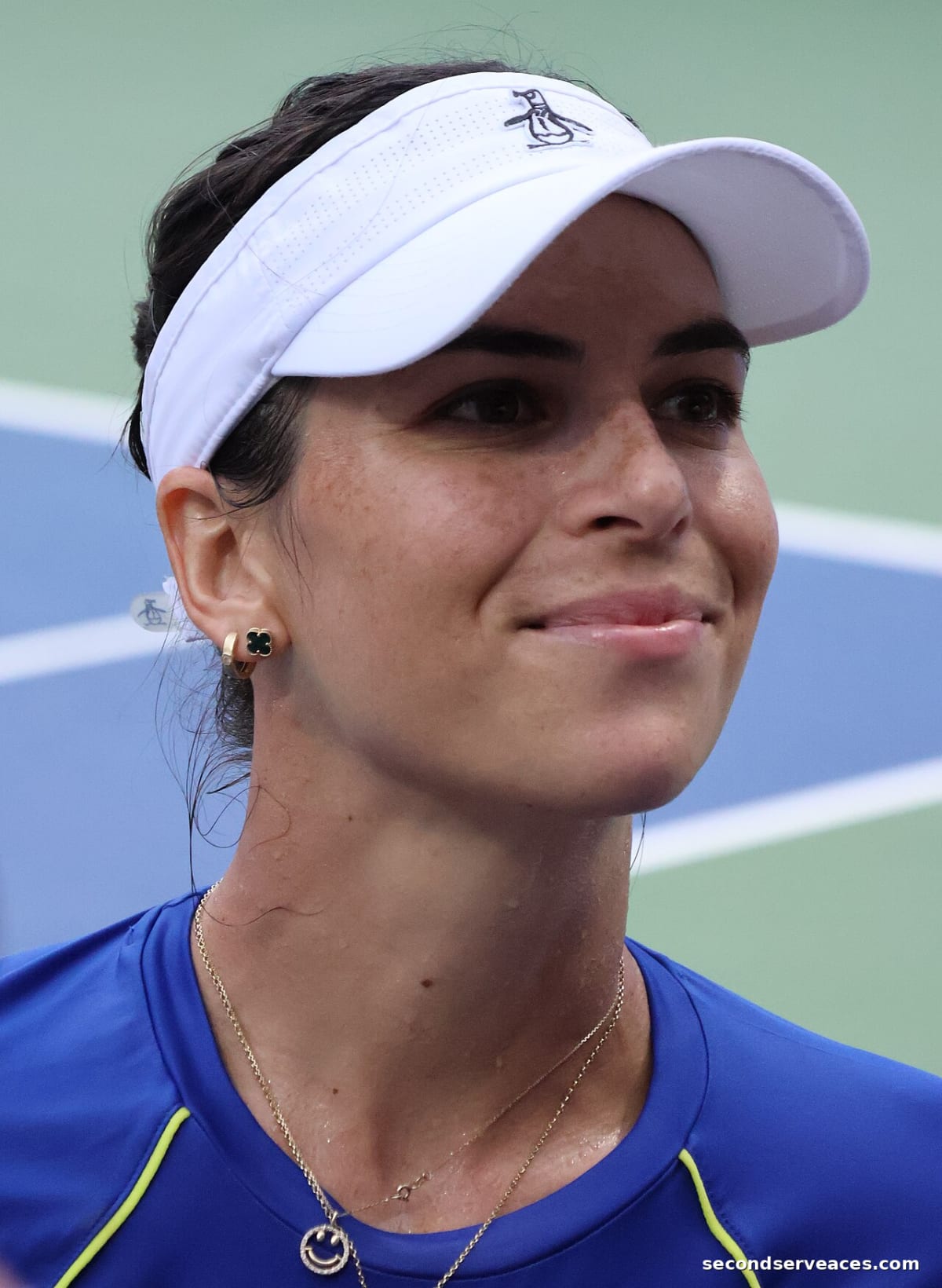
The Eastbourne Grass Court Backlash
The WTA locker room is officially a powder keg, and Ajla Tomljanovic just threw a match right into the center of it. Following her hard-fought first-round victory on the lawns of Eastbourne, Tomljanovic didn't want to talk about her forehand or the slick grass. Instead, she unloaded a furious volley of criticism directly at the International Tennis Integrity Agency (ITIA), calling their decision to hand Marketa Vondrousova a four-year doping ban an absolute disgrace. It is the kind of high-stakes, off-court drama that exposes the deep, fractured relationship between the sport's governing bodies and the athletes who actually draw the crowds.
Listen to the Second Serve Podcast
Get our daily AI-synthesized audio briefings and match reviews on the go.
Tomljanovic’s comments have sent shockwaves through the tournament, shifting the focus entirely away from the baseline battles. As we noted in our Eastbourne WTA Preview: Golubic, McNally & Siegemund Bets, the grass-court season is always packed with tension, but this controversy has elevated the stakes to a whole new level of professional anxiety. Players are no longer just fighting their opponents; they feel like they are dodging a predatory administrative machine.
This isn't just a minor disagreement over scheduling; it’s an existential crisis for player trust. The WTA Tour has seen its share of officiating controversies, but Tomljanovic's public rebellion marks a turning point where players are openly accusing anti-doping officials of running a hostile, aggressive operation designed to trap athletes rather than protect the sport's integrity.
The December Night That Triggered the Four-Year Ban
To understand the fury, you have to look at the cold, hard facts of the incident that took place last December. A female doping control officer arrived at Vondrousova's home around 8:00 PM for an unannounced out-of-competition test. What happened next was a catastrophic breakdown in protocol. Instead of complying with the request, Vondrousova signed a release form outside her residence explicitly stating her refusal to provide a sample, and then simply walked away to walk her dog.
Let’s be honest: walking your dog instead of taking a mandatory test is a mind-bogglingly bad decision. But does a single bureaucratic meltdown warrant the absolute destruction of a Grand Slam champion's career? That is the core question we explored in our breaking coverage of how Marketa Vondrousova Banned Four Years After Test Refusal sent shockwaves through the tennis world. The ITIA's response was swift, merciless, and completely devoid of nuance.
The strict liability framework of the ITF anti-doping program leaves virtually no room for human error. Once that pen touched the release form, Vondrousova's fate was sealed. The administrative hammer fell with the force of a lifetime sentence, demonstrating that the system values rigid compliance over any semblance of situational context or common sense.
The Mental Health Defense Rejected by the Tribunal
During her subsequent tribunal hearing, Vondrousova tried to explain the unexplainable. She argued that she was suffering from an acute stress reaction and generalised anxiety disorder at the moment the officer knocked on her door. The crushing pressure of being a reigning Grand Slam champion is something very few human beings can comprehend, a psychological burden we have seen affect legendary figures like Serena Williams during her most intense career moments.
But the independent tribunal wasn't buying it. They ruled there was "no compelling justification" for her refusal, completely dismissing her psychological defense as legally insufficient. In their eyes, anxiety does not excuse a player from the basic obligations of the clean sport program. It is a brutal reminder that in the eyes of tennis tribunals, mental health struggles are often treated as mere inconveniences rather than legitimate medical crises.
This cold rejection is precisely what has triggered the locker room backlash. When players see a colleague's mental health struggles dismissed so easily by an administrative panel, it breeds a culture of fear. The message from the top is clear: we do not care about your anxiety, we do not care about your panic; you either pee in the cup on demand or your career is over.
The Locker Room Divide Over Drug Testing Protocols
However, this is not a one-sided rebellion. The controversy has exposed a fascinating, deep-seated divide among the players themselves. While Tomljanovic went on the attack, calling the ITIA "cocky" and claiming "they're always out to get you," former world No. 1 Karolina Pliskova took a radically different stance. Pliskova made it clear that refusing a test would "never be an option" under any circumstances, emphasizing that rules are rules.
This split highlights two entirely different philosophies within the professional ranks. On one side, you have veterans who believe that absolute compliance is the only shield against a ruthless system. They argue that as professional athletes, managing the administrative demands of anti-doping is simply part of the job description, no matter how intrusive or inconvenient those demands might be.
On the other side, Tomljanovic's passionate defense of her peer represents a growing fatigue with what many perceive as a heavy-handed, adversarial system. When the governing bodies behave like a police force looking for gotcha moments rather than partners in integrity, the sport loses its competitive spirit. This battle is far from over, and the fallout will be felt long after the grass-court season concludes.
Essential Matchday Add-Ons
Tournament-tested accessories and high-frequency consumables every competitive player keeps in their bag.
Tourna Grip Original Dry Feel Overgrip (10-Pack)
4.8 ★ (12,000+ reviews)
The gold standard for sweaty hands. Proprietary dry feel absorbs moisture better as play intensifies.
Luxilon ALU Power 125 Silver String Set
4.9 ★ (3,500+ reviews)
Unrivaled control and spin potential used by over 50% of the ATP Top 100 players.
Babolat Custom Damp Vibration Dampener (2-Pack)
4.7 ★ (4,200+ reviews)
Customizable dampening with removable central O-ring for fine-tuning court feedback and sound.
Penn Championship Extra Duty Tennis Balls (4-Can Pack)
4.7 ★ (8,900+ reviews)
Official ball of USTA League Tennis with extra-duty felt designed for abrasive hard courts.
Analyze Ajla Tomljanovic vs. Marketa Vondrousova
Predict tactical adjustments, momentum swings, and serve strategy options for this match-up using our AI simulator.
The Aces Tactical Panel
This report was curated and edited by Bhaskar Goel. Tactical analysis and technical insights were provided by our specialized panel of expert correspondents.
Julian Price
Senior Tactical Correspondent
Stuffy, pedantic British academic and historian specializing in match momentum and historical context.
Elena Cruz
Director of Analytical Research
Data scientist specializing in court surface physics and movement patterns.
Bhaskar
The Editor & Fan
Passionate tennis player and site editor bringing everyday amateur insights and relatable fan commentary.
Arthur Vance
Senior Existential Analyst
Deep, eccentric, and DFW-inspired. Models court metaphysics, kinetic beauty, and player psychology.
Leo Sterling
High-Performance Consultant
Hard-nosed ex-trainer from Melbourne with a no-nonsense view on tour fitness.
Related Reports

Quick Answers
Why was Marketa Vondrousova banned for four years?+
She received a four-year suspension from the ITIA after refusing to provide a doping sample at her home in December.
What was Ajla Tomljanovic's reaction to Vondrousova's ban?+
Tomljanovic heavily criticized the ITIA, calling the ruling a disgrace and labeling the anti-doping officials as cocky.
What was Karolina Pliskova's stance on the doping test refusal?+
Pliskova disagreed with the refusal, stating that refusing to take a doping test would never be an option for her.