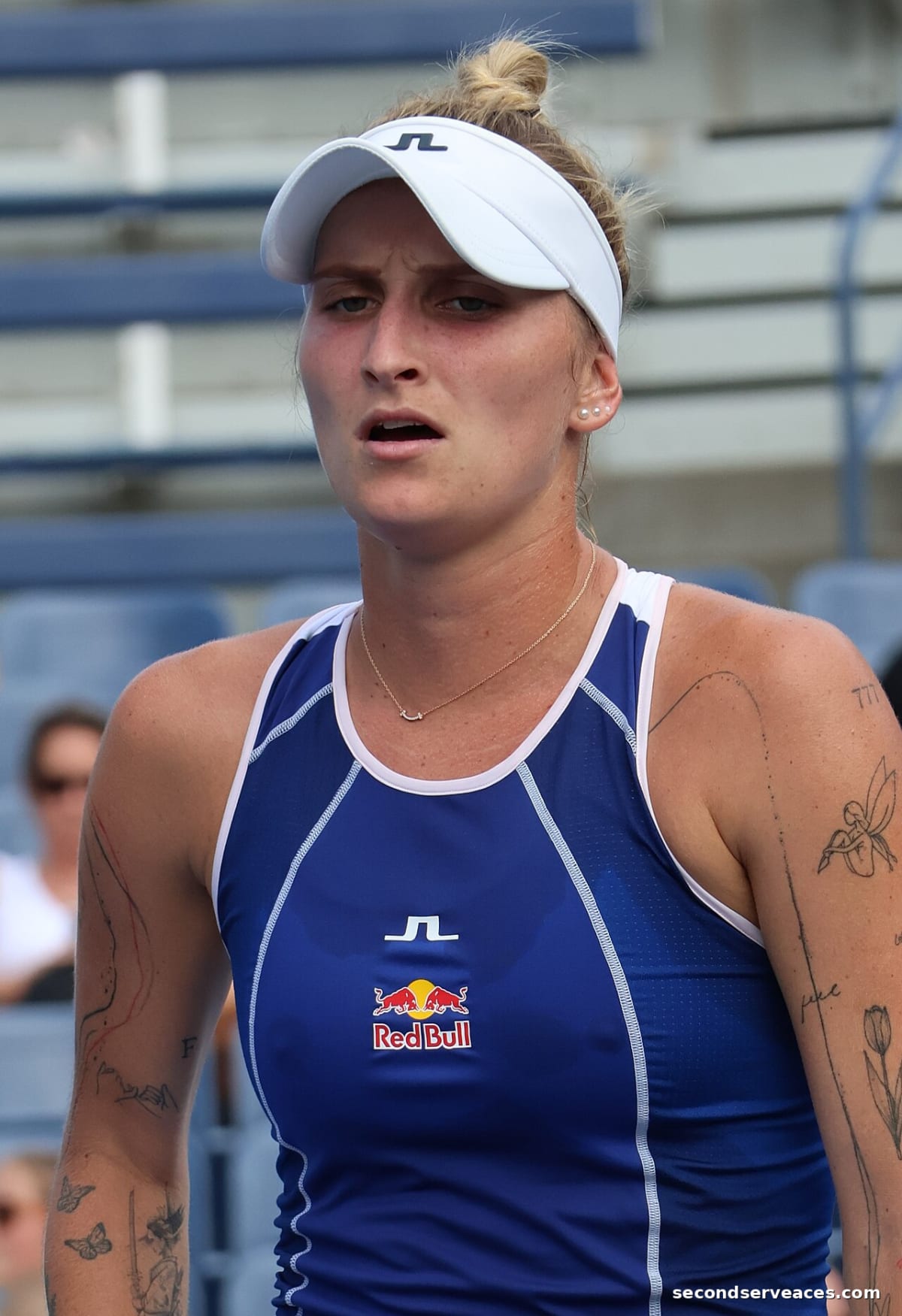
In the highly regulated ecosystem of professional tennis, anti-doping protocols operate with the same uncompromising tolerances as a custom-weighted graphite frame. For 2023 Wimbledon champion Marketa Vondrousova, a single off-court operational failure has triggered a catastrophic career derailment. An independent tribunal has handed down a mandatory four-year suspension, sidelining the Czech left-hander from professional sport until June 21, 2030.
Listen to the Second Serve Podcast
Get our daily AI-synthesized audio briefings and match reviews on the go.
The Decisive December Testing Refusal at Home
The catalyst for this severe sanction occurred on December 3, at approximately 8:00 p.m., when doping control officers arrived at Vondrousova’s residence for an unannounced out-of-competition collection. Rather than completing the standard biological passport documentation and providing the required specimen, Vondrousova refused to submit to the collection process. In the metrics of anti-doping compliance, a refusal is treated with the exact same gravity as an analytical positive, carrying an immediate baseline penalty that offers virtually no room for mitigation.
For a player whose baseline game relies on extreme physical durability and precise court coverage, this off-court operational error carries immense consequences. At 25 years old, Vondrousova is currently in her prime athletic window, where every month of competitive play translates directly to ranking points and tournament revenue. A suspension of this magnitude effectively mothballs her high-performance career during what should be her highest-yielding seasons on the WTA Tour.
The sudden removal of a reigning Grand Slam champion from the active roster sends shockwaves through the sport's ecosystem. From a technical standpoint, the loss of her unique left-handed variety and tactical depth alters the competitive balance at the top of the women's game. This administrative ruling represents a self-inflicted blow that no amount of physical training or technical adjustment can easily fix.
The Medical Defense and Cognitive Capacity Arguments
Faced with the prospect of a multi-year ban, Vondrousova’s legal team presented a detailed defense to the independent tribunal, focusing heavily on her psychological state at the time of the testing attempt. The defense argued that Vondrousova was suffering from an acute stress reaction and generalised anxiety disorder during the encounter. They contended that these clinical conditions severely impaired her cognitive capacity and overall judgment, rendering her unable to process the immediate consequences of her non-compliance.
From a technical perspective, establishing a lack of "significant fault or negligence" under these parameters requires meeting an incredibly high evidentiary threshold. The tribunal analyzed the timeline of the 8:00 p.m. interaction, evaluating whether the acute psychological distress was sufficient to fully override her understanding of the mandatory testing protocols. In professional tennis, players are trained extensively on these administrative requirements, making a cognitive impairment defense exceptionally difficult to sustain without overwhelming contemporaneous medical documentation.
Ultimately, the independent tribunal determined that the medical evidence presented did not sufficiently excuse the refusal. While acknowledging the realities of mental health challenges on tour, the ruling emphasized that the strict liability framework of the anti-doping program cannot be bypassed by subjective stress responses during a routine home visit. This decision highlights the rigid, black-and-white nature of international sports jurisprudence, where procedural compliance is treated with absolute rigidity.
The ITIA Regulatory Framework and Strict Liability
To understand the mechanics of this ruling, one must look at the specific regulatory parameters enforced by the International Tennis Integrity Agency (ITIA). Karen Moorhouse, chief executive of the ITIA, clarified the organization's firm stance following the tribunal's decision. Moorhouse stated that the starting point for refusing a test is a four-year ban, which deliberately mirrors the standard penalty for a major analytical doping violation. This parity is designed to prevent athletes from avoiding a positive test by simply walking away from the testers.
This strict equivalence acts as a structural safeguard for the integrity of the sport's testing pool. If a refusal carried a lighter penalty than a positive test, it would create a massive loophole, offering a strategic incentive for non-compliance. By maintaining a uniform four-year baseline, the ITIA ensures that the "cost of non-compliance" remains prohibitively high, protecting the overall credibility of the anti-doping program.
The strict liability principle dictates that athletes are ultimately responsible for whatever enters their systems—and for their availability and compliance during scheduled testing windows. For elite players, managing these administrative obligations is as critical as maintaining their equipment or managing physical recovery. A failure to execute these basic logistical duties carries a penalty that far outweighs the physical toll of any on-court injury.
The Impending CAS Appeal and Career Trajectory
Despite the severity of the initial ruling, Vondrousova still has one remaining legal avenue to salvage her professional career. She retains the right to appeal the independent tribunal's findings to the Court of Arbitration for Sport (CAS) in Lausanne, Switzerland. A CAS appeal represents her final opportunity to present her clinical diagnoses of anxiety and acute stress to a new panel of arbitrators who may view the mitigating circumstances differently.
Historically, CAS appeals can result in reduced sanctions if the athlete can successfully demonstrate a lack of significant fault or intent. However, the legal costs and analytical resources required to mount a successful CAS defense are substantial, representing a high-stakes gamble for any professional athlete. If the appeal fails to reduce the ban, Vondrousova will remain ineligible to compete in any sanctioned events until the summer of 2030, a duration that would make a successful return to elite tennis highly improbable.
As the tennis community processes this shocking development, the focus shifts to how the WTA Tour will adapt to the loss of a recent Grand Slam champion. For Vondrousova, the immediate future involves a transition from hitting heavy topspin on the practice courts to navigating the courtroom, where her legal representation must construct an airtight case to find a break point in the ITIA's ruling. The outcome of that impending appeal will determine whether her career is permanently cut short or if she can shift the match momentum back in her favor for an eventual competitive return.
Essential Matchday Add-Ons
Tournament-tested accessories and high-frequency consumables every competitive player keeps in their bag.
Tourna Grip Original Dry Feel Overgrip (10-Pack)
4.8 ★ (12,000+ reviews)
The gold standard for sweaty hands. Proprietary dry feel absorbs moisture better as play intensifies.
Luxilon ALU Power 125 Silver String Set
4.9 ★ (3,500+ reviews)
Unrivaled control and spin potential used by over 50% of the ATP Top 100 players.
Babolat Custom Damp Vibration Dampener (2-Pack)
4.7 ★ (4,200+ reviews)
Customizable dampening with removable central O-ring for fine-tuning court feedback and sound.
Penn Championship Extra Duty Tennis Balls (4-Can Pack)
4.7 ★ (8,900+ reviews)
Official ball of USTA League Tennis with extra-duty felt designed for abrasive hard courts.
Analyze Marketa Vondrousova vs. Petra Kvitova
Predict tactical adjustments, momentum swings, and serve strategy options for this match-up using our AI simulator.
The Aces Tactical Panel
This report was curated and edited by Bhaskar Goel. Tactical analysis and technical insights were provided by our specialized panel of expert correspondents.
Julian Price
Senior Tactical Correspondent
Stuffy, pedantic British academic and historian specializing in match momentum and historical context.
Elena Cruz
Director of Analytical Research
Data scientist specializing in court surface physics and movement patterns.
Bhaskar
The Editor & Fan
Passionate tennis player and site editor bringing everyday amateur insights and relatable fan commentary.
Arthur Vance
Senior Existential Analyst
Deep, eccentric, and DFW-inspired. Models court metaphysics, kinetic beauty, and player psychology.
Leo Sterling
High-Performance Consultant
Hard-nosed ex-trainer from Melbourne with a no-nonsense view on tour fitness.
Related Reports


Quick Answers
Why was Marketa Vondrousova banned from professional tennis?+
Marketa Vondrousova was handed a four-year ban after refusing to submit an anti-doping sample during an out-of-competition test at her home on December 3.
What defense did Vondrousova present to the independent tribunal?+
Vondrousova argued that she was suffering from an acute stress reaction and generalized anxiety disorder, which impaired her cognitive capacity and judgment during the testing encounter.
Can Marketa Vondrousova appeal the four-year suspension?+
Yes, Vondrousova has the right to appeal the independent tribunal's decision to the Court of Arbitration for Sport (CAS).