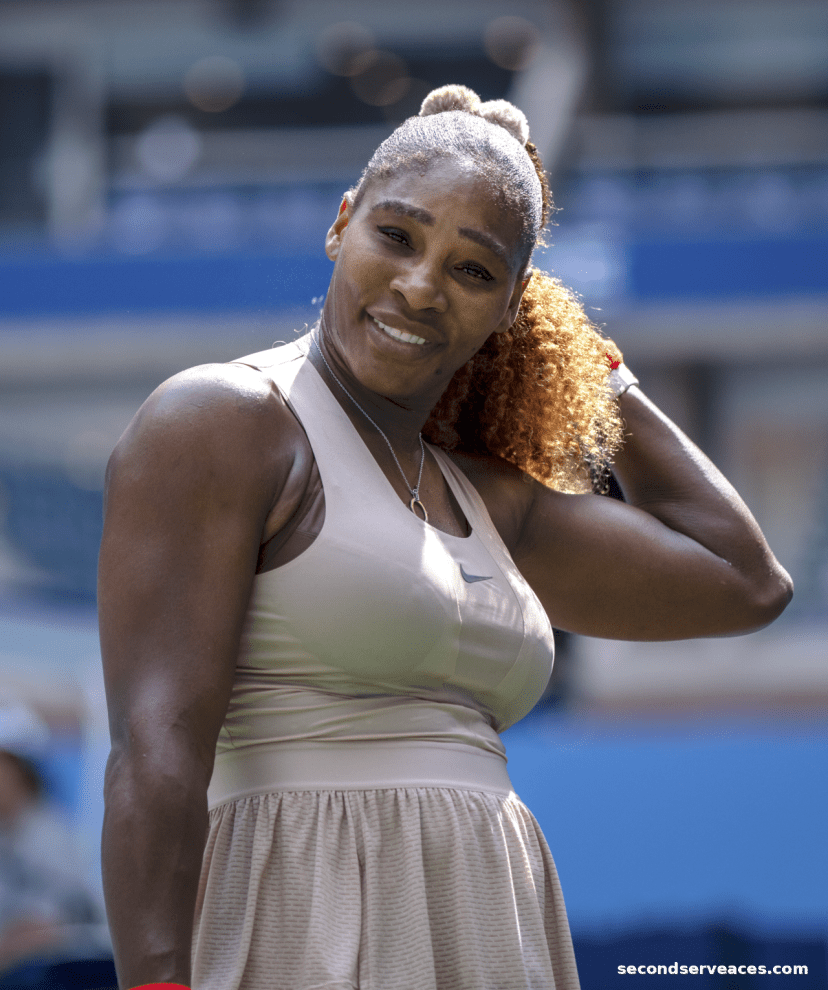
The tennis court is a brutal, solitary rectangle. It offers no sanctuary, no teammates to hide behind, and absolutely nowhere to escape the blistering reality of the moment. You step out onto the searing blue hard courts of the Miami Open, the humidity already sticking to your skin, and look across the net. Staring back is the very reason you picked up a racket. This was the exact, overwhelming scenario for British No. 3 Fran Jones. Instead of buckling under the immense psychological weight of her own admiration, she dismantled her childhood idol, Venus Williams, securing her landmark first-ever WTA 1000 victory.
Listen to the Second Serve Podcast
Get our daily AI-synthesized audio briefings and match reviews on the go.
Earning a breakthrough win on the elite circuit is arduous enough. Doing it against a transcendent icon demands an entirely different level of mental fitness. Jones had to strip away the reverence, ignoring the legendary aura of the seven-time Grand Slam singles champion, and treat her merely as an obstacle blocking her path. The mental grind required to separate the legend from the opponent is an exercise in ruthless emotional compartmentalization.
Stepping onto the stadium court in South Florida requires a specific type of psychological armor. Every player on the tour reads the game like an open book, relentlessly searching for the tiniest fracture in their opponent's confidence. When you face the woman whose posters likely hung on your bedroom wall, that open book suddenly feels like a mirror reflecting your own childhood dreams back at you. Overcoming that reflection is the ultimate test of a player's maturity.
The Tactical Breakdown
Analyzing the mechanics of a matchup like this requires dissecting contrasting philosophies. Venus Williams built her historic career on suffocating opponents with relentless, first-strike tennis. Her flat, penetrating groundstrokes and imposing serve are designed to rob rivals of time, shrinking the court and forcing rapid, panicked decisions. To survive against that caliber of aggressive baseline geometry, you must disrupt her rhythm and artificially extend the rallies.
Hard courts demand aggressive positioning. You cannot sit back and merely float defensive slices; you must carve through the heavy air and dictate terms. While the specific match statistics remain safely locked in the servers, the archetypal blueprint to counter a legendary power player involves a heavy dose of topspin and relentless lateral movement. Jones, known for her phenomenal physical grit and heavy ball-striking, likely anchored her strategy around immense depth. By pushing the ball deep into the corners with heavy revolutions, she effectively forces the American veteran to generate pace from uncomfortable, defensive postures.
Historically, the tactical blueprint for surviving an elite first-strike player boils down to a few critical metrics:
- Rally Tolerance: Refusing to yield during prolonged baseline exchanges. It is about building a wall, employing heavy topspin to keep the ball deep, and waiting for the high-risk, low-margin aggressive shot to ultimately miss its mark.
- Neutralizing the First Strike: Absorbing the sheer velocity of the Williams serve. By returning deep down the middle, a player limits the server's ability to create immediate, sharp-angled replies, essentially resetting the point to neutral.
- Managing Match Momentum: Navigating the inevitable momentum shifts that occur when a vocal crowd rallies behind a beloved veteran. This includes facing crucial break point opportunities without letting the gravity of the moment shatter your internal focus.
Executing these patterns requires supreme aerobic capacity. The modern game is won in the legs long before it is won in the arms, and Jones's ability to absorb blistering pace while maintaining her court position speaks volumes about her offseason physical conditioning.
The Bigger Picture
Securing a maiden WTA 1000 victory dramatically alters the trajectory of a season. For Fran Jones, this result in Miami is far more than an accumulation of ranking points; it is undeniable, hard-earned validation. The British No. 3 has spent years grinding through the grueling ITF circuit, battling the brutal physical and logistical demands of professional tennis. Surmounting the barrier of a premier-level tournament shifts her narrative from a promising regional talent to a legitimate, tour-level threat.
The grind of the professional tour is entirely unforgiving. It asks you to pack your bags week after week, crossing time zones, only to potentially lose in the first round and start all over again. A victory of this magnitude acts as essential fuel. It validates the early morning sprints, the endless bucket of practice serves, and the agonizing rehab sessions. It provides the tangible proof required to push through the next inevitable wall of adversity.
Furthermore, holding the title of British No. 3 carries its own unique brand of scrutiny. The British tennis media landscape is famously demanding, constantly searching for the next profound talent to carry the mantle into the European clay and grass swings. Succeeding on the unforgiving American hard courts—a surface that demands sheer power and unwavering stamina—proves that Jones possesses a highly adaptable, multi-surface game.
Beyond the personal milestone, this encounter underscores the beautiful, cyclical nature of professional sports. Venus Williams inspired an entire generation to chase down seemingly impossible dreams. Now, she finds herself continuously competing against the very athletes whose careers she birthed. Every blistering forehand exchanged between the two out on the Miami court was a silent conversation between eras, a literal passing of the torch measured in topspin and sweat.
Moving forward, the tour locker room will look closely at how Jones handles the psychological hangover of this triumph. Surviving the mental grind of a career-defining win often dictates a player’s ultimate ceiling. Can she reboot her emotional hard drive for the next round? If she can successfully replicate the tactical discipline and emotional control required to dispatch her childhood idol, the premier hard courts of the WTA circuit will quickly become her preferred hunting ground.
Essential Matchday Add-Ons
Tournament-tested accessories and high-frequency consumables every competitive player keeps in their bag.
Tourna Grip Original Dry Feel Overgrip (10-Pack)
4.8 ★ (12,000+ reviews)
The gold standard for sweaty hands. Proprietary dry feel absorbs moisture better as play intensifies.
Luxilon ALU Power 125 Silver String Set
4.9 ★ (3,500+ reviews)
Unrivaled control and spin potential used by over 50% of the ATP Top 100 players.
Babolat Custom Damp Vibration Dampener (2-Pack)
4.7 ★ (4,200+ reviews)
Customizable dampening with removable central O-ring for fine-tuning court feedback and sound.
Penn Championship Extra Duty Tennis Balls (4-Can Pack)
4.7 ★ (8,900+ reviews)
Official ball of USTA League Tennis with extra-duty felt designed for abrasive hard courts.
Analyze Fran Jones vs. Venus Williams
Predict tactical adjustments, momentum swings, and serve strategy options for this match-up using our AI simulator.
The Aces Tactical Panel
This report was curated and edited by Bhaskar Goel. Tactical analysis and technical insights were provided by our specialized panel of expert correspondents.
Julian Price
Senior Tactical Correspondent
Stuffy, pedantic British academic and historian specializing in match momentum and historical context.
Elena Cruz
Director of Analytical Research
Data scientist specializing in court surface physics and movement patterns.
Bhaskar
The Editor & Fan
Passionate tennis player and site editor bringing everyday amateur insights and relatable fan commentary.
Arthur Vance
Senior Existential Analyst
Deep, eccentric, and DFW-inspired. Models court metaphysics, kinetic beauty, and player psychology.
Leo Sterling
High-Performance Consultant
Hard-nosed ex-trainer from Melbourne with a no-nonsense view on tour fitness.