The Anatomy of a Disputed Hierarchy
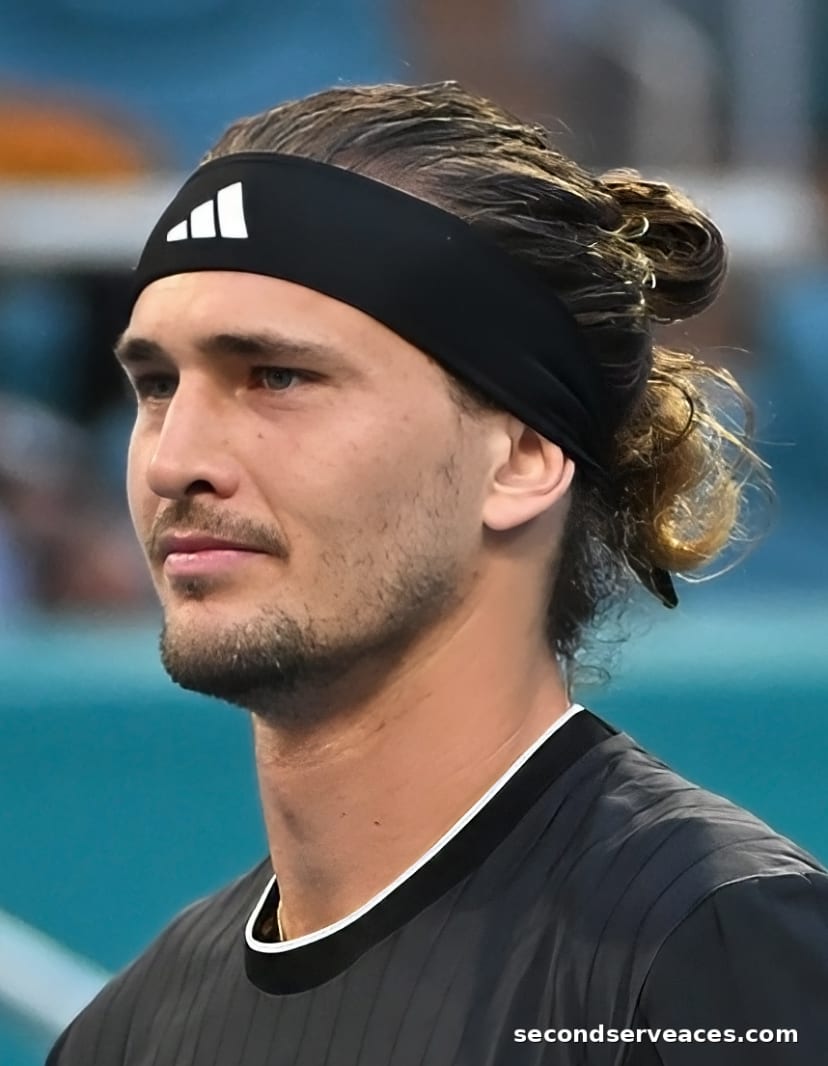
In the rarefied air of the ATP Tour, where rankings often serve as a numerical ego-buffer, Alexander Zverev has long asserted his claim to the throne. Following his recent appearance at the Madrid Open final, where he fell to the burgeoning brilliance of Jannik Sinner, Zverev publicly categorized the current ATP landscape into three distinct tiers. He placed his own name firmly alongside the heavy hitters: Novak Djokovic and Carlos Alcaraz.
Listen to the Second Serve Podcast
Get our daily AI-synthesized audio briefings and match reviews on the go.
It was a declaration of parity that invited scrutiny. Enter CoCo Vandeweghe, a firebrand with an eye for the cold, hard truths that decorate the history books. Vandeweghe did not mince words, essentially pulling the rug from under Zverev’s self-styled triumvirate. Her argument remains tethered to the one currency that matters in this sport: the Grand Slam title.
By her estimation, Zverev resides in a separate corridor of the game. Until he can clasp a major trophy in his hands, he remains in a conversation distinct from the trio of Sinner, Alcaraz, and the indomitable Djokovic. It is a harsh assessment, but one that echoes the sentiment of the history books—the only ones that truly endure the test of time.
The Specter of Roland Garros and the US Open
History, as Marcelo Rios or even the modern-day Dominic Thiem might attest, is unforgiving to those who dance with glory but fail to consummate the relationship. Zverev’s record is littered with these near-misses that define a career in the public eye. In 2020, he stood on the precipice of immortality at the US Open, only to see the title slip away against Thiem.
More recently, the red dust of Roland Garros provided another stage for Zverev to stake his claim. Yet, in a final that ultimately swung the way of the vibrant Carlos Alcaraz, Zverev faltered, losing 3-6, 6-2, 7-5, 1-6, 2-6. The scoreboard, that most objective of jurors, tells a story of a player capable of deep runs but struggling to cross the final threshold.
This recurring narrative of falling at the final hurdle is precisely what fuels the skepticism of observers like Vandeweghe. When the pressure hits its apex on the sport’s most hallowed courts, the consistency of the top-tier elite—Djokovic’s mental fortitude or Alcaraz’s relentless aggression—remains the gold standard by which Zverev is being measured and, for now, found wanting.
Defining the Elite in an Era of Transition
The current landscape of professional tennis is caught in a fascinating, turbulent transition. We see players like Aryna Sabalenka or the ever-popular Emma Raducanu defining their eras through singular bursts of brilliance or sustained excellence, further highlighting why the Grand Slam metric remains the ultimate separator. Zverev’s assertion that he belongs in the same breath as the multi-major winners is a challenge to the established order.
Is it enough to be a perennial top-ten contender, or does the legacy of a player hinge solely on the shiny hardware lifted on Championship Sunday? Zverev certainly brings the technical prowess to the table, but the psychology of winning at the highest level requires more than just ranking points. It requires the ability to seize the break point when the world is watching.
As the circuit moves toward the next major event, the debate ignited by Vandeweghe will likely rumble on in the press rooms and social forums. Until Zverev can finally hoist that elusive major title, he will remain in a purgatory of potential, forever defined by who he *isn't* standing next to in the winners' circle.
The Data Behind the Sentiment
When analyzing the top of the ATP rankings, one must look at the conversion rate of deep tournament runs. Zverev’s ability to remain competitive is beyond reproach; he is a permanent fixture in the second week of any major. However, the delta between a finalist and a champion is vast.
Vandeweghe’s critique highlights a divide between the 'process' of being a high-ranked pro and the 'product' of a Hall of Fame career. While ranking positions provide a roadmap of current form, they lack the permanence of a Slam tally. The history of this sport is written in the winners, not the runners-up.
Whether this serves as the spark for Zverev’s eventual breakthrough or merely increases the scrutiny on his future performance, the conversation serves as a potent reminder: in tennis, your status is only as high as your last trophy. Until that changes, the debate about his elite credentials will continue to simmer.
What Alexander Zverev Plays With
Head Gravity Pro
Head Hawk Touch 1.25
Head Prime Tour (12-Pack)
Analyze Alexander Zverev vs. Jannik Sinner
Predict tactical adjustments, momentum swings, and serve strategy options for this match-up using our AI simulator.
The Aces Tactical Panel
This report was curated and edited by Bhaskar Goel. Tactical analysis and technical insights were provided by our specialized panel of expert correspondents.
Julian Price
Senior Tactical Correspondent
Stuffy, pedantic British academic and historian specializing in match momentum and historical context.
Elena Cruz
Director of Analytical Research
Data scientist specializing in court surface physics and movement patterns.
Bhaskar
The Editor & Fan
Passionate tennis player and site editor bringing everyday amateur insights and relatable fan commentary.
Arthur Vance
Senior Existential Analyst
Deep, eccentric, and DFW-inspired. Models court metaphysics, kinetic beauty, and player psychology.
Leo Sterling
High-Performance Consultant
Hard-nosed ex-trainer from Melbourne with a no-nonsense view on tour fitness.