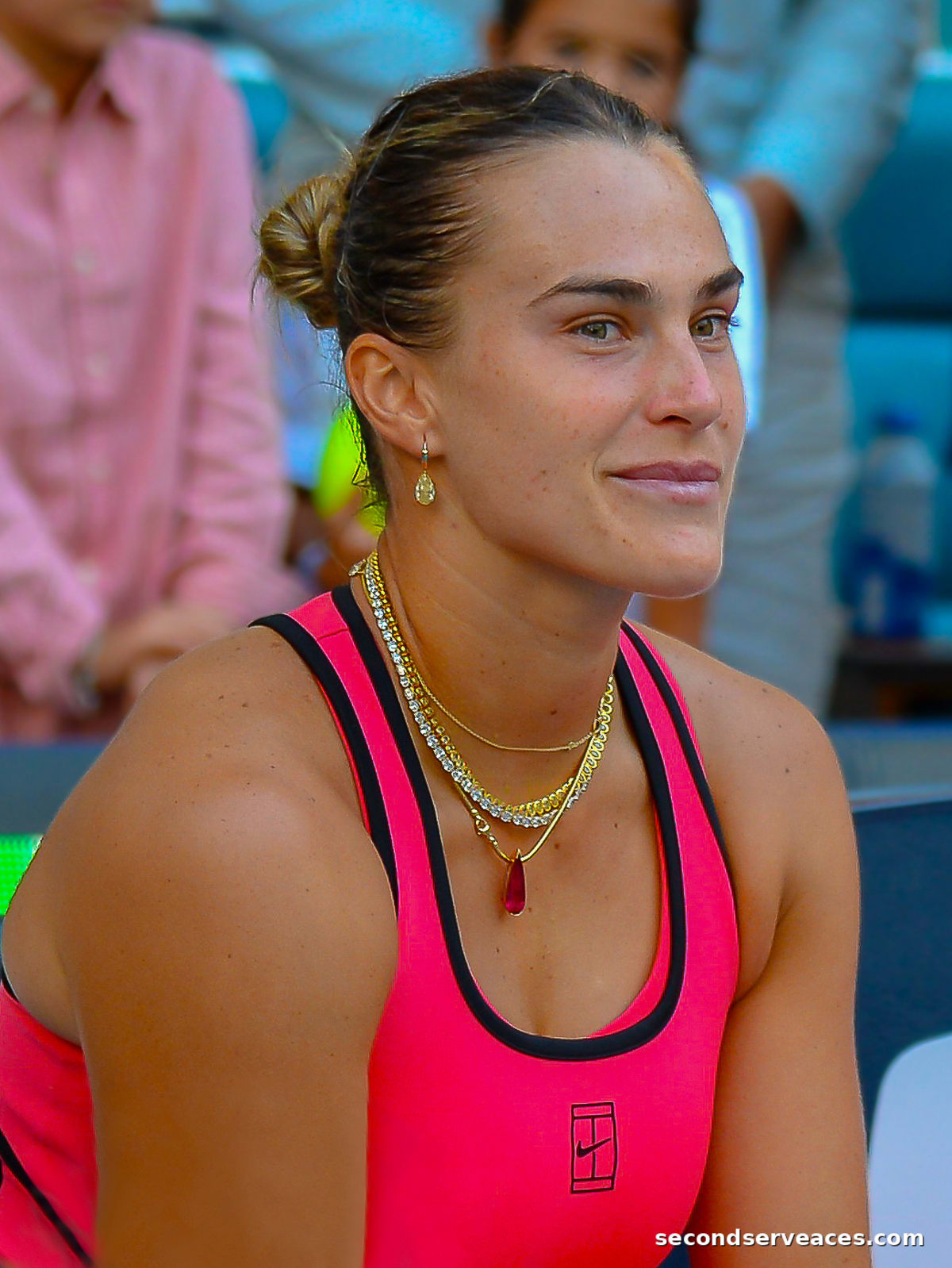
The pristine courts of Flushing Meadows have long been a theater for both athletic brilliance and theatrical tempestuousness. Yet, the aftermath of the women's singles final has ignited a modern discourse on decorum that would make the grandees of the old West Side Tennis Club at Forest Hills spill their gin and tonics. The Minsk Mauler, Aryna Sabalenka, having succumbed to Elena Rybakina, did not merely retreat; she did so with a thunderous display of frustration that has deeply divided the tennis establishment.
Listen to the Second Serve Podcast
Get our daily AI-synthesized audio briefings and match reviews on the go.
Following her defeat in the final, Sabalenka marched directly to her player bench, summarily demolished her racket, and sat in stony silence with her coaching staff. To those of us who fondly recall the classic grass-court duels of the 1970s—where players like Virginia Wade maintained an air of regal poise even in the face of heartbreaking defeat—this modern outburst felt particularly jarring. It was a visceral exhibition of disappointment, captured in high-definition for a global audience.
The racket-smashing incident, which we previously detailed in our post-match report, became an instant lightning rod for debate. In an era where every micro-expression is analyzed, Sabalenka's refusal to mask her frustration with a polite smile drew immediate scrutiny. It raises the timeless question of how much emotional vulnerability we should tolerate from our modern baseline competitors when the ultimate prize slips through their fingers.
The Commentary Box Divide: Rubin and Wertheim Clash Over Tennis Decorum
Former doubles champion Chanda Rubin did not mince words when analyzing the situation on the Tennis Channel. Rubin, a player of immense class during her own distinguished career on the WTA Tour, characterized Sabalenka's behavior as outright "bratty." To Rubin, the act of destroying equipment and retreating instantly to one's camp represents a departure from the traditional tennis etiquette that once governed the sport.
Conversely, respected journalist Jon Wertheim offered a spirited defense of the Belarusian. Wertheim argued that the sting of losing a major final should indeed evoke a raw, visceral response. In his view, a player showing genuine, unvarnished anger is far preferable to a sterile, corporate display of indifference. He wants to see players who care deeply enough about the trophy to let their disappointment boil over in the public eye.
This clash of perspectives highlights a deeper philosophical divide in contemporary tennis. On one hand, purists align with Rubin, believing that respect for the opponent, the fans, and the equipment should remain sacrosanct. On the other hand, the modern audience often craves the authentic drama of a high-stakes break point or a devastating loss, viewing Sabalenka's outburst as a refreshing window into the soul of an elite competitor.
Echoes of Roland Garros and the Weight of Major Finals
This is not the first time Sabalenka has found herself grappling with the crushing weight of a Grand Slam runner-up finish. The memory of the 2025 Roland Garros final remains fresh, where she suffered a similarly agonizing defeat at the hands of Coco Gauff. That particular afternoon in Paris ended with a highly emotional press conference, underscoring the immense psychological toll of these late-stage major defeats.
Gauff's rise, which we have explored in our look at the American tennis legacy, represents a different kind of mental fortitude. For Sabalenka, the challenge has always been managing her explosive power and matching it with emotional stability. When her high-velocity topspin fails to find the lines during critical moments, the internal pressure cooker inevitably explodes.
The transition from the red clay of Paris to the rapid courts of New York did little to dampen the emotional stakes. Sabalenka's quest to cement her status at the pinnacle of the WTA rankings remains a turbulent journey. Every major final she contests seems to carry an extra layer of personal drama, transforming her matches into theatrical events that transcend mere sporting contests.
Modern Baseline Gladiators and the Quest for Courtroom Serenity
The contrast between the two finalists in New York could not have been more striking. While Sabalenka wore her heart on her sleeve, Elena Rybakina—the "Ice Queen of Astana"—remained a portrait of absolute tranquility. Rybakina's ability to maintain her composure, even as the match momentum shifted during the second set, ultimately paved her way to the title.
This clash of temperaments is what makes the modern game so compelling. The stoic, analytical approach of Rybakina acts as the perfect foil to Sabalenka's thunderous, emotional style. When these two meet, it is not just a battle of physical conditioning, but a profound psychological chess match where the first player to lose their focus often surrenders the match.
As the dust settles on this latest New York saga, the tennis world remains divided on how players should conduct themselves in moments of extreme disappointment. While classic etiquette dictates a quiet retreat and a polite handshake, the raw emotion of the modern game suggests that the era of the perfectly behaved champion may be giving way to a more expressive, if occasionally petulant, generation.
Rivalry Matchup & Player Profiles
| Metric | Aryna Sabalenka | Elena Rybakina |
|---|---|---|
| Rank | No. 2 | No. 1 |
| Country | Belarus | Kazakhstan |
| Age | 28 | 27 |
| Height | 1.82 m (6 ft 0 in) | 1.84 m (6 ft 0 in) |
| Handedness | Right-handed | Right-handed |
| Play Style | Aggressive baseliner | Aggressive baseliner |
| Career Titles | 24 Singles, 6 Doubles | 14 Singles |
Sabalenka leads their overall head-to-head record 10-8. Their rivalry has become one of the premier attractions of the modern WTA Tour, characterized by high-octane baseline exchanges and blistering serves. Every encounter is a physical test of wills, with both players refusing to cede an inch of territory behind the baseline.
However, Rybakina's recent triumph in the 2026 US Open final (6-4, 5-7, 6-2) not only secured her first New York crown but also propelled her to the World No. 1 ranking, adding a delicious new chapter to this compelling saga. As they continue to battle for supremacy at the top of the women's game, their contrasting personalities will undoubtedly keep fans and pundits thoroughly entertained.
What Aryna Sabalenka Plays With
Wilson Blade 98 v9 (16x19)
Luxilon ALU Power 125
Analyze Aryna Sabalenka vs. Elena Rybakina
Predict tactical adjustments, momentum swings, and serve strategy options for this match-up using our AI simulator.
The Aces Tactical Panel
This report was curated and edited by Bhaskar Goel. Tactical analysis and technical insights were provided by our specialized panel of expert correspondents.
Julian Price
Senior Tactical Correspondent
Stuffy, pedantic British academic and historian specializing in match momentum and historical context.
Elena Cruz
Director of Analytical Research
Data scientist specializing in court surface physics and movement patterns.
Bhaskar
The Editor & Fan
Passionate tennis player and site editor bringing everyday amateur insights and relatable fan commentary.
Arthur Vance
Senior Existential Analyst
Deep, eccentric, and DFW-inspired. Models court metaphysics, kinetic beauty, and player psychology.
Leo Sterling
High-Performance Consultant
Hard-nosed ex-trainer from Melbourne with a no-nonsense view on tour fitness.
Related Reports
Quick Answers
Why did Chanda Rubin criticize Aryna Sabalenka's US Open behavior?+
Chanda Rubin criticized Aryna Sabalenka's post-match behavior as 'bratty' after Sabalenka went straight to her bench and demolished her racket following her final defeat.
How did Jon Wertheim defend Aryna Sabalenka's reaction?+
Jon Wertheim defended Sabalenka by stating that he wants to see players visibly upset and showing raw emotion after losing a major Grand Slam final.
What is the head-to-head record between Aryna Sabalenka and Elena Rybakina?+
Aryna Sabalenka leads their head-to-head record 10-8, though Elena Rybakina won their most recent meeting in the 2026 US Open final.