
In the hyper-accelerated slipstream of professional tennis, momentum is less a physical law and more a psychological currency. For world number two Aryna Sabalenka, that currency has felt strangely volatile since her triumphant run at the Miami Open in late March. That victory in southern Florida, executed with her trademark high-octane baseline violence, seemed to herald a season of absolute dominance. Instead, it marked the beginning of an enigmatic dry spell, a prolonged stretch where the ultimate prize has repeatedly slipped through her fingers.
The Miami Ascent and the Subsequent Title Drought
The Belarusian, standing at a commanding 1.82 meters, relies on a high-risk, high-reward style that leaves very little margin for error. When her serve is clicking and her flat groundstrokes find the court lines, she looks entirely unplayable. Yet, the current WTA rankings reflect a persistent gap between her competitive ceiling and her floor, a variance that has puzzled analysts. Since lifting the trophy in Miami, her campaign has been characterized by deep runs that terminate not with a trophy, but with a sudden, inexplicable loss of competitive focus.
This barren run is not merely a statistical anomaly but a symptom of a deeper, more agonizing struggle with front-runner anxiety. Veteran coach Brad Gilbert recently pointed out this worrying trend, noting that Sabalenka has developed a habit of letting opponents back into matches they have no business contesting. The transition from dominant front-runner to defensive scrambled-scrambler has become a recurring motif in her 2026 campaign, casting a shadow over her preparations for the season-ending championships.
Listen to the Second Serve Podcast
Get our daily AI-synthesized audio briefings and match reviews on the go.
To watch Sabalenka when a match begins to drift is to witness a profound human struggle against one's own impulses. The same aggressive baseline play that builds her massive leads often becomes her undoing when the tension mounts. Without a reliable secondary strategy, she remains highly vulnerable to opponents who possess the patience to simply weather her initial storm and wait for the errors to accumulate.
The Parisian Collapse Against Diana Shnaider
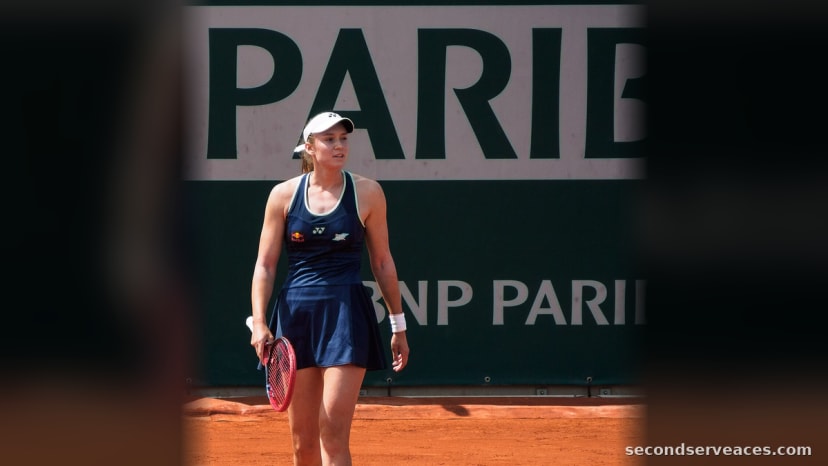
Perhaps nowhere was this vulnerability more starkly exposed than on the red clay of Roland Garros. Facing the rising force of Diana Shnaider, Sabalenka appeared to have the match entirely under her control, securing the opening set and establishing multiple breaks of serve in the second. What followed was a sporting collapse of surreal proportions, a sudden evaporation of tactical coherence that left spectators in near-disbelief.
Sabalenka proceeded to lose ten consecutive games, a catastrophic slide that saw her heavy topspin groundstrokes fly yards past the baseline. Shnaider, sensing the shift in the match's gravity, simply kept the ball in play, allowing the Belarusian's unforced errors to do the heavy lifting. This match was not won by tactical brilliance, but rather lost in the dark recesses of Sabalenka's own competitive psyche, a stark reminder of how quickly her game can unravel.
This Parisian meltdown was an existential crisis played out in real-time on Court Philippe-Chatrier. It highlighted a structural flaw in Sabalenka's aggressive baseliner DNA: when the power game misfires, there is rarely a Plan B. Instead of dialing back the aggression, she doubled down, hitting herself out of the tournament in a flurry of double faults and erratic forehands that left her coaching box looking on in grim silence.
Meltdown in Melbourne and the Rybakina Factor
This pattern of self-sabotage is not isolated to the clay of Paris; it has also reared its head on the rapid hard courts of the Australian Open. In the final against Elena Rybakina, Sabalenka clawed her way to a seemingly insurmountable 3-0 lead in the deciding third set. The trophy was practically within arm's reach, yet the momentum vanished as quickly as it had arrived, proving once again that no lead is safe in her hands.
Rybakina, known for her ice-cold demeanor and lethal serve, took full advantage of Sabalenka's sudden hesitation. The Kazakhstani star rallied to snatch the title, exposing the deep-seated anxieties that continue to plague Sabalenka in grand slam pressure cookers. Rybakina has since maintained this high level, recently claiming the title in Ningbo and finishing the 2025 campaign with immense momentum, establishing herself as a primary obstacle for Sabalenka.
The contrast between the two players could not be starker. While Rybakina operates with a surgical, almost mechanical efficiency, Sabalenka's tennis is a raw, emotional melodrama. This Melbourne defeat was a devastating blow, illustrating that even when Sabalenka plays near-flawless tennis for two sets, the specter of the collapse is always hovering just beyond the baseline, waiting for the slightest tremor of doubt.
Riyadh Reconfiguration and Brad Gilbert's Warning
As the elite eight gather for the prestigious season-ending showcase, the spotlight is firmly fixed on Sabalenka's mental fortitude. Brad Gilbert's public warnings are not merely media fodder; they are a direct challenge to the world number two to address her psychological fragility. The fast indoor conditions in Riyadh will offer no hiding place for players who cannot protect their service games or consolidate breaks of serve.
To succeed against a field that includes a surging Rybakina and other battle-tested stars, Sabalenka must find a way to stabilize her performance when leading. The tendency to let her foot off the gas pedal has become a scouting report staple on the WTA Tour official website, with opponents actively planning to weather her initial storm in hopes of a late-match collapse.
Ultimately, the tournament in Riyadh is less about her opponents and more about Sabalenka's battle with her own shadow. If she can conquer the internal demons that have cost her multiple titles this season, her raw physical power remains unmatched. If not, the season-ending championships will simply be another stage for a familiar drama, where a commanding lead serves only as a prelude to a heartbreaking exit.
Rivalry Matchup & Player Profiles
| Metric | Aryna Sabalenka |
|---|---|
| Rank | 2 |
| Country | Belarus |
| Age | 28 |
| Handedness | Right-handed |
| Height | 1.82 m (6 ft 0 in) |
| Play Style | Aggressive baseliner |
| Career Titles | 24 |
As a premier aggressive baseliner, Aryna Sabalenka's profile highlights her immense physical advantages. Standing 1.82 meters tall, her heavy serve and devastating groundstrokes have propelled her to 24 career titles and the number two spot in the world. However, her high-risk style requires absolute mental clarity to function effectively under pressure.
Her ongoing rivalry with Elena Rybakina continues to define the upper echelons of the WTA Tour. While Sabalenka possesses the raw power to blow any opponent off the court, Rybakina's tactical discipline and superior mental composure have repeatedly turned the tide in their most critical encounters, making their potential matchups in Riyadh highly anticipated.
What Aryna Sabalenka Plays With
Wilson Blade 98 v9 (16x19)
Luxilon ALU Power 125
Wilson Pro Overgrip (12-Pack)
Nike Vapor Pro 2
Analyze Aryna Sabalenka vs. Coco Gauff
Predict tactical adjustments, momentum swings, and serve strategy options for this match-up using our AI simulator.
The Aces Tactical Panel
This report was curated and edited by Bhaskar Goel. Tactical analysis and technical insights were provided by our specialized panel of expert correspondents.
Julian Price
Senior Tactical Correspondent
Stuffy, pedantic British academic and historian specializing in match momentum and historical context.
Elena Cruz
Director of Analytical Research
Data scientist specializing in court surface physics and movement patterns.
Bhaskar
The Editor & Fan
Passionate tennis player and site editor bringing everyday amateur insights and relatable fan commentary.
Arthur Vance
Senior Existential Analyst
Deep, eccentric, and DFW-inspired. Models court metaphysics, kinetic beauty, and player psychology.
Leo Sterling
High-Performance Consultant
Hard-nosed ex-trainer from Melbourne with a no-nonsense view on tour fitness.
Related Reports


Quick Answers
What did Brad Gilbert warn Aryna Sabalenka about?+
Brad Gilbert warned Aryna Sabalenka about her worrying habit of blowing big leads during the 2026 season, particularly in high-stakes matches.
Which matches did Brad Gilbert cite as examples of Sabalenka's collapses?+
Gilbert pointed to the French Open, where Sabalenka lost 10 consecutive games against Diana Shnaider, and the Australian Open final, where she blew a 3-0 third-set lead against Elena Rybakina.
When was the last time Aryna Sabalenka won a singles title?+
Aryna Sabalenka has not won a trophy since her triumph at the Miami Open in late March.