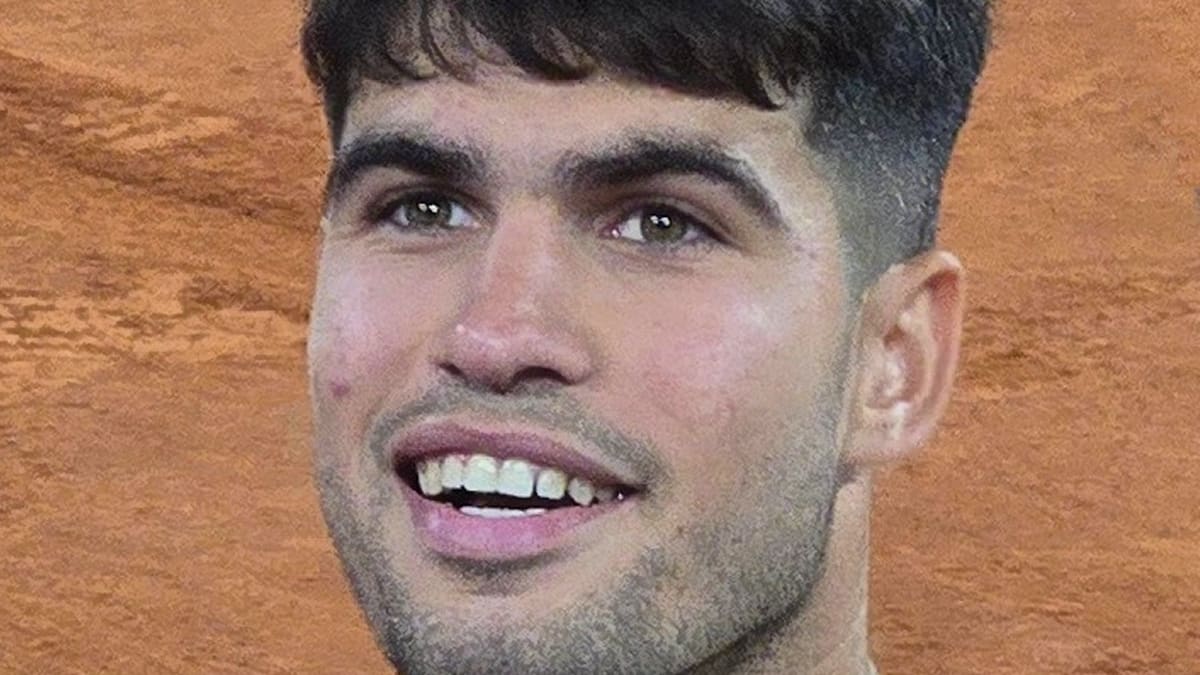
The Barcelona Wrist Calamity and Kinetic Interruption
The human wrist is an incredibly complex anatomical structure, a delicate cluster of eight carpal bones acting as the biomechanical fulcrum for the modern topspin-heavy game. For Carlos Alcaraz, whose violent, whip-like forehand generates some of the most extreme rotational force on the ATP Tour, this delicate junction became a site of profound kinetic failure during the Barcelona Open earlier this year. The severe right wrist injury suffered on the Catalan clay did not merely halt his season; it disrupted the somatic rhythm of a player who treats the baseline as a canvas for high-speed, improvisational art.
Watching Alcaraz play when healthy is to witness a kinetic spectacle where physical limits seem temporarily suspended, but a wrist injury forces an existential reckoning with the limits of the human body. The recovery process from such a tendon or ligamentous setback is notoriously non-linear, requiring an agonizingly slow rebuilding of neuromuscular confidence. It is a quiet, frustrating struggle that occurs far from the roaring crowds, defined by physical therapy sessions and the slow, tentative gripping of a racquet.
This physical setback has forced a major strategic pivot in the young Spaniard's calendar, highlighting how fragile a professional athlete's career trajectory truly is. Rather than rushing back and risking permanent structural damage to his primary weapon, Alcaraz has chosen a path of disciplined restraint, recognizing that a premature return could compromise the long-term integrity of his kinetic chain.
Listen to the Second Serve Podcast
Get our daily AI-synthesized audio briefings and match reviews on the go.
The SW19 Withdrawal Decision and Grass-Court Absence
The direct consequence of this prolonged recuperation is now official: Alcaraz has formally decided not to defend his Wimbledon runner-up status in 2026. This decision represents a massive vacuum at the All England Club, where his explosive movement and creative shot-making have previously electrified the lawns of southwest London. For fans and analysts alike, his absence from the grass-court major is a stark reminder of how quickly the competitive landscape can be reshaped by physical misfortune, as we discussed in our coverage of four ATP players doubtful for Wimbledon injuries.
The timing of this withdrawal is particularly poignant given that Wimbledon has announced a substantial 20% increase in its total prize money for the 2026 tournament. This financial windfall will be distributed among the competitors, yet Alcaraz will watch from the sidelines, unable to chase either the historic trophy or the enhanced financial rewards. The decision to skip the prestigious grass-court event underscores the severity of the wrist injury, proving that no amount of financial incentive can override the cold, biological reality of incomplete healing.
Grass-court tennis demands an exceptionally low center of gravity and sudden, jarring directional shifts that put immense stress on a player's joints and wrists, particularly during low slice receptions. Without a fully functioning right wrist to absorb these heavy, skidding balls, attempting to compete on the slick lawns of SW19 would have been an exercise in futility, if not outright athletic self-destruction. By prioritizing his long-term physical health over immediate glory, Alcaraz is playing the long game in an era where burnout and chronic injury are all too common.
The Monte-Carlo Clay Breakthrough and Sinner's Ascendancy
While Alcaraz manages his physical rehabilitation, his chief rival, Jannik Sinner, has been busy consolidating his own position at the absolute pinnacle of the sport. Their last on-court encounter took place at the Monte-Carlo Masters final, a match that served as a fascinating study in contrasting styles and shifting match momentum. Sinner ultimately defeated Alcaraz in that clay-court showcase, capturing his very first clay-court Masters 1000 title in a performance that demonstrated his massive technical evolution on the red dirt.
Sinner's victory in the Principality was not merely a triumph of raw power, but a masterclass in slide-and-strike movement and relentless depth. Historically viewed as a hard-court specialist whose flat, penetrating groundstrokes were less suited to the high-bouncing clay, Sinner adjusted his court positioning and spin rates to neutralize Alcaraz's heavy topspin. This tactical shift allowed him to dominate the baseline exchanges, proving that his game is now fully adaptable to any surface the tour offers.
The rivalry between these two young titans is rapidly becoming the defining narrative of modern men's tennis, a kinetic chess match where each player constantly forces the other to innovate. Sinner's Monte-Carlo breakthrough signaled a changing of the guard on clay, exposing minor vulnerabilities in Alcaraz's defensive patterns before the Spaniard's wrist ultimately gave way. With Alcaraz sidelined, the burden of carrying the tour's competitive peak falls squarely on Sinner's shoulders, though the Italian faces his own off-court complications.
The Flushing Meadows Revenue Rebellion and Mixed Doubles Friction
Beyond the baseline, the sport is currently grappling with systemic tensions regarding player compensation and tournament revenue distribution. Jannik Sinner has thrust himself into the center of this political maelstrom by threatening to boycott the US Open mixed doubles event later this year. This dramatic stance stems from an ongoing, highly contentious revenue-sharing dispute between the players and tournament organizers, a conflict that highlights the growing labor consciousness among the game's elite.
The crux of the dispute lies in how auxiliary events, such as mixed doubles, are valued and compensated relative to the massive commercial success of the singles draws. Sinner's threat to withdraw from the mixed doubles field is a calculated leverage play, designed to force the United States Tennis Association (USTA) to reconsider its financial allocations, as we previously documented in our analysis of how Sinner and doubles specialists threaten US Open boycott. It represents a rare moment of an elite singles superstar using his considerable star power to advocate for broader structural equity.
This friction highlights the delicate balance between tennis as a pure, kinetic art form and tennis as a multi-billion-dollar commercial enterprise. While fans tune in to witness the poetic geometry of baseline rallies, the underlying machinery of the sport is governed by contracts, television rights, and balance sheets. Sinner's willingness to engage in this political struggle, even as he enjoys the peak of his athletic powers, suggests that the next era of tennis will be defined as much by labor negotiations as by on-court triumphs.
What Carlos Alcaraz Plays With
Babolat Pure Aero 98
Babolat RPM Blast 1.30
Babolat VS Original (12-Pack)
Nike Vapor Pro 2
Analyze Carlos Alcaraz vs. Jannik Sinner
Predict tactical adjustments, momentum swings, and serve strategy options for this match-up using our AI simulator.
The Aces Tactical Panel
This report was curated and edited by Bhaskar Goel. Tactical analysis and technical insights were provided by our specialized panel of expert correspondents.
Julian Price
Senior Tactical Correspondent
Stuffy, pedantic British academic and historian specializing in match momentum and historical context.
Elena Cruz
Director of Analytical Research
Data scientist specializing in court surface physics and movement patterns.
Bhaskar
The Editor & Fan
Passionate tennis player and site editor bringing everyday amateur insights and relatable fan commentary.
Arthur Vance
Senior Existential Analyst
Deep, eccentric, and DFW-inspired. Models court metaphysics, kinetic beauty, and player psychology.
Leo Sterling
High-Performance Consultant
Hard-nosed ex-trainer from Melbourne with a no-nonsense view on tour fitness.
Related Reports


Quick Answers
Why is Carlos Alcaraz skipping the 2026 Wimbledon tournament?+
Carlos Alcaraz is skipping Wimbledon in 2026 to continue his recovery from a severe right wrist injury suffered at the Barcelona Open earlier this year.
Why is Jannik Sinner threatening to boycott the US Open mixed doubles?+
Jannik Sinner is threatening a boycott due to an ongoing revenue-sharing dispute regarding player compensation for the mixed doubles event.
Who won the last match between Carlos Alcaraz and Jannik Sinner?+
Jannik Sinner defeated Carlos Alcaraz in their last meeting at the 2026 Monte-Carlo Masters final to claim his first clay-court Masters 1000 title.