The physics of modern professional tennis are, at their core, an exercise in violent deceleration. To watch a player change direction on a slick, low-bouncing lawn is to witness a kinetic miracle—or, increasingly, a physiological catastrophe. As the grass-court season intensifies, the physical toll of this brutal transition has manifested in a wave of high-profile withdrawals, casting a long shadow over the upcoming Championships at Wimbledon.
Listen to the Second Serve Podcast
Get our daily AI-synthesized audio briefings and match reviews on the go.
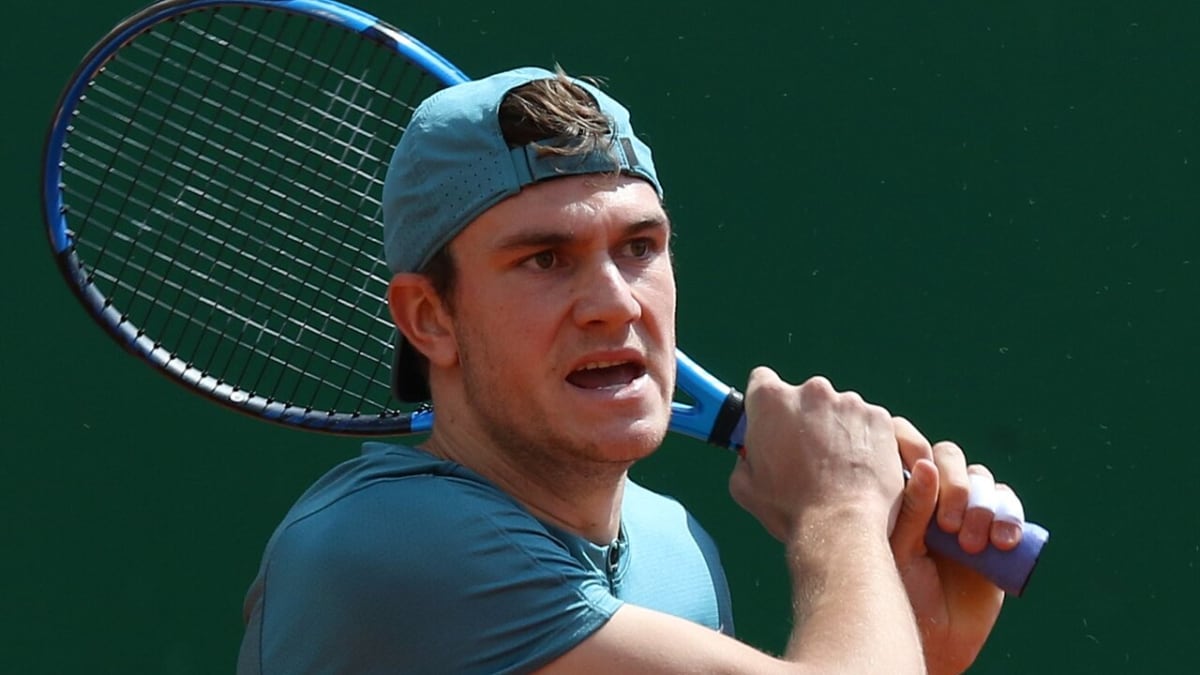
The Patellar Deterioration of Jack Draper
The sudden deceleration required on slick turf places an extraordinary eccentric load on the patellar tendon. For Jack Draper, who has not played competitive tennis since April due to a persistent knee injury, this biomechanical reality is particularly grim. His recent withdrawal from the HSBC Championships underscores the severity of an issue that refuses to yield to standard physical therapy, leaving his grass-court preparation severely compromised.
When we analyze Draper's kinetic chain, his massive 6'4" frame generates immense torque, but that same mass becomes a liability when transitioning to low-skidding lawns. As we detailed in our previous analysis of Draper's knee issues, the British lefty relies heavily on a deep knee bend to get under low-skidding balls. Without a fully functioning knee joint, his ability to explode upward into his heavy topspin forehand is fundamentally compromised.
The statistical reality of his season is stark; according to the official ATP rankings, Draper's lack of match play has stalled his professional trajectory. The knee joint, specifically the patellar tendon, acts as the primary shock absorber during the split-step. For a player who relies on explosive first-strike tennis, any micro-tear or inflammation in this region translates to a catastrophic loss of serve speed and lateral movement.
The Achilles Kinetic Chain of Holger Rune
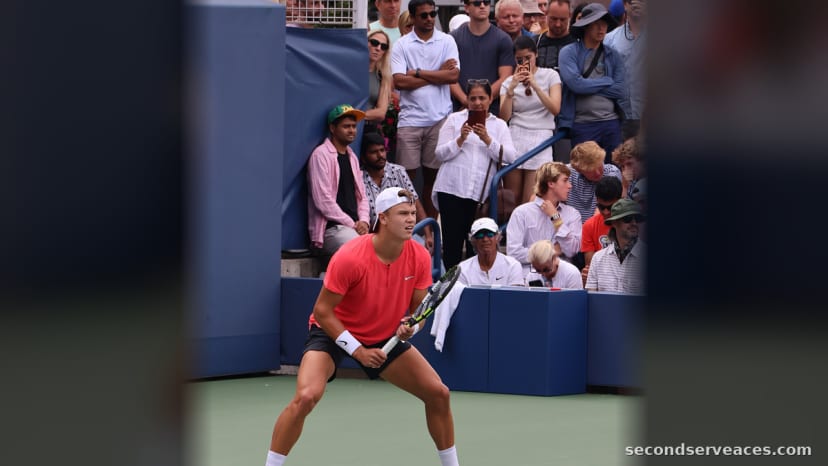
Holger Rune's physical predicament centers on the Achilles tendon, an anatomical structure that is the very engine of a tennis player's vertical explosion. Having suffered an Achilles injury late last year, Rune's attempts to construct a durable physical baseline have been repeatedly thwarted. His recent decision to withdraw from upcoming grass tournaments highlights the high-stakes risk calculation occurring within his coaching camp.
The biomechanics of grass-court movement demand instant, twitch-fiber acceleration. Unlike clay, where a slide can dissipate kinetic energy over a longer duration, grass requires immediate traction, putting maximum tension on the Achilles tendon during the first step. Rune's aggressive baseline positioning, which requires him to constantly cut off angles, relies on this explosive first step to maintain court position.
By pulling out of the preparatory grass events, Rune is prioritizing long-term physiological preservation over short-term match rhythm. According to details on his career trajectory on Wikipedia, the young Dane's hyper-athletic style is highly dependent on absolute physical trust. Without that trust, the subtle hesitation before a split-step can be the difference between a clean winner and a forced error.
The Clay Court Toll on Arthur Fils
Arthur Fils presents another case of physiological overload, with his body showing signs of rebellion after a punishing spring swing. The French powerhouse made the difficult decision to withdraw from the French Open, a home Grand Slam that surely represented a massive emotional target. This was quickly followed by his withdrawal from the HSBC Championships, confirming that his physical deficits are not easily remedied.
Fils' game is built on sheer, unadulterated physicality—massive hip rotation, heavy topspin, and explosive lateral coverage. When a player of his muscular profile experiences a breakdown, it is often a result of systemic fatigue affecting the deceleration muscles. On grass, where the ball stays low and the bounce is inherently irregular, the constant adjustment of the center of gravity puts immense strain on the lower back and core.
The decision to bypass both clay and grass warm-ups suggests a holistic rehabilitation strategy. For Fils, rushing back to compete at the All England Club without adequate physical preparation could risk a more chronic injury. His absence from the tour leaves a noticeable void, depriving fans of one of the most physically dynamic prospects in the modern game.
The Quiet Absence of Lorenzo Musetti
Lorenzo Musetti has been conspicuously absent from the competitive arena since his campaign at the Italian Open. The Italian's elegant, single-handed backhand is an aesthetic marvel, but it requires exquisite timing and a perfectly stable physical foundation. Musetti's prolonged absence suggests a quiet struggle to regain the physical equilibrium necessary to compete at the highest level.
The single-handed backhand is particularly sensitive to kinetic disruptions; any weakness in the core or shoulder prevents the clean, whip-like release required to handle low-skidding grass court bounces. On grass, Musetti must bend lower and strike earlier, a physical demand that amplifies any lingering muscular imbalances from his clay-court campaign.
As the tour converges on the grass courts, Musetti's lack of competitive matches since Rome places him at a severe tactical disadvantage. The transition from the slow, high-bouncing clay of the Foro Italico to the rapid, low lawns requires a complete recalibration of footwork and swing preparation. Without match play, this adjustment must be made under the unforgiving spotlight of a major tournament.
What Carlos Alcaraz Plays With
Babolat Pure Aero 98
Babolat RPM Blast 1.30
Babolat VS Original (12-Pack)
Nike Vapor Pro 2
Analyze Jack Draper vs. Andy Murray
Predict tactical adjustments, momentum swings, and serve strategy options for this match-up using our AI simulator.
The Aces Tactical Panel
This report was curated and edited by Bhaskar Goel. Tactical analysis and technical insights were provided by our specialized panel of expert correspondents.
Julian Price
Senior Tactical Correspondent
Stuffy, pedantic British academic and historian specializing in match momentum and historical context.
Elena Cruz
Director of Analytical Research
Data scientist specializing in court surface physics and movement patterns.
Bhaskar
The Editor & Fan
Passionate tennis player and site editor bringing everyday amateur insights and relatable fan commentary.
Arthur Vance
Senior Existential Analyst
Deep, eccentric, and DFW-inspired. Models court metaphysics, kinetic beauty, and player psychology.
Leo Sterling
High-Performance Consultant
Hard-nosed ex-trainer from Melbourne with a no-nonsense view on tour fitness.
Related Reports


Quick Answers
Why did Jack Draper withdraw from the HSBC Championships?+
Jack Draper withdrew due to an ongoing knee injury that has kept him out of competitive match play since April.
What injury is Holger Rune recovering from ahead of the grass-court season?+
Holger Rune is attempting to return from an Achilles injury suffered last year, which has forced him to withdraw from upcoming grass tournaments.
Which tournaments did Arthur Fils withdraw from recently?+
Arthur Fils withdrew from both the French Open and the upcoming HSBC Championships due to physical struggles.