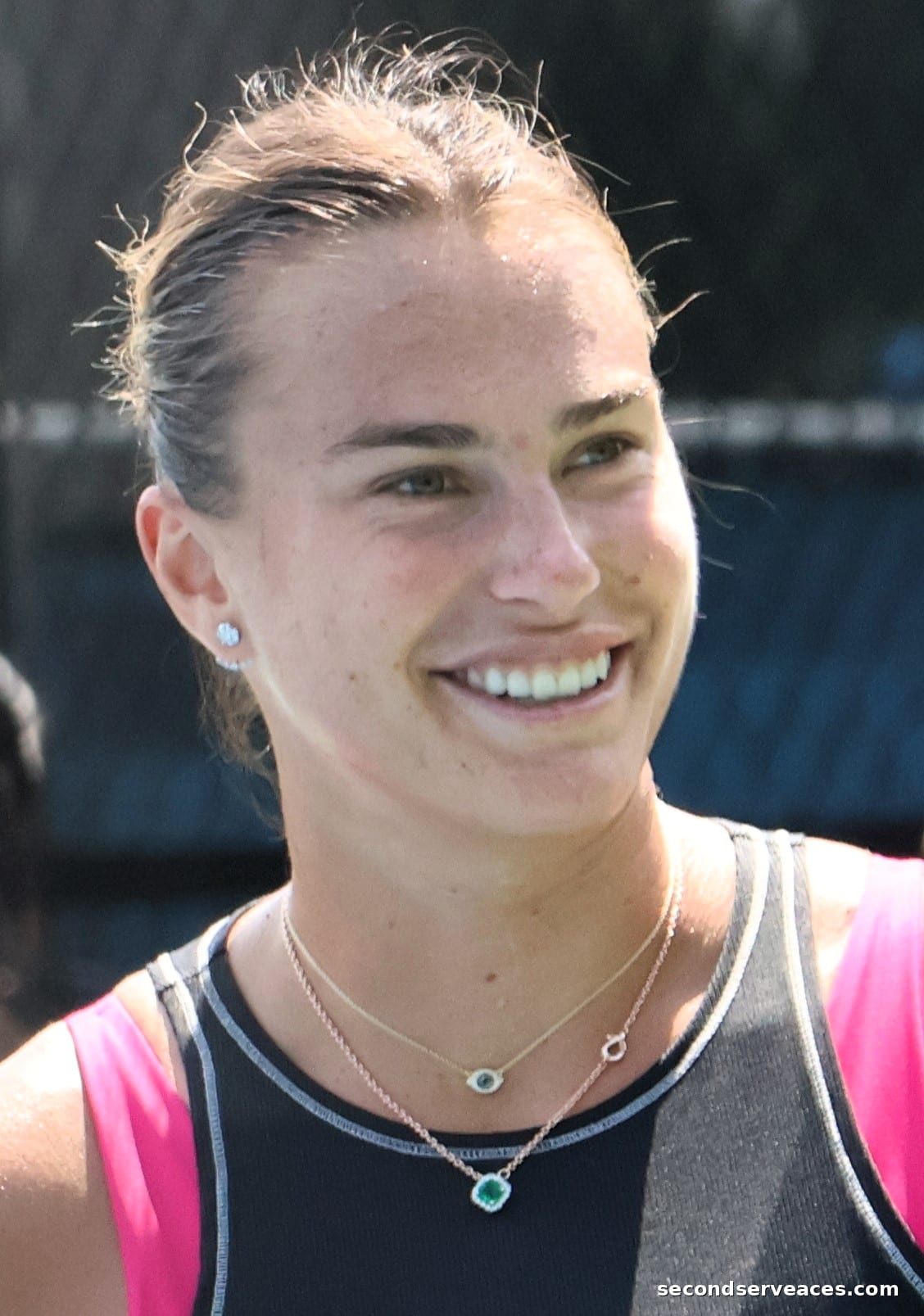
The scoreline reads as a brutal 3-6, 7-5, 6-0 defeat, but the numbers tell only half the story of Aryna Sabalenka’s shocking French Open quarterfinal collapse against world No. 25 Diana Shnaider. Up 6-3, 5-3, the world No. 1 looked poised to cruise into the semifinals, commanding the court with her signature heavy topspin and aggressive baseline positioning. Instead, a sudden technical and emotional unraveling saw her drop ten consecutive games, sending her out of Paris in spectacular fashion.
Listen to the Second Serve Podcast
Get our daily AI-synthesized audio briefings and match reviews on the go.
From a technical standpoint, Sabalenka’s collapse began with a subtle shift in her contact point. As Shnaider began to vary the depth of her groundstrokes, Sabalenka found herself caught in no-man's-land, unable to establish her footing on the slippery Parisian clay. The aggressive court positioning that had served her so well in the opening matches of Roland-Garros evaporated, replaced by a defensive posture that played directly into Shnaider’s hands.
Shnaider, showing tactical maturity well beyond her years, refused to be bullied from the baseline. She consistently targeted Sabalenka’s forehand wing with high-looping, heavy topspin angles, dragging the top seed out of her comfort zone and forcing her to hit on the stretch. This lateral movement took a heavy toll on Sabalenka, whose footwork grew increasingly sluggish as the second set slipped away.
The Tactical Deconstruction of a Set-and-a-Break Advantage
When analyzing how a world-class player squanders a 6-3, 5-3 lead, one must look closely at the service numbers. Sabalenka’s first-serve percentage plummeted from a comfortable 68% in the first set to a dismal 41% in the decider. Without the protection of her powerful first delivery, she was forced to defend second serves against an opponent who was stepping inside the baseline to dictate play.
Shnaider’s return strategy was brilliant in its simplicity. Rather than trying to match Sabalenka's raw pace, the young challenger focused on depth, landing her returns deep in the center of the court to jam Sabalenka’s hip. This prevented Sabalenka from uncoiling her hips and generating the clean rotation needed to control the rally, leading to a cascade of unforced errors from the back of the court.
As the match momentum swung, Sabalenka’s shot selection deteriorated. She began forcing low-percentage winners from defensive positions, repeatedly finding the net or missing the tramlines. Shnaider simply stood her ground, absorbing the pace and redirecting the ball with exceptional precision to seal the final set without dropping a single game.
Psychological Fractures in the Deep Dark Hole
The technical breakdown on the court was closely mirrored by an emotional crisis off it. In her post-match press conference, Sabalenka did not mince words, offering a raw and unsettling glimpse into her mental state. "I just want to quit tennis right now," Sabalenka admitted, confessing that she had fallen into a "deep, dark hole" as the match slipped away from her grasp.
This level of vulnerability is rare among top-tier athletes, but it underscores the immense psychological pressure of maintaining a top ranking on the WTA Tour. When a player's primary weapons fail them under pressure, the court can feel like the loneliest place in the world. Sabalenka's inability to arrest her slide during the second and third sets points to a deeper crisis of confidence.
We have witnessed similar struggles in the past. In our previous coverage of Sabalenka's deepening slump, we noted how her emotional volatility can disrupt her physical mechanics. When the frustration mounts, her ball toss becomes erratic, her shoulder turn gets restricted, and the timing that makes her groundstrokes so devastating completely disappears.
The Post-Match Apology and the Gauff Controversy
The fallout from Sabalenka's exit extended beyond her own performance. In the immediate aftermath of her defeat, Sabalenka made comments suggesting that Coco Gauff had only won their previous high-profile matchup due to Sabalenka's own self-inflicted mistakes, rather than Gauff's tactical execution. The remarks quickly drew criticism from fans and analysts alike, who viewed them as dismissive of Gauff's defensive brilliance.
Recognizing the negative impact of her words, Sabalenka took steps to mend fences. She sent a direct apology message to Gauff, seeking to clarify her comments and ensure there was no lingering animosity between two of the sport's biggest stars. This gesture of sportsmanship was crucial for maintaining locker-room harmony as the tour prepares for the grass-court season.
Gauff has always handled these situations with grace, but the incident highlights the intense, pressure-cooker environment of elite tennis. Every quote is dissected, and every emotional reaction is scrutinized, leaving very little margin for error both on and off the court.
Recalibrating the Baseline Strategy for Berlin and Wimbledon
Now, Sabalenka must turn her attention to the grass courts. Speaking via video link from Berlin, where she is already training, she expressed a desire to put the clay-court disappointment behind her. The transition from the slow, high-bouncing clay of Paris to the slick, low-bouncing lawns of Wimbledon requires an entirely different physical and tactical blueprint.
On grass, Sabalenka’s movement must change dramatically. She can no longer rely on sliding into her shots; instead, she must stay low, bend her knees, and take the ball on the rise. Her court positioning will need to be hyper-aggressive, cutting off angles early to deny her opponents the time to exploit her lateral movement.
If she can find her rhythm on the grass, her powerful serve and flat groundstrokes remain tailor-made for the surface. The devastating loss to Shnaider could serve as a vital turning point, forcing Sabalenka to address the technical and emotional vulnerabilities that have threatened to derail her season.
What Aryna Sabalenka Plays With
Wilson Blade 98 v9 (16x19)
Luxilon ALU Power 125
Wilson Pro Overgrip (12-Pack)
Analyze Aryna Sabalenka vs. Diana Shnaider
Predict tactical adjustments, momentum swings, and serve strategy options for this match-up using our AI simulator.
The Aces Tactical Panel
This report was curated and edited by Bhaskar Goel. Tactical analysis and technical insights were provided by our specialized panel of expert correspondents.
Julian Price
Senior Tactical Correspondent
Stuffy, pedantic British academic and historian specializing in match momentum and historical context.
Elena Cruz
Director of Analytical Research
Data scientist specializing in court surface physics and movement patterns.
Bhaskar
The Editor & Fan
Passionate tennis player and site editor bringing everyday amateur insights and relatable fan commentary.
Arthur Vance
Senior Existential Analyst
Deep, eccentric, and DFW-inspired. Models court metaphysics, kinetic beauty, and player psychology.
Leo Sterling
High-Performance Consultant
Hard-nosed ex-trainer from Melbourne with a no-nonsense view on tour fitness.
Related Reports

Quick Answers
What was the final score of Aryna Sabalenka's match against Diana Shnaider at the French Open?+
Diana Shnaider defeated Aryna Sabalenka 3-6, 7-5, 6-0 in the quarterfinals of the French Open.
What did Aryna Sabalenka say in her post-match press conference?+
Sabalenka admitted to falling into a "deep, dark hole" and stated, "I just want to quit tennis right now" after her collapse.
Why did Aryna Sabalenka apologize to Coco Gauff?+
Sabalenka sent an apology to Gauff after making post-match comments suggesting Gauff only won their previous matchup due to Sabalenka's own errors.