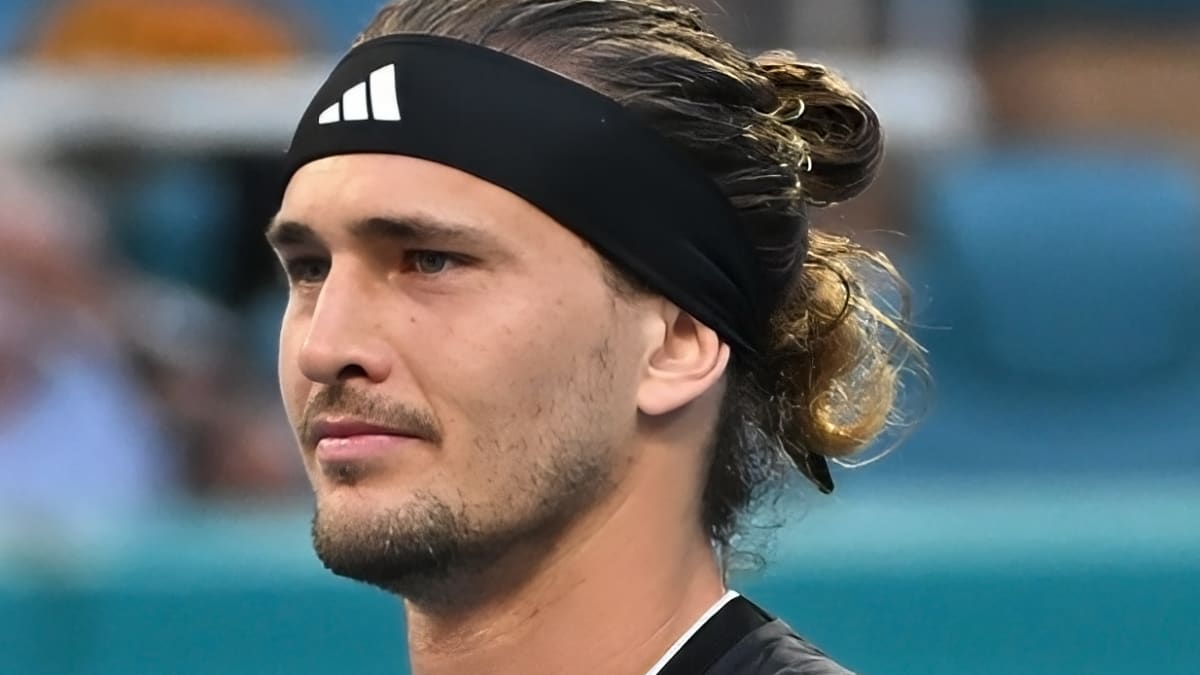
Following a monumental breakthrough on the red clay of Paris, Alexander Zverev has solidified his status among the sport's elite. By capturing his maiden Grand Slam title at Roland-Garros, the German has answered long-standing questions about his ability to perform under maximum pressure. However, far from viewing this milestone as a career-capping achievement, Zverev is treating it as the foundation for an extended reign at the top of the men's game.
The Clay-Court Engine and Red-Clay Durability Metrics
Zverev's triumph in Paris was a masterclass in physical durability and technical optimization. Utilizing his standard Head Gravity Pro setup, which features an 18x20 string pattern for extreme control, the German was able to neutralize heavy topspin and dictate baseline rallies. The high swingweight of his frame provides massive plow-through, a spec that proved vital in maintaining deep court positioning throughout the grueling two-week tournament.
At 6'6", Zverev's lateral movement sliding efficiency on clay is highly optimized. His ability to slide into his backhand side, decelerate, and recover back to the center of the court minimizes overall energy expenditure. This mechanical efficiency allowed him to outlast opponents in extended, high-intensity baseline exchanges without experiencing a drop-off in first-serve velocity.
Listen to the Second Serve Podcast
Get our daily AI-synthesized audio briefings and match reviews on the go.
This physical durability has long been a hallmark of his career, as detailed in his Wikipedia profile. By securing his first-ever Major on the Parisian clay, Zverev has proven that his heavy-duty baseline style is built to withstand the physical punishment of seven best-of-five-set matches, silencing critics who doubted his Grand Slam endurance.
A Ten-Year Blueprint for the German's Heavy-Duty Frame
In a recent interview with the German media outlet BILD, the 29-year-old Zverev made the striking revelation that he intends to play professional tennis for another ten years. To sustain a high-performance career until age 39 requires a meticulous approach to physical preservation, especially for a player of his height. Typically, taller players experience accelerated wear and tear on their joints, particularly the knees and lower back.
To realize this decade-long blueprint, Zverev will likely need to refine his equipment and scheduling. Dropping his string tension slightly could offer easier depth and reduce the impact shock transmitted to his shoulder and elbow. Furthermore, optimizing his schedule to prioritize high-value tournaments will be essential to preventing physical burnout over the next ten seasons.
As we analyzed in our previous coverage of Zverev's clay-court mechanics, maintaining baseline consistency over a long career horizon depends heavily on service efficiency. If Zverev can maintain a high first-serve percentage, he can keep service games short, thereby reducing the physical toll on his body during the early rounds of major tournaments.
The Missing Apex in the ATP Rankings Equation
With a Grand Slam title finally in his trophy cabinet, Zverev has turned his focus to the only remaining milestone missing from his resume: reaching the pinnacle of the ATP rankings. Zverev explicitly stated that the World No. 1 ranking is his ultimate target, a goal that will require sustained dominance across multiple surfaces over a 52-week rolling period.
To accumulate the points necessary to challenge for the top spot, Zverev must translate his clay-court consistency to fast hard courts and grass. This requires a tactical shift toward more aggressive return positioning. Standing deep behind the baseline serves him well on slow clay, but on quicker surfaces, he must step up to take the ball early and shorten his swing path.
Transitioning from a defensive counter-puncher to an active first-strike player is the key to preserving his body and securing the necessary ranking points. If he can increase his break-point conversion rate on faster courts, he will put immense pressure on the rest of the tour, positioning himself as a legitimate threat to claim the top ranking.
Low-Bounce Grass Court Liabilities and the All England Club Barrier
The immediate challenge to Zverev's World No. 1 ambitions lies on the grass courts of the All England Club. Historically, grass has been Zverev's weakest surface, with the German never advancing beyond the fourth round at Wimbledon. The low, skidding bounce of the ball on grass conflicts with his long, looping groundstroke preparation, forcing him to bend lower and hit from uncomfortable contact zones.
On slick grass courts, lateral traction is vastly different from clay. Zverev cannot rely on his signature sliding recovery; instead, he must employ short, choppy adjustment steps to maintain balance. This movement shift places heavy strain on his adductors and lower back, occasionally leading to tentative movement and a drop in baseline depth.
However, the upcoming grass-court swing presents a unique opportunity. With Carlos Alcaraz pulling out of the tournament, and rivals like Arthur Fils, Lorenzo Musetti, and Taylor Fritz dealing with physical setbacks, the draw is highly volatile. As we noted in our report on the Wimbledon fitness race, the player who adapts their footwork quickest to the low-bounce grass surface will be primed to capitalize on these high-stakes opportunities.
What Alexander Zverev Plays With
Head Gravity Pro
Head Hawk Touch 1.25
Head Prime Tour (12-Pack)
Adidas Ubersonic 4
Analyze Alexander Zverev vs. Carlos Alcaraz
Predict tactical adjustments, momentum swings, and serve strategy options for this match-up using our AI simulator.
The Aces Tactical Panel
This report was curated and edited by Bhaskar Goel. Tactical analysis and technical insights were provided by our specialized panel of expert correspondents.
Julian Price
Senior Tactical Correspondent
Stuffy, pedantic British academic and historian specializing in match momentum and historical context.
Elena Cruz
Director of Analytical Research
Data scientist specializing in court surface physics and movement patterns.
Bhaskar
The Editor & Fan
Passionate tennis player and site editor bringing everyday amateur insights and relatable fan commentary.
Arthur Vance
Senior Existential Analyst
Deep, eccentric, and DFW-inspired. Models court metaphysics, kinetic beauty, and player psychology.
Leo Sterling
High-Performance Consultant
Hard-nosed ex-trainer from Melbourne with a no-nonsense view on tour fitness.
Related Reports

Quick Answers
How long does Alexander Zverev plan to play professional tennis?+
In an interview with German outlet BILD, Alexander Zverev revealed that he plans to continue playing professional tennis for another ten years.
What is the only major career goal Alexander Zverev has not yet achieved?+
Alexander Zverev stated that reaching the World No. 1 ranking is the only remaining goal he has yet to achieve in his professional tennis career.
What is Alexander Zverev's best career result at Wimbledon?+
Alexander Zverev has never advanced beyond the fourth round at the All England Club (Wimbledon).