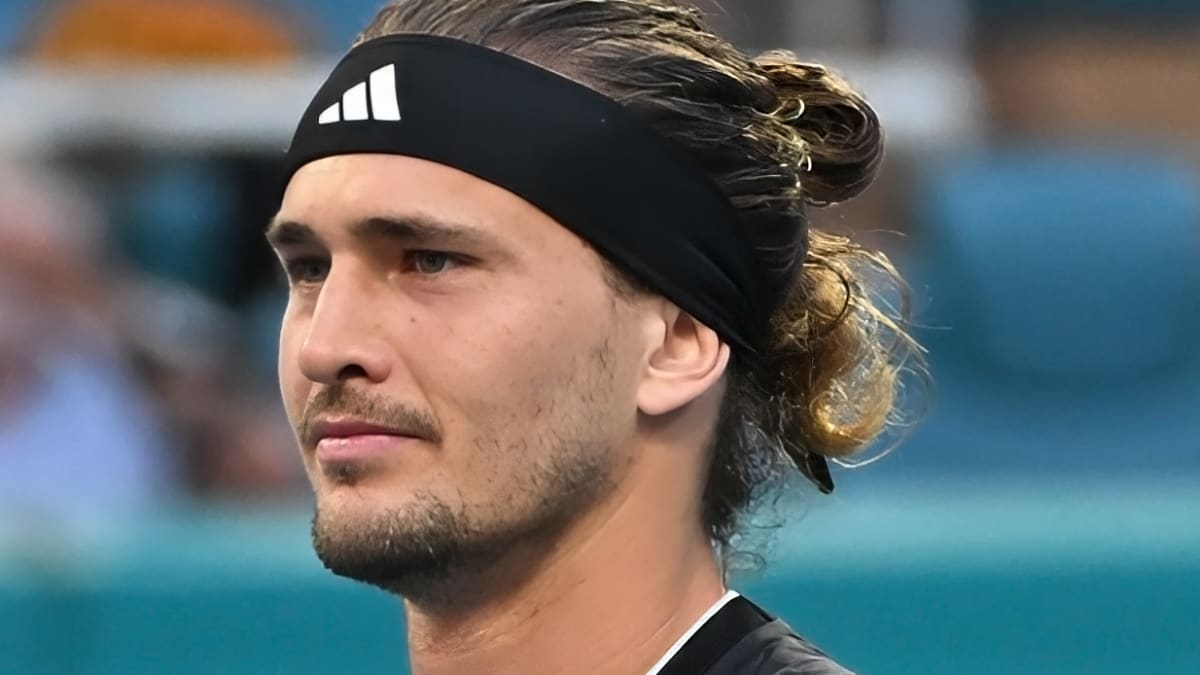
Alexander Zverev finally captured his maiden Grand Slam title at the 2026 French Open, dismantling the tactical defenses of Italy's Flavio Cobolli in a grueling five-set final on the red clay of Paris. From a technical standpoint, Zverev’s deep court positioning and heavy, looping topspin off the backhand wing kept Cobolli pinned behind the baseline, neutralizing the Italian's aggressive inside-out forehand. It was a masterclass in clay-court patience, but the victory has done little to quiet the complex, off-court narrative that continues to define the German's career.
The Five-Set Clay Court Breakthrough
On the red clay of Roland-Garros, Zverev's deep return position proved to be the tactical anchor of his championship performance. By standing nearly four meters behind the baseline to receive Cobolli's kick serves, Zverev bought himself the necessary time to take massive, aggressive cuts at the ball, forcing the Italian into defensive lateral movement. Cobolli attempted to counter by using drop shots, but Zverev’s forward court coverage and technical precision at the net repeatedly snuffed out those attempts.
As the match stretched into a deciding fifth set, Zverev's physical conditioning and first-serve percentage saved him during critical break points. He adjusted his ball toss slightly forward, generating flatter trajectories that prevented Cobolli from establishing any rhythm on the return. It was a display of pure competitive discipline, showing a level of tactical maturity that Zverev has often lacked in previous late-stage Grand Slam matches.
Listen to the Second Serve Podcast
Get our daily AI-synthesized audio briefings and match reviews on the go.
This long-awaited milestone comes at a time of immense transition on the men's tour. While other top contenders faltered early in the tournament—much like the dramatic exit we analyzed when Jannik Sinner collapsed in Paris—Zverev held his nerve to finally capture the Coupe des Mousquetaires, asserting his status as one of the premier clay-court players of his generation.
The Berlin Court Settlement and Public Fallout
Despite the historic nature of Zverev's victory, the celebration was immediately overshadowed by his highly publicized legal history. In June 2024, Zverev's high-profile domestic violence trial in Berlin was settled out of court. The German player agreed to pay a €200,000 fine to resolve the case while maintaining his innocence, a legal resolution that did not provide the clean public vindication he had hoped for.
The sports world's reaction to his triumph in Paris highlighted this ongoing division. Most notably, the prestigious French sports daily L'Equipe completely omitted Zverev's victory from its front page the following morning. Instead, the publication ran a prominent editorial focusing strictly on his past abuse allegations, illustrating the deep reluctance of the international media to separate his athletic achievements from his personal controversies.
This cold reception underscores the unique challenge Zverev faces moving forward on the ATP Tour. While his name is now etched on the Musketeers' Cup, his standing with global tennis fans, sponsors, and journalists remains deeply fractured, proving that on-court excellence is not always enough to rebuild a damaged public persona.
The Becker-Petkovic Podcast Prescription
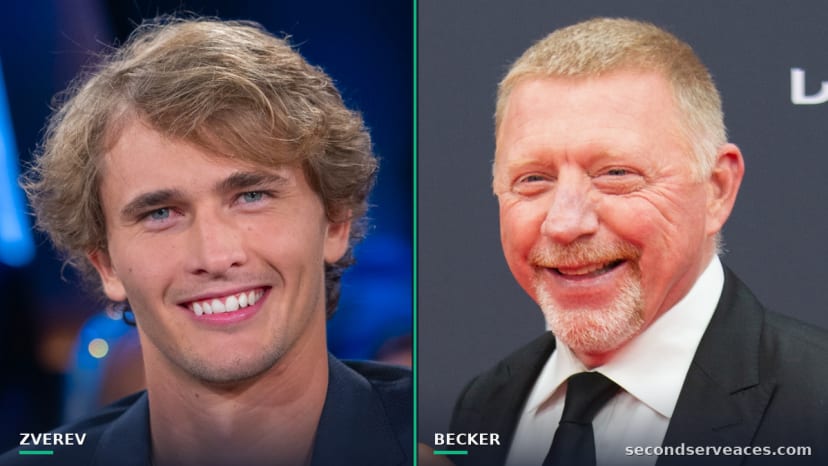
In the wake of the French Open final, German tennis legend Boris Becker used his platform on the 'Becker Petkovic' podcast to offer blunt, strategic advice to his compatriot. Becker urged Alexander Zverev to abandon his guarded, defensive posture and actively open up about his personal life and off-court persona to gain public love and respect.
Becker, who navigated his own share of intense public scrutiny and legal battles throughout his career, argued that Zverev's current public relations strategy is failing to connect with fans. According to Becker, tennis audiences need to see vulnerability and authenticity to move past the headlines, rather than just witnessing a sterile, highly focused athlete on the court.
Implementing Becker's advice will require a massive psychological pivot for Zverev. For years, the German has built protective walls, often reacting defensively to difficult questions in press conferences. Shifting toward transparency is a risky endeavor, but Becker insists it is the only viable method for Zverev to transform his public image from a controversial figure into a respected champion.
The Halle Transition on the Grass Courts
There is little time for Zverev to dwell on the media storm in Paris as the tour shifts away from the slow red clay. His next scheduled tournament is the Terra Wortmann Open in Halle, Germany, beginning on June 15. The transition to grass courts demands an entirely different set of physical mechanics and tactical adjustments.
On the low-bouncing lawns of Halle, Zverev must shorten his backswings and adjust his footwork to stay lower to the ground. His deep clay-court positioning will no longer be viable; he must stand closer to the baseline to take the ball on the rise and prevent opponents from dictating play with flat, skidding groundstrokes. His formidable first serve will be his greatest asset, but his movement and transition game will be thoroughly tested.
Playing on home soil always intensifies the spotlight, and the German media will undoubtedly press Zverev on Becker's comments. How he handles the press room and the tactical adjustments on the grass will offer the first real glimpse into how his maiden Grand Slam title has altered his mental approach to the sport.
What Alexander Zverev Plays With
Head Gravity Pro
Head Hawk Touch 1.25
Head Prime Tour (12-Pack)
Adidas Ubersonic 4
Analyze Alexander Zverev vs. Flavio Cobolli
Predict tactical adjustments, momentum swings, and serve strategy options for this match-up using our AI simulator.
The Aces Tactical Panel
This report was curated and edited by Bhaskar Goel. Tactical analysis and technical insights were provided by our specialized panel of expert correspondents.
Julian Price
Senior Tactical Correspondent
Stuffy, pedantic British academic and historian specializing in match momentum and historical context.
Elena Cruz
Director of Analytical Research
Data scientist specializing in court surface physics and movement patterns.
Bhaskar
The Editor & Fan
Passionate tennis player and site editor bringing everyday amateur insights and relatable fan commentary.
Arthur Vance
Senior Existential Analyst
Deep, eccentric, and DFW-inspired. Models court metaphysics, kinetic beauty, and player psychology.
Leo Sterling
High-Performance Consultant
Hard-nosed ex-trainer from Melbourne with a no-nonsense view on tour fitness.
Related Reports

Quick Answers
Who did Alexander Zverev defeat to win the 2026 French Open?+
Alexander Zverev defeated Italy's Flavio Cobolli in a grueling five-set final to claim his first Grand Slam title.
What advice did Boris Becker give to Alexander Zverev after his French Open victory?+
On the 'Becker Petkovic' podcast, Boris Becker advised Zverev to open up about his personal life and off-court persona to build a deeper connection and gain public respect.
Where is Alexander Zverev scheduled to play next after Roland Garros?+
Alexander Zverev is scheduled to transition to the grass courts at the Terra Wortmann Open in Halle, Germany, starting on June 15.