The Wrist and the Weight of the Internazionali BNL d'Italia
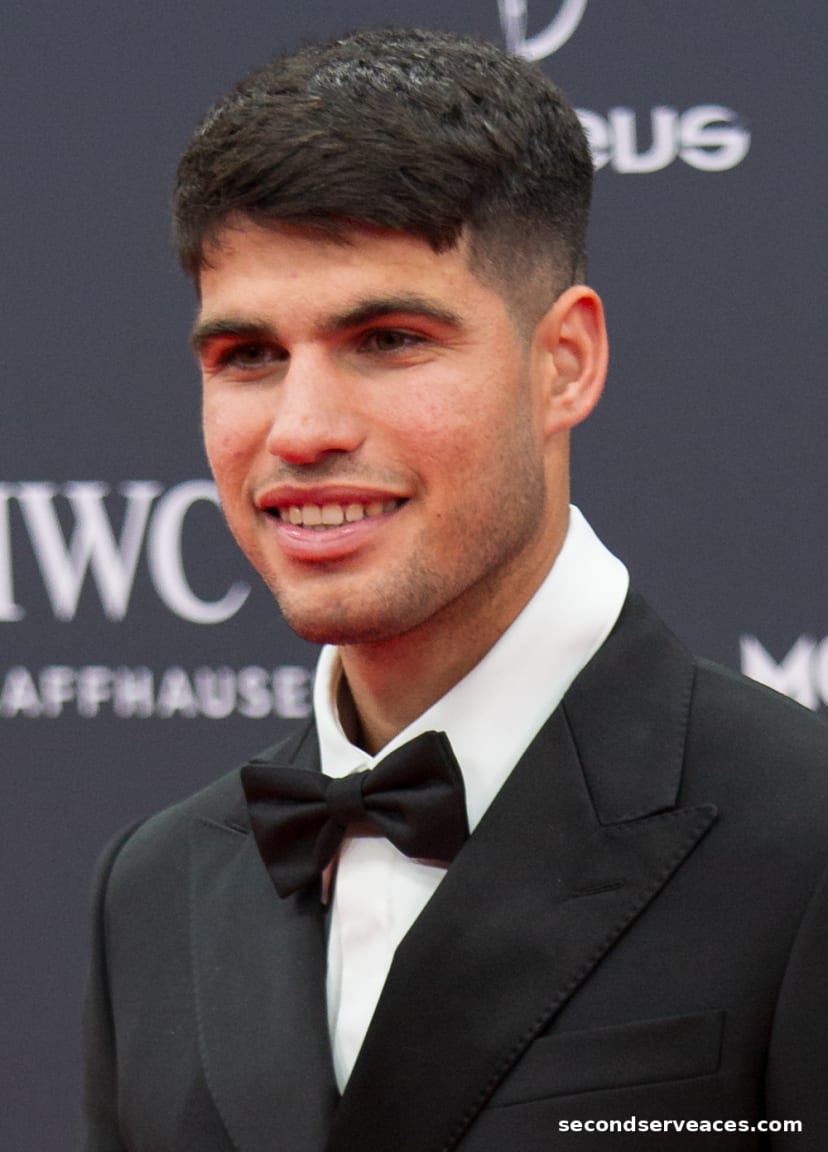
There is a specific, quiet agony in the withdrawal of a player whose game is defined by kinetic joy. Carlos Alcaraz, whose baseline physics usually involve a violent, heavy-topspin erasure of his opponent’s geometry, will be absent from the red clay of the Foro Italico. The wrist injury is not merely a medical footnote; it is a disruption of the fundamental rhythm that Alcaraz forces upon the slow, gritty surface of Rome, where the ball sits up just enough to be punished, provided one’s levers are functioning at peak efficiency.
Listen to the Second Serve Podcast
Get our daily AI-synthesized audio briefings and match reviews on the go.
His absence pulls a thread from the tapestry of the event, leaving a vacuum where the tournament organizers had surely envisioned a spectacle of sheer velocity. The ATP circuit, which operates on the relentless cycle of Masters 1000 events, now forces the remaining field to recalibrate. Without the Spaniard’s distinct brand of high-octane pressure, the structural hierarchy of the draw flattens, opening avenues for players like Jannik Sinner or Alexander Zverev to assert their own, perhaps more methodical, dominance over the slow, granular surface.
The stakes of this withdrawal are quantified not just in the potential for points, but in the cold arithmetic of the prize pool. The 2026 Italian Open commands a staggering total prize purse of €8,235,540. The champion of this year’s installment stands to walk away with €1,007,165 and the critical 1,000 ranking points that dictate the seeding hierarchy for the remainder of the European spring.
The New Financial Arithmetic of the Baseline Elite
We are currently witnessing a fascinating, almost sedimentary shift in the accumulation of wealth at the summit of the sport. Carlos Alcaraz, in his meteoric ascent, has now tallied career earnings of $64,948,871. This figure is more than a mere vanity metric; it signifies that he has formally surpassed the career earnings of the venerable Andy Murray, who sits at $64,687,542. To see a player of Alcaraz's age move past such a titan of the game is to witness the acceleration of the sport’s economic trajectory.
Contrast this with the long-view stability of Novak Djokovic, whose career earnings hover around $193 million. These numbers describe a chasm, yes, but also a lineage. Djokovic represents the cumulative endurance of the game, while Alcaraz represents the volatile, high-speed inflation of the modern era. When a player like Alcaraz withdraws, he isn't just missing a tournament; he is temporarily stepping off a ledger that moves with terrifying speed.
The absence of the Spaniard forces us to reconsider the 'dark horse' dynamics of the field. Players like Alex de Minaur or Arthur Fils now find their odds of navigating the draw shifted by the missing presence of the tournament’s primary kinetic engine. The tournament, in its infinite technical complexity, continues, yet the financial stakes remain anchored to the performance of those who are currently, and literally, still in the arena.
The Physics of the Absence
The Foro Italico demands a specific type of sliding recovery and a high degree of patience on the second ball. When Alcaraz’s wrist denies him that violent, flicking forehand, the tournament loses its most aggressive proponent of the "short angle" strategy—a move that relies on the player’s ability to take the ball on the rise and punch it into the clay’s friction. Without that variable, the field becomes a study in endurance rather than eruption.
We look to established veterans and surging talents alike to fill the void. The court remains the same: a surface where the ball leaves the string with a heavy, deadened spin that demands intense physical labor to redirect. The pressure shifts to players capable of utilizing the court’s unique bounce to mitigate the incoming power of their peers. Without Alcaraz, the geometric options open up, and the tactical battle shifts from raw power to placement and deep, grinding rally tolerance.
One wonders how this break will impact his physical "reset" as he approaches the next chapter of the season. A wrist is the primary conduit of intent; when it fails, the player is left to contemplate the game from the sideline, a vantage point that is as grueling for the athlete as the match itself. The leaderboard, meanwhile, waits for no one, as the remaining contenders chase the €1,007,165 prize and the ascent up the ATP rankings.
What Carlos Alcaraz Plays With
Babolat Pure Aero 98
Babolat RPM Blast 1.30
Nike Vapor Pro 2
Analyze Carlos Alcaraz vs. Jannik Sinner
Predict tactical adjustments, momentum swings, and serve strategy options for this match-up using our AI simulator.
The Aces Tactical Panel
This report was curated and edited by Bhaskar Goel. Tactical analysis and technical insights were provided by our specialized panel of expert correspondents.
Julian Price
Senior Tactical Correspondent
Stuffy, pedantic British academic and historian specializing in match momentum and historical context.
Elena Cruz
Director of Analytical Research
Data scientist specializing in court surface physics and movement patterns.
Bhaskar
The Editor & Fan
Passionate tennis player and site editor bringing everyday amateur insights and relatable fan commentary.
Arthur Vance
Senior Existential Analyst
Deep, eccentric, and DFW-inspired. Models court metaphysics, kinetic beauty, and player psychology.
Leo Sterling
High-Performance Consultant
Hard-nosed ex-trainer from Melbourne with a no-nonsense view on tour fitness.