The Emergence of Akasha Urhobo on the Parisian Red
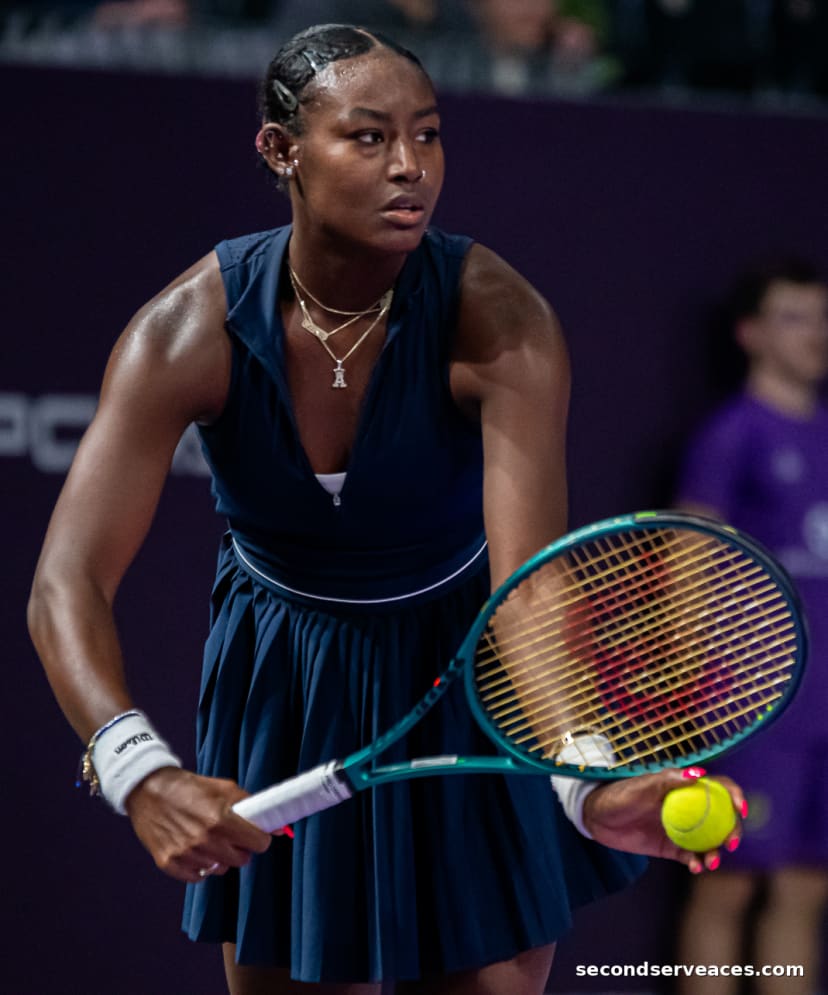
The announcement that Akasha Urhobo has been granted a wild card into the 2026 Roland Garros main draw is a massive vote of confidence for the 19-year-old. Currently ranked world No. 239, Urhobo now faces the ultimate pressure test on the sport’s most demanding surface. Clay requires a patience that young players rarely possess, and how she translates her baseline game to the terre battue will define her maiden appearance.
Listen to the Second Serve Podcast
Get our daily AI-synthesized audio briefings and match reviews on the go.
It is worth noting the pedigree of the tournament’s recent history, including the 2021 final between Barbora Krejcikova and Anastasia Pavlyuchenkova. Urhobo is not walking into a vacuum; she is stepping onto a stage that has historically rewarded tactical discipline over pure ball-striking power. Her ability to navigate the transition between defense and offense on a sliding surface will be the primary metric for her success.
While the ranking gap between Urhobo and the WTA elite is significant, wild cards at this level are designed to facilitate exposure. We are looking for technical indicators—such as the utilization of the kick serve to pull opponents off the court or the capacity to defend wide balls with high-margin topspin—that signal she is ready for the tour’s rigorous demands.
The Final Bow for Wawrinka and Monfils
Parallel to the youth movement is the somber acknowledgement that two French-speaking icons are approaching their final Roland Garros. Tournament organizers have confirmed that both Stan Wawrinka and Gael Monfils will receive wild cards for their final appearance at the tournament. This isn't just a ceremonial gesture; it is an acknowledgment of their massive contributions to the physicality of the men’s game.
Wawrinka, who secured the title in 2015 and finished as the runner-up in 2017, remains one of the most effective heavy-ball strikers in the history of the sport. His ability to anchor his position behind the baseline and uncork a one-handed backhand that penetrates the clay surface is a masterclass in weight transfer. Seeing him one last time on Court Philippe-Chatrier is a mandatory viewing for anyone who appreciates pure, unadulterated power.
Monfils, for his part, has long been the master of court coverage. His capacity to turn defense into a highlight-reel transition is unmatched. While these players are deep into their careers, their presence adds a tactical weight to the draw that serves as a benchmark for the younger generation, including players like Urhobo, to test themselves against.
Analyzing the Tactical Stakes of the 2026 Draw
With the tournament scheduled to begin on May 24, the preparation window is narrowing rapidly. For a young player like Urhobo, the priority will be on serve placement. On clay, the second serve is the most vulnerable shot in the arsenal. The ability to hide the ball toss and change depth will keep her opponents from stepping inside the baseline to dictate the point early in the rally.
In contrast, the veteran contingent of Wawrinka and Monfils brings a wealth of experience regarding match momentum. They understand how to shorten the duration of a match when energy levels dip and how to utilize the drop shot to draw opponents forward into uncomfortable positions. This technical variance is precisely what makes Roland Garros the most distinct Grand Slam on the calendar.
We are tracking these developments closely to see how the draw unfolds. As the ATP Tour and WTA Tour prepare for this transition period, the mix of legendary farewells and the uncertainty of breakout prospects creates a fascinating narrative dynamic. We will be watching the practice courts leading up to May 24 to gauge the readiness of the wild card recipients.
Why Veteran Presence Matters in Modern Tennis
The inclusion of stalwarts alongside debutantes is a staple of tennis tradition. When a player with the experience of a 2015 champion like Wawrinka hits the practice court with a burgeoning talent, the tactical exchange is invaluable. These are not merely farewell tours; they are final opportunities for the current field to challenge their own tactical acumen against established masters of the clay court surface.
The pressure on a wild card is immense, as the expectation is always to justify the tournament’s faith. Urhobo has a clear path: focus on the fundamentals of heavy topspin and court positioning, while ignoring the noise of the Parisian crowd. The tournament organizers are clearly looking for a balance between honoring the past and cultivating the future.
Ultimately, Roland Garros is a war of attrition. Whether it is a veteran looking to savor one last final run or a teenager making a first appearance, the requirements remain unchanged: hold the baseline, survive the serve, and win the pivotal break points. The 2026 edition promises to be a study in those very principles.
Analyze Akasha Urhobo vs. Kayla Day
Predict tactical adjustments, momentum swings, and serve strategy options for this match-up using our AI simulator.
The Aces Tactical Panel
This report was curated and edited by Bhaskar Goel. Tactical analysis and technical insights were provided by our specialized panel of expert correspondents.
Julian Price
Senior Tactical Correspondent
Stuffy, pedantic British academic and historian specializing in match momentum and historical context.
Elena Cruz
Director of Analytical Research
Data scientist specializing in court surface physics and movement patterns.
Bhaskar
The Editor & Fan
Passionate tennis player and site editor bringing everyday amateur insights and relatable fan commentary.
Arthur Vance
Senior Existential Analyst
Deep, eccentric, and DFW-inspired. Models court metaphysics, kinetic beauty, and player psychology.
Leo Sterling
High-Performance Consultant
Hard-nosed ex-trainer from Melbourne with a no-nonsense view on tour fitness.