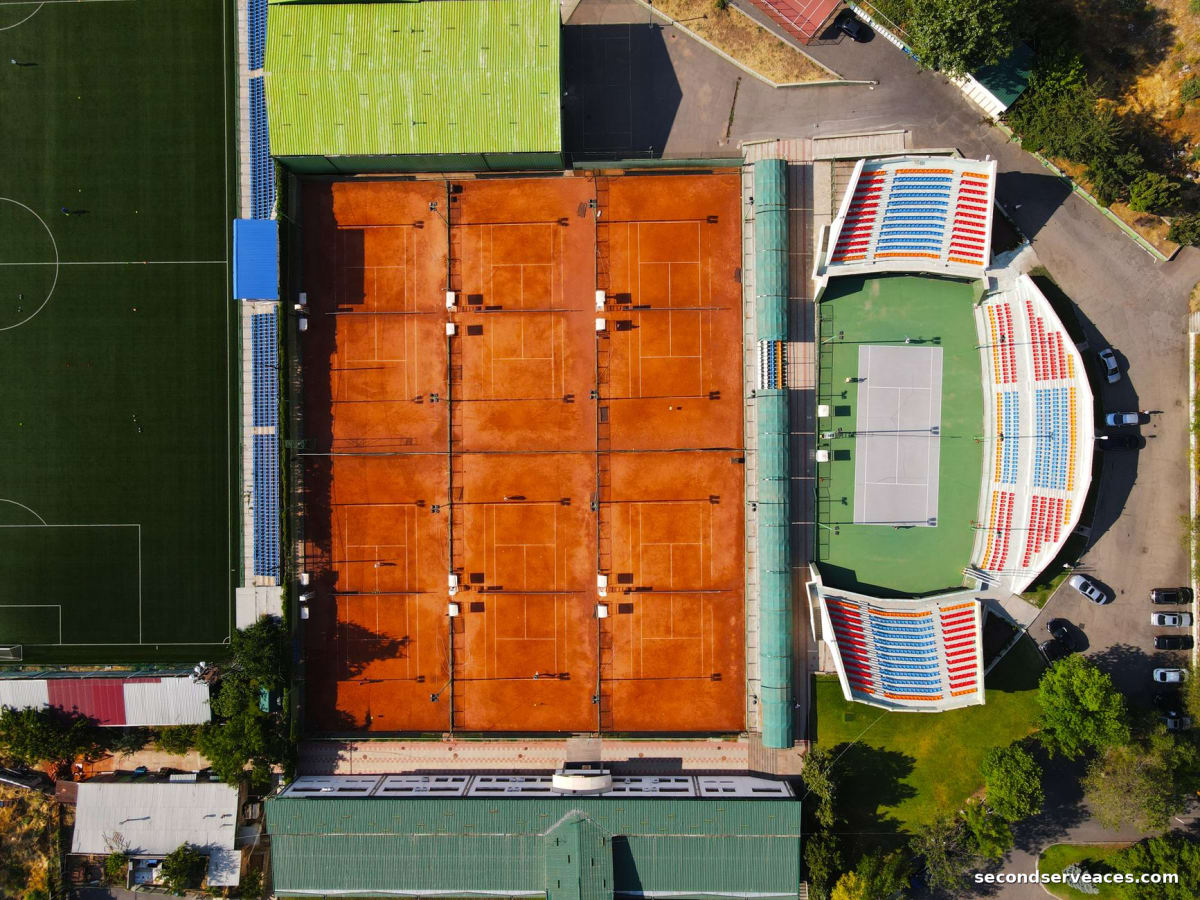
Wimbledon stands alone as the only Grand Slam tournament that does not host its qualifying rounds on-site. Instead, hundreds of players fighting for a spot in the main draw must compete miles away at a leased complex in Roehampton. To eliminate this logistical and competitive disparity, the All England Lawn Tennis Club (AELTC) has launched an ambitious infrastructure play on the former Wimbledon Park Golf Club site, targeting the construction of 38 new grass courts and a state-of-the-art 8,000-seat show court.
Listen to the Second Serve Podcast
Get our daily AI-synthesized audio briefings and match reviews on the go.
This massive undertaking is not just about adding more turf; it is about absolute control over court preparation and player transition. Moving qualifying on-site allows lower-ranked competitors to adjust to the exact micro-climate, soil compaction, and bounce dynamics of SW19. To incentivize local support, the proposed expansion also includes a new 27-acre public park, a lake boardwalk, children's playgrounds, and a multi-sport facility designed to integrate the local community directly into the tournament's footprint.
The Roehampton Disadvantage and the Push for 38 New Grass Courts
The legal path for the Wimbledon expansion remains highly contested. While the High Court ruled in favor of the AELTC in March regarding a critical statutory trust dispute, the "Save Wimbledon Park" opposition group is actively preparing to appeal the decision. Furthermore, a separate challenge focusing on planning permission is slated for the Court of Appeal in October, meaning the heavy machinery remains parked for the foreseeable future.
This long-drawn-out property battle mirrors the modern struggles faced by other tennis majors looking to modernize. The French Tennis Federation endured a grueling five-year court battle before finally opening the Simonne-Mathieu stadium in 2019, which successfully expanded the tight footprint of Roland Garros. For the AELTC, securing this expansion is the ultimate baseline defense to maintain its status as the premier grass-court event in the world.
Essential Matchday Add-Ons
Tournament-tested accessories and high-frequency consumables every competitive player keeps in their bag.
Tourna Grip Original Dry Feel Overgrip (10-Pack)
4.8 ★ (12,000+ reviews)
The gold standard for sweaty hands. Proprietary dry feel absorbs moisture better as play intensifies.
Luxilon ALU Power 125 Silver String Set
4.9 ★ (3,500+ reviews)
Unrivaled control and spin potential used by over 50% of the ATP Top 100 players.
Babolat Custom Damp Vibration Dampener (2-Pack)
4.7 ★ (4,200+ reviews)
Customizable dampening with removable central O-ring for fine-tuning court feedback and sound.
Penn Championship Extra Duty Tennis Balls (4-Can Pack)
4.7 ★ (8,900+ reviews)
Official ball of USTA League Tennis with extra-duty felt designed for abrasive hard courts.
Run Match-Point Simulations
Simulate high-pressure scenarios, score leverage points, and tactical responses for ATP and WTA players.
The Aces Tactical Panel
This report was curated and edited by Bhaskar Goel. Tactical analysis and technical insights were provided by our specialized panel of expert correspondents.
Julian Price
Senior Tactical Correspondent
Stuffy, pedantic British academic and historian specializing in match momentum and historical context.
Elena Cruz
Director of Analytical Research
Data scientist specializing in court surface physics and movement patterns.
Bhaskar
The Editor & Fan
Passionate tennis player and site editor bringing everyday amateur insights and relatable fan commentary.
Arthur Vance
Senior Existential Analyst
Deep, eccentric, and DFW-inspired. Models court metaphysics, kinetic beauty, and player psychology.
Leo Sterling
High-Performance Consultant
Hard-nosed ex-trainer from Melbourne with a no-nonsense view on tour fitness.
Related Reports



Quick Answers
Why does Wimbledon want to expand its grounds?+
The AELTC aims to build 38 new tennis courts and an 8,000-seat stadium so it can host its qualifying rounds on-site, which are currently held off-site in Roehampton.
What is the current legal status of the Wimbledon expansion?+
The High Court ruled in favor of the AELTC in March regarding a statutory trust dispute, but opponents plan to appeal, and a separate planning permission challenge is scheduled for October.
What community features are included in the proposed expansion plan?+
The proposed expansion includes a new 27-acre public park, a lake boardwalk, children's playgrounds, and a new multi-sport facility.