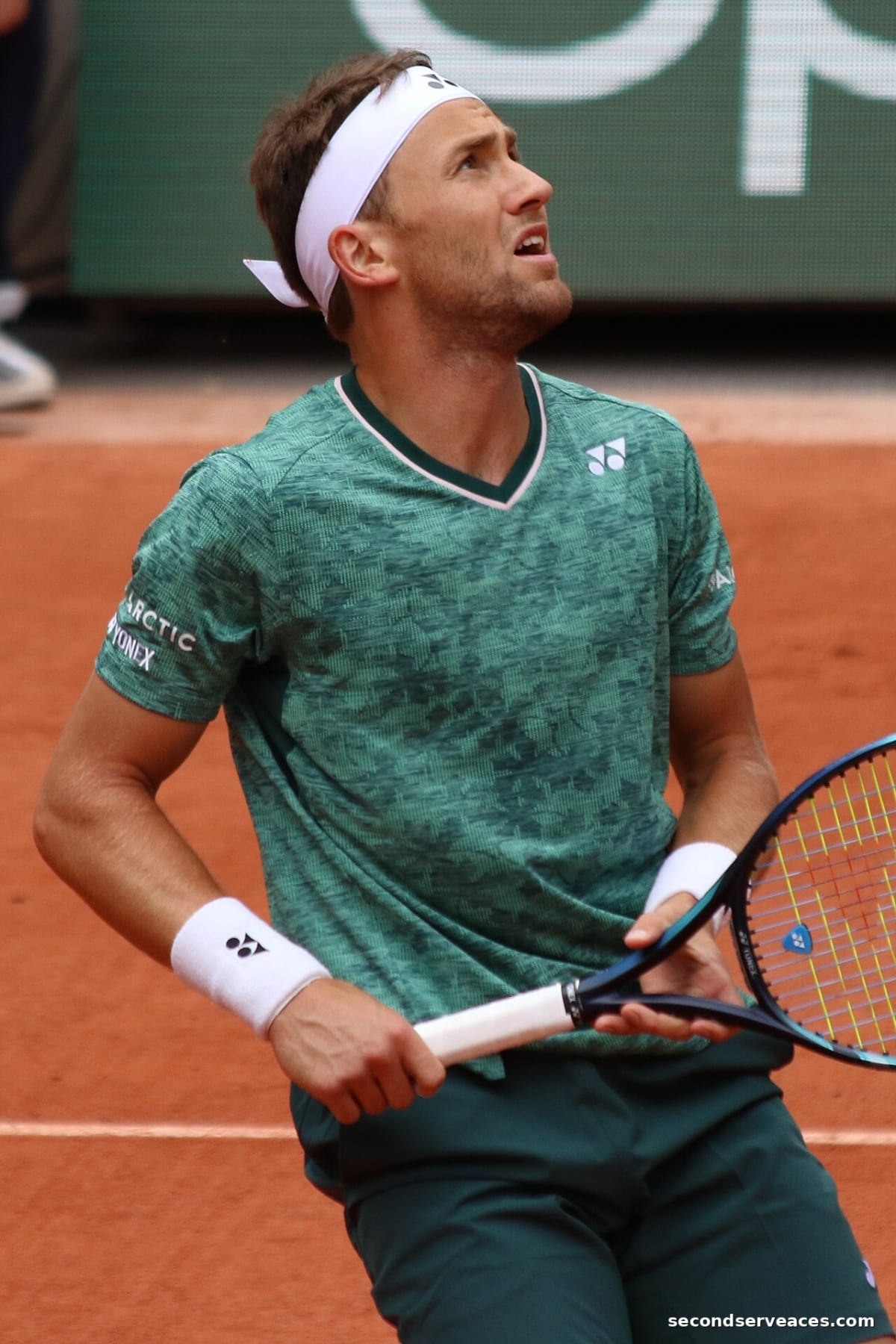
To watch professional tennis on grass is to witness a highly specialized form of kinetic problem-solving, a discipline where the laws of friction are suspended and the human body must reconcile itself with a surface that actively resists stability. As the gates of SW19 swing open for the first day of action, we are presented not merely with a series of athletic contests, but with profound existential questions written in chalk and green rye. The transition from the high-bouncing clay of Paris to the slick, low-skidding lawns of London requires a complete biomechanical reorganization—a task that is as much philosophical as it is physical.
Listen to the Second Serve Podcast
Get our daily AI-synthesized audio briefings and match reviews on the go.
The Frictionless Slide of Casper Ruud on the SW19 Lawns
At the center of the opening day's drama is the intriguing clash between Casper Ruud and Hubert Hurkacz. Ruud, whose game was forged on the gritty, predictable clay courts of Europe, has historically treated grass with a sort of polite suspicion. According to the official ATP Tour data, Ruud actually leads his head-to-head matchup against Hurkacz 3-1, a statistic that might suggest a level of dominance that does not quite exist in the spatial reality of a grass court. The critical detail here is that none of those four previous meetings occurred on grass, a surface that fundamentally alters the trajectory and velocity of Ruud’s heavy topspin.
Hurkacz, by contrast, moves on grass with the easy grace of a man who has made peace with the low bounce. His serve is not just a shot; it is an architectural event, a towering delivery that cuts through the damp London air with devastating efficiency. For Ruud to succeed, he must abandon his preferred deep return position—a luxury the fast-skidding grass will not afford him—and find a way to neutralize Hurkacz’s first-strike capability. It is a matchup of contrasting geometries: Ruud’s loopy, heavy-spinning arcs against Hurkacz’s linear, penetrating drives.
The tactical calculus of this match will depend almost entirely on how quickly Ruud can adjust his footwork. On grass, the split-step must be lower, the center of gravity more compressed, and the swing path shortened to accommodate the lack of time. As we noted in our previous analysis of the Wimbledon draw, the early rounds on grass are notoriously volatile for clay specialists, and Hurkacz’s comfort in these specific conditions makes him a formidable obstacle for the Norwegian on day one.
The Canadian Paradox of Denis Shapovalov and the Spanish Wall
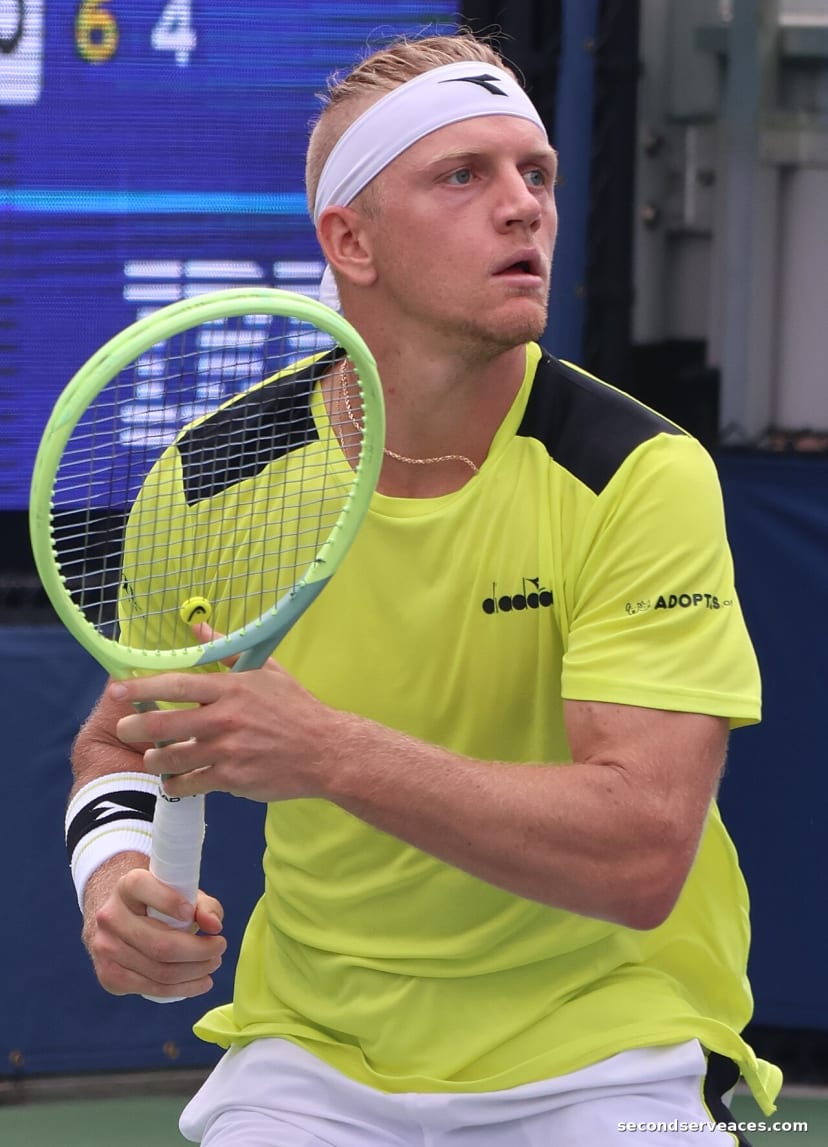
Elsewhere on the schedule, we find a fascinating stylistic collision between Denis Shapovalov and Pablo Carreno Busta. Shapovalov’s career has always been a high-wire act, a display of breathtaking shot-making tempered by sudden, catastrophic lapses in consistency. The 2026 season has been particularly unkind to the left-handed Canadian, who lost 13 of his first 22 matches before arriving in London. His game, which relies on explosive rhythm and aggressive court positioning, has looked disjointed, lacking the fluid kinetic chain that makes his one-handed backhand one of the most aesthetic shots in tennis.
Carreno Busta represents the ultimate competitive litmus test for a player searching for rhythm. The Spaniard is a human backboard, a player who does not beat himself and who forces his opponent to win every point multiple times. Interestingly, Carreno Busta holds a commanding 6-2 head-to-head record against Shapovalov prior to this meeting. However, like the Ruud-Hurkacz matchup, this statistic comes with a significant caveat: this will be their very first meeting on a grass court, a surface that traditionally favors Shapovalov’s attacking instincts over Carreno Busta’s defensive baseline positioning.
For Shapovalov to reverse his dismal 2026 trajectory, he must find a way to harness his power without succumbing to unforced errors. The slick grass of Wimbledon will naturally reward his slice and his ability to rush Carreno Busta’s backswing. If Shapovalov can maintain his composure during the inevitable extended rallies, his natural grass-court pedigree should allow him to dictate play, despite the daunting historical head-to-head record that favors the Spaniard.
Jenson Brooksby and the Search for Lost Rhythm in London
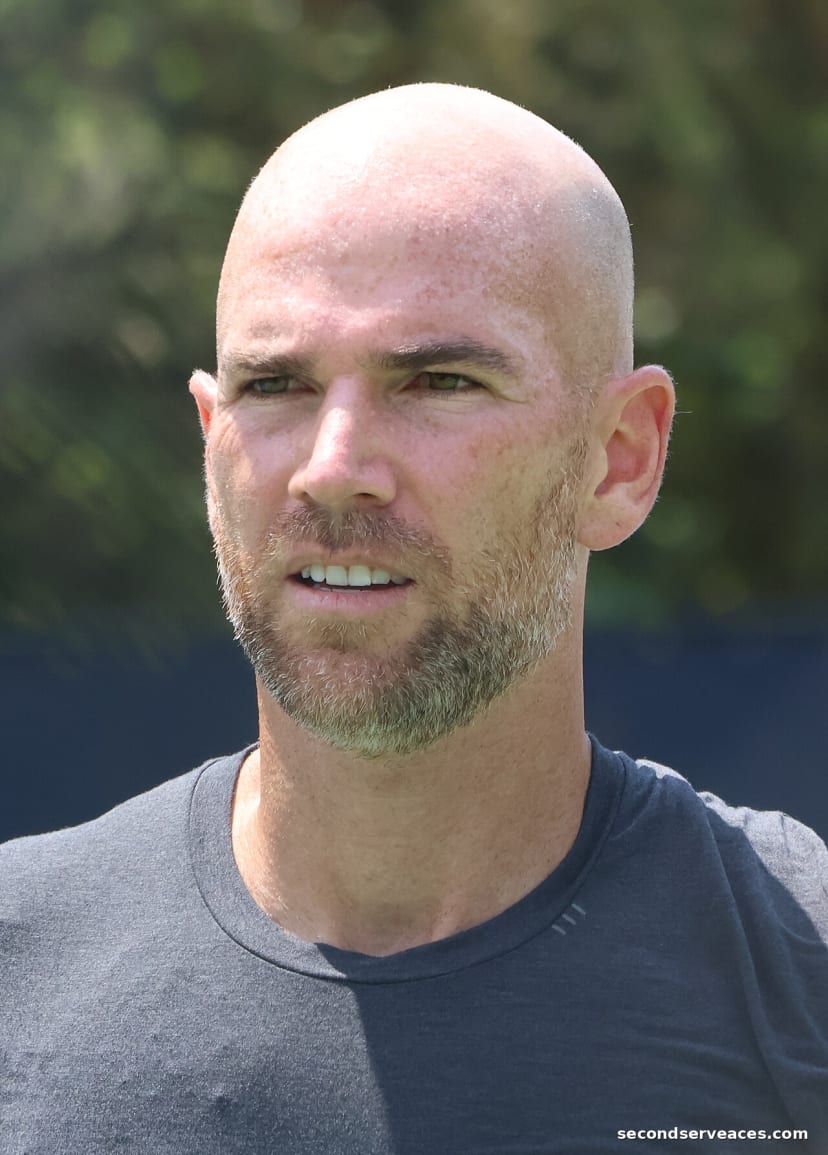
The return of Jenson Brooksby to the grand stage of SW19 offers another compelling narrative of athletic redemption. Brooksby’s tennis is an acquired taste—a bizarre, highly idiosyncratic collection of slices, two-handed backhand dropshots, and unorthodox court coverage that defies traditional coaching manuals. His 2026 campaign began in a state of near-total collapse, as he won just six of his first 22 matches this season, a slump that threatened to derail his standing on the tour.
However, the grass has a strange way of validating non-traditional styles, and Brooksby finally found a spark at the Queen's Club, where he snapped a grueling nine-match losing streak. His low-skidding shots and exceptional tactical intelligence are highly suited to the lawn, where opponents are forced to bend low to retrieve his off-pace deliveries. The physical toll of playing Brooksby on grass is immense; he robs you of your rhythm and forces you into awkward, biomechanically stressful positions.
In his opening-round match, Brooksby will look to employ his signature web of variation to disrupt his opponent's timing. On grass, where momentum can shift in the space of a single loose service game, Brooksby's ability to extend rallies and play high-percentage tennis in pressure moments becomes a massive asset. His recent resurgence suggests that the dark clouds of his early-season slump may finally be parting just in time for the fortnight in London.
Max Basing and the Dream of the British Wildcard
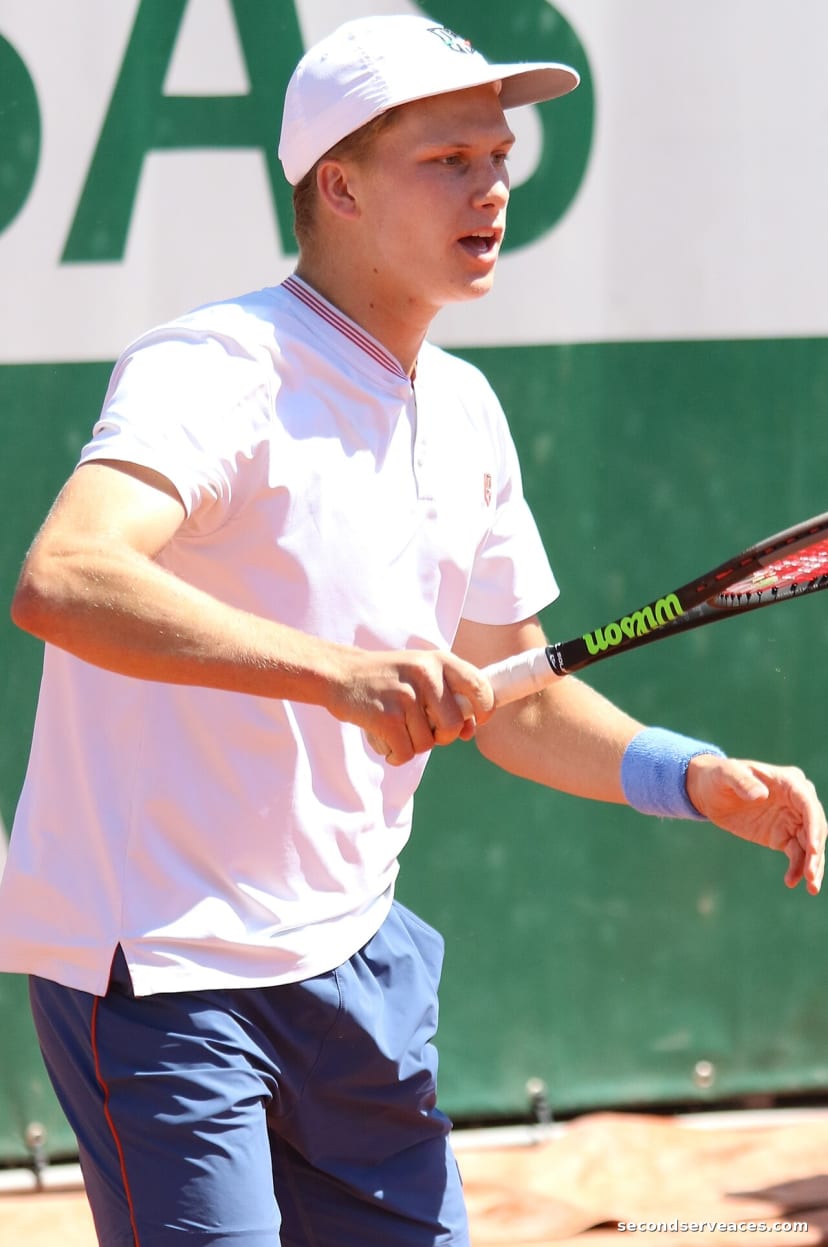
Finally, we must turn our attention to the romantic heart of the tournament: the local wildcard. Max Basing, a 23-year-old British player, is set to make his Grand Slam main draw debut after successfully navigating the grueling qualifying rounds. To qualify for Wimbledon is to earn entry into a private club of elite athletes, and for Basing, the achievement represents the culmination of years of quiet toil away from the bright lights of the main tour.
The transition from the quiet, tense atmosphere of the qualifying courts to the grand, echoing stadiums of the main draw is a psychological chasm that few young players find easy to cross. Basing will have the vociferous backing of the home crowd, an energy that can either elevate a player to new heights or crush them under the weight of expectation. His opponent will undoubtedly try to exploit Basing’s lack of five-set experience, testing his physical endurance and tactical resolve over the long haul.
Yet, there is a distinct advantage in being the qualifier on day one. Basing has already played and won multiple matches on the grass, adapting his movement and timing to the surface while his higher-ranked opponents are still adjusting to the unique bounce of the lawn. If he can overcome the initial wave of adrenaline and settle into his patterns, Basing has the game to make his debut a highly competitive affair, embodying the timeless spirit of the British grass-court season.
Essential Matchday Add-Ons
Tournament-tested accessories and high-frequency consumables every competitive player keeps in their bag.
Tourna Grip Original Dry Feel Overgrip (10-Pack)
4.8 ★ (12,000+ reviews)
The gold standard for sweaty hands. Proprietary dry feel absorbs moisture better as play intensifies.
Luxilon ALU Power 125 Silver String Set
4.9 ★ (3,500+ reviews)
Unrivaled control and spin potential used by over 50% of the ATP Top 100 players.
Babolat Custom Damp Vibration Dampener (2-Pack)
4.7 ★ (4,200+ reviews)
Customizable dampening with removable central O-ring for fine-tuning court feedback and sound.
Penn Championship Extra Duty Tennis Balls (4-Can Pack)
4.7 ★ (8,900+ reviews)
Official ball of USTA League Tennis with extra-duty felt designed for abrasive hard courts.
Analyze Casper Ruud vs. Hubert Hurkacz
Predict tactical adjustments, momentum swings, and serve strategy options for this match-up using our AI simulator.
The Aces Tactical Panel
This report was curated and edited by Bhaskar Goel. Tactical analysis and technical insights were provided by our specialized panel of expert correspondents.
Julian Price
Senior Tactical Correspondent
Stuffy, pedantic British academic and historian specializing in match momentum and historical context.
Elena Cruz
Director of Analytical Research
Data scientist specializing in court surface physics and movement patterns.
Bhaskar
The Editor & Fan
Passionate tennis player and site editor bringing everyday amateur insights and relatable fan commentary.
Arthur Vance
Senior Existential Analyst
Deep, eccentric, and DFW-inspired. Models court metaphysics, kinetic beauty, and player psychology.
Leo Sterling
High-Performance Consultant
Hard-nosed ex-trainer from Melbourne with a no-nonsense view on tour fitness.
Related Reports
Quick Answers
What is the head-to-head record between Casper Ruud and Hubert Hurkacz?+
Casper Ruud leads the head-to-head matchup 3-1, though none of their previous four meetings have occurred on grass.
How has Denis Shapovalov performed leading up to Wimbledon 2026?+
Denis Shapovalov has struggled significantly in the 2026 season, losing 13 of his first 22 matches prior to the tournament.
Who is Max Basing and how did he qualify for Wimbledon?+
Max Basing is a 23-year-old British player who successfully earned a spot in his first Grand Slam main draw through the qualifying rounds.