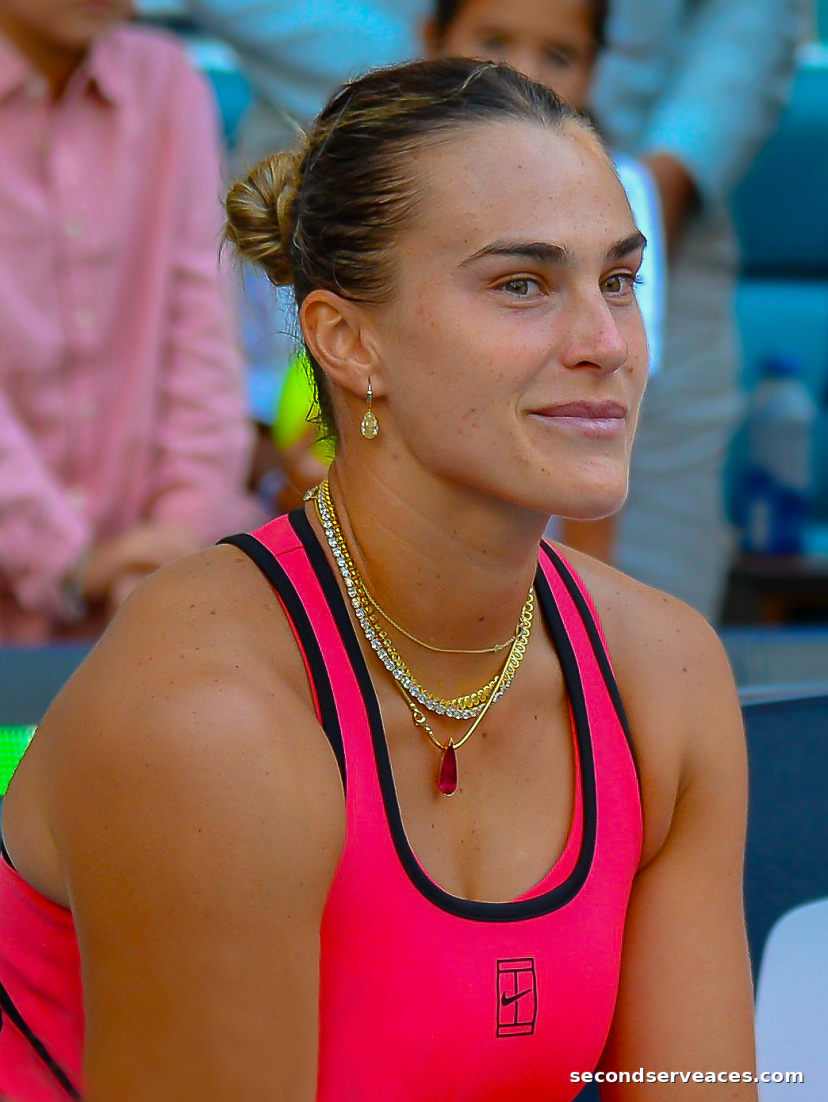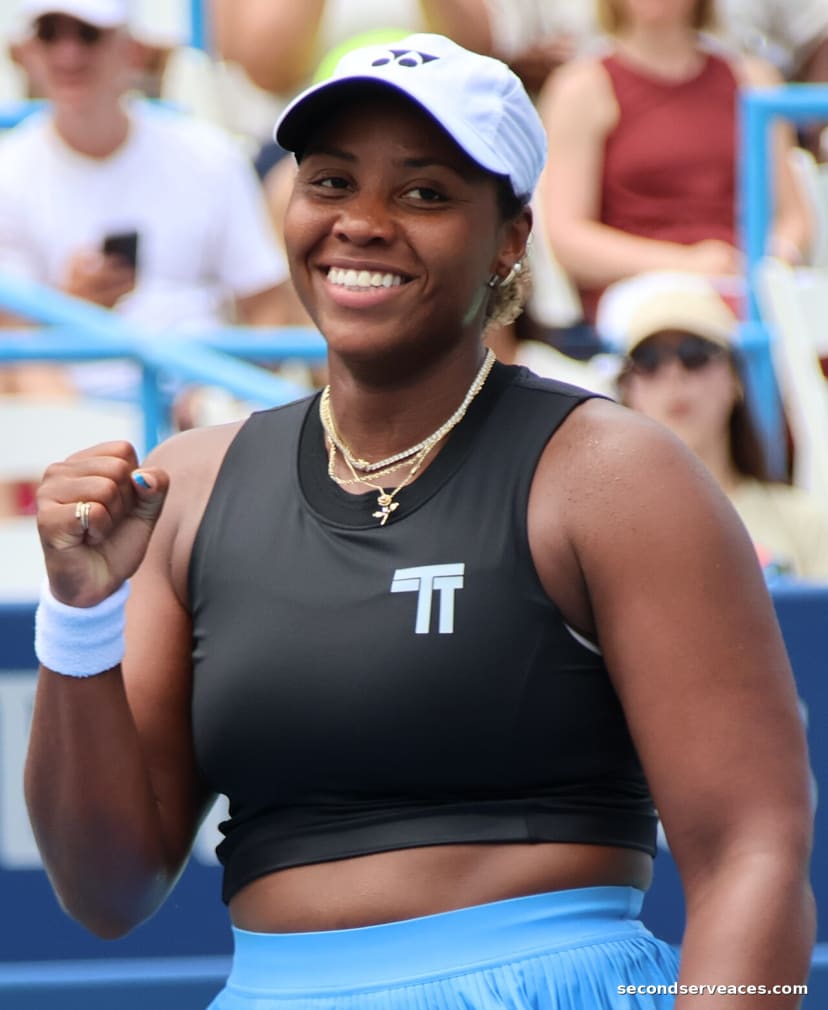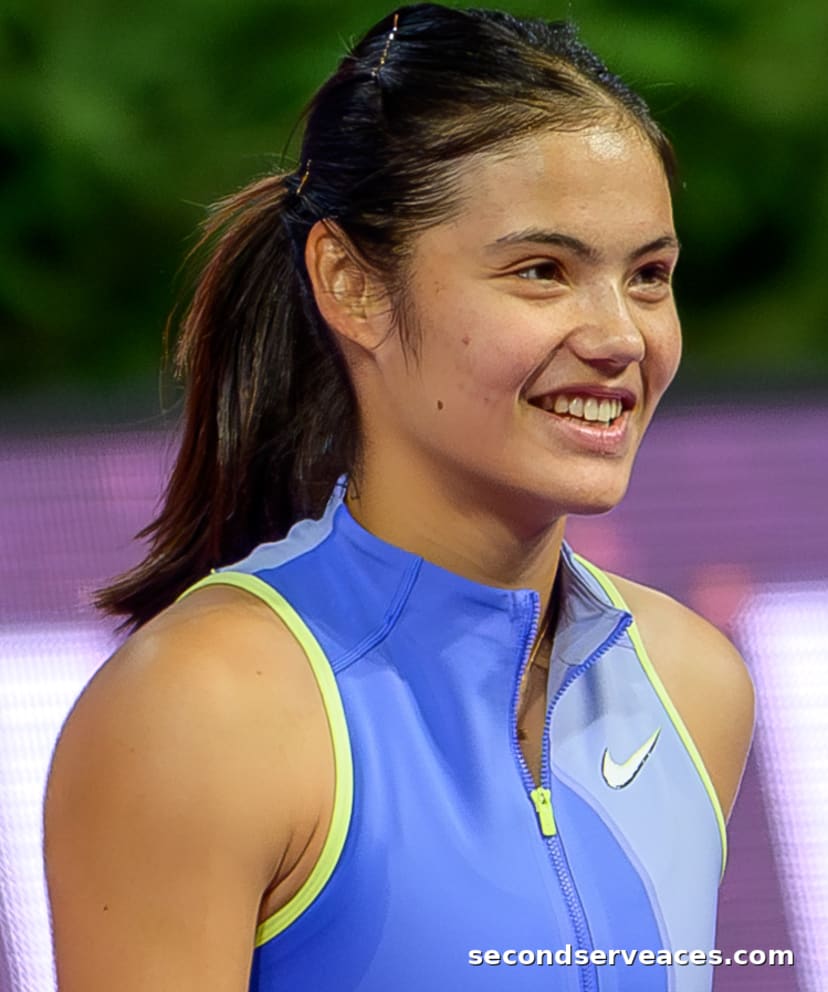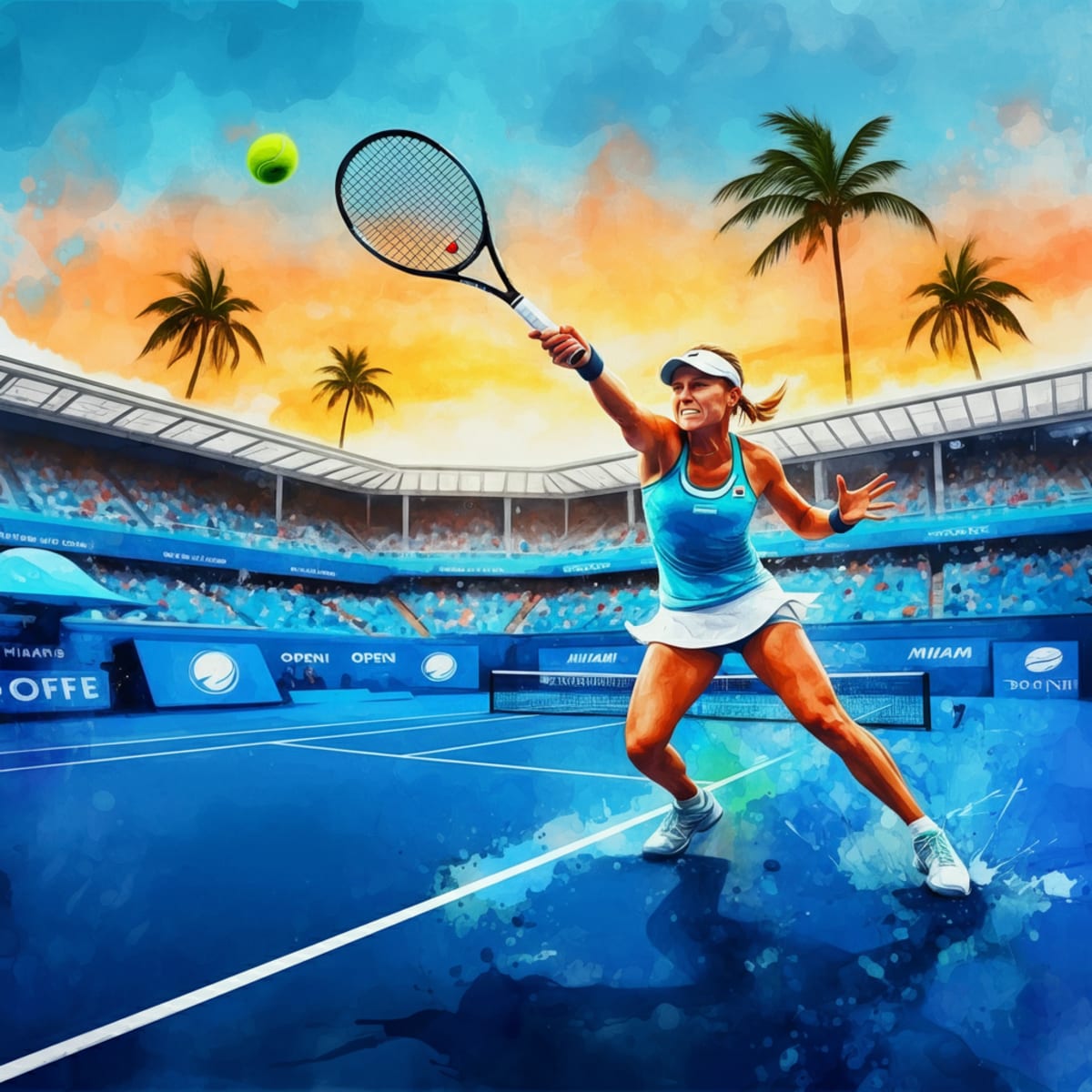
The air in South Florida during late March carries a specific, suffocating density—a barometric weight that makes the tennis ball feel heavier, fuzzier, and decidedly more reluctant to fly through the court. It is within this humid crucible that the Miami Open final unfolded, resolving in a three-set baseline battle where Aryna Sabalenka ultimately broke the kinetic resistance of Coco Gauff.
Listen to the Second Serve Podcast
Get our daily AI-synthesized audio briefings and match reviews on the go.
Sabalenka’s victory does not merely award her a crystalline trophy; it inscribes her name onto one of the sport's most exclusive historical monoliths. By conquering both Indian Wells and Miami back-to-back, the Belarusian has achieved the elusive Sunshine Double.
Consider the sheer historical gravity of this list. Before this weekend, only four women possessed the requisite combination of durability, neurological endurance, and tactical adaptability to sweep both spring hardcourt monoliths in a single season:
- Steffi Graf
- Kim Clijsters
- Victoria Azarenka
- Iga Swiatek
Now, there is a fifth.
To reach this final hurdle, Gauff had to navigate her own labyrinth. The American arrived at the championship match after meticulously dismantling the all-court geometry of Karolina Muchova in a straight-sets semifinal—a match that required supreme lateral problem-solving against one of the Tour's most unpredictable tacticians. But the final presented a radically different physics problem.
The Tactical Breakdown
Professional tennis is, at its core, a conversation of opposing forces. Sabalenka’s baseline philosophy is predicated on overwhelming rotational torque and linear velocity. She seeks to compress the time her opponent has to react, flattening out groundstrokes to strip away the defensive buffer. Against a supreme athlete like Gauff—whose court coverage borders on the supernatural—raw power is rarely enough. The ball almost always comes back, demanding the aggressor to hit three or four consecutive winning shots per rally.
The crux of this three-set encounter lay in the serve-and-return complex. Specifically, former Wimbledon champion Marion Bartoli astutely highlighted a fascinating tactical wrinkle from the American: Gauff's persistent deployment of the slice serve.
Rather than simply trying to out-pace the Belarusian’s explosive return block, Gauff utilized the slice to drag Sabalenka out wide into the ad-court tramlines or jam her hip on the deuce side. The slice serve spins away from the strike zone, staying low and forcing the returner to generate their own pace from an awkward, bent-knee posture. While it wasn't enough to secure the title against Sabalenka's relentless baseline pressure in the deciding set, Bartoli emphasized that this precise architectural pattern—sliding the ball out of the ideal contact point—will be exceptionally potent as the tour transitions to the unforgiving, granular surface of the European clay swing.
The Bigger Picture
Securing the Sunshine Double requires a player to conquer two distinctly different hardcourt ecosystems. Indian Wells and Miami are not merely sequential tournaments; they are opposite sides of a meteorological coin. One is played in thin, arid desert air where the ball rips through the atmosphere; the other is contested in the soup-thick humidity of sea-level Florida. Conquering both in a four-week span demands not just physical supremacy, but immense psychological elasticity.
For Sabalenka, joining the ranks of Graf and Clijsters signals an evolution from mere baseline powerhouse to an all-condition titan. She is learning to manage her margins, optimizing when to unleash devastating pace and when to employ defensive rally tolerance. The hardcourt season belongs unequivocally to her.
For Gauff, the Miami Open fortnight remains deeply positive despite the final hurdle. The straight-sets victory over Muchova showcased her maturing ability to handle players who disrupt rhythm with varied spins. Furthermore, the very tactics that kept her afloat against Sabalenka in this three-set final—namely, the slice serve patterns praised by Bartoli—are essentially a dress rehearsal for the clay season. If Gauff can translate that exact lateral movement and low-bouncing geometry to the dirt, her trajectory toward Roland Garros remains fiercely upward.
What Coco Gauff Plays With
Head Boom MP 2024
Head Lynx Tour 1.25
Analyze Coco Gauff vs. Aryna Sabalenka
Predict tactical adjustments, momentum swings, and serve strategy options for this match-up using our AI simulator.
The Aces Tactical Panel
This report was curated and edited by Bhaskar Goel. Tactical analysis and technical insights were provided by our specialized panel of expert correspondents.
Julian Price
Senior Tactical Correspondent
Stuffy, pedantic British academic and historian specializing in match momentum and historical context.
Elena Cruz
Director of Analytical Research
Data scientist specializing in court surface physics and movement patterns.
Bhaskar
The Editor & Fan
Passionate tennis player and site editor bringing everyday amateur insights and relatable fan commentary.
Arthur Vance
Senior Existential Analyst
Deep, eccentric, and DFW-inspired. Models court metaphysics, kinetic beauty, and player psychology.
Leo Sterling
High-Performance Consultant
Hard-nosed ex-trainer from Melbourne with a no-nonsense view on tour fitness.