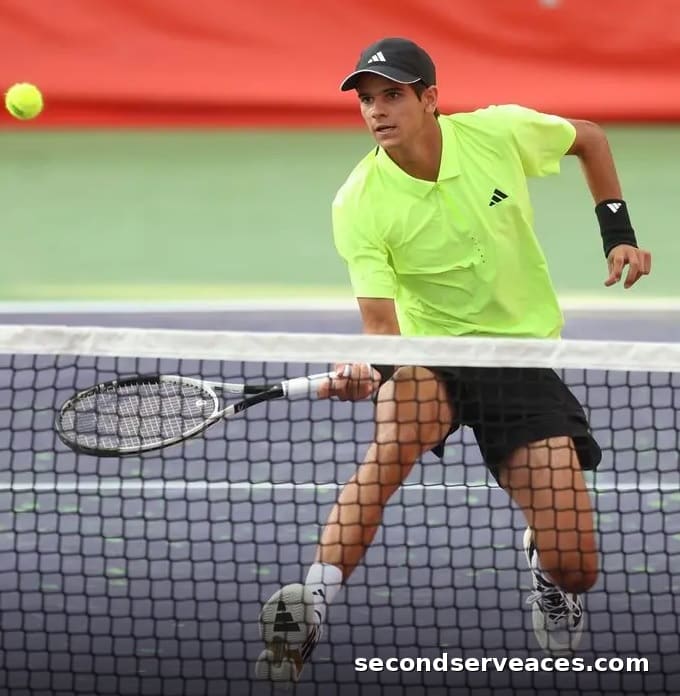
From Collegiate Courts to Grand Slam Contention
Twelve months ago, the name Rafael Jodar barely registered on the radar of the ATP rankings. He was grinding through the collegiate ranks, representing the University of Virginia, a far cry from the red dust of Paris. Now, the 19-year-old enters the French Open as one of the top 32 seeds, a meteoric trajectory that feels more like a sprint than a journey.
Listen to the Second Serve Podcast
Get our daily AI-synthesized audio briefings and match reviews on the go.
The shift from the structured environment of NCAA tennis to the unforgiving grind of the pro tour is where most prospects fracture. Yet, Jodar has embraced the physical toll required to survive on the surface that defines his nation. It is a testament to his mental conditioning that he has managed to climb from roughly No. 700 to the seeding threshold in a single calendar year.
This isn't just about talent; it is about the willingness to absorb punishment. In the grand tradition of Spanish tennis, Jodar has learned that the baseline is not just a line on the court—it is a battlefield. His preparation reflects a dedication to the 'suffering' philosophy that turned legends like Rafael Nadal into 22-time major champions.
The Shadow of Icons and the Absence of Alcaraz
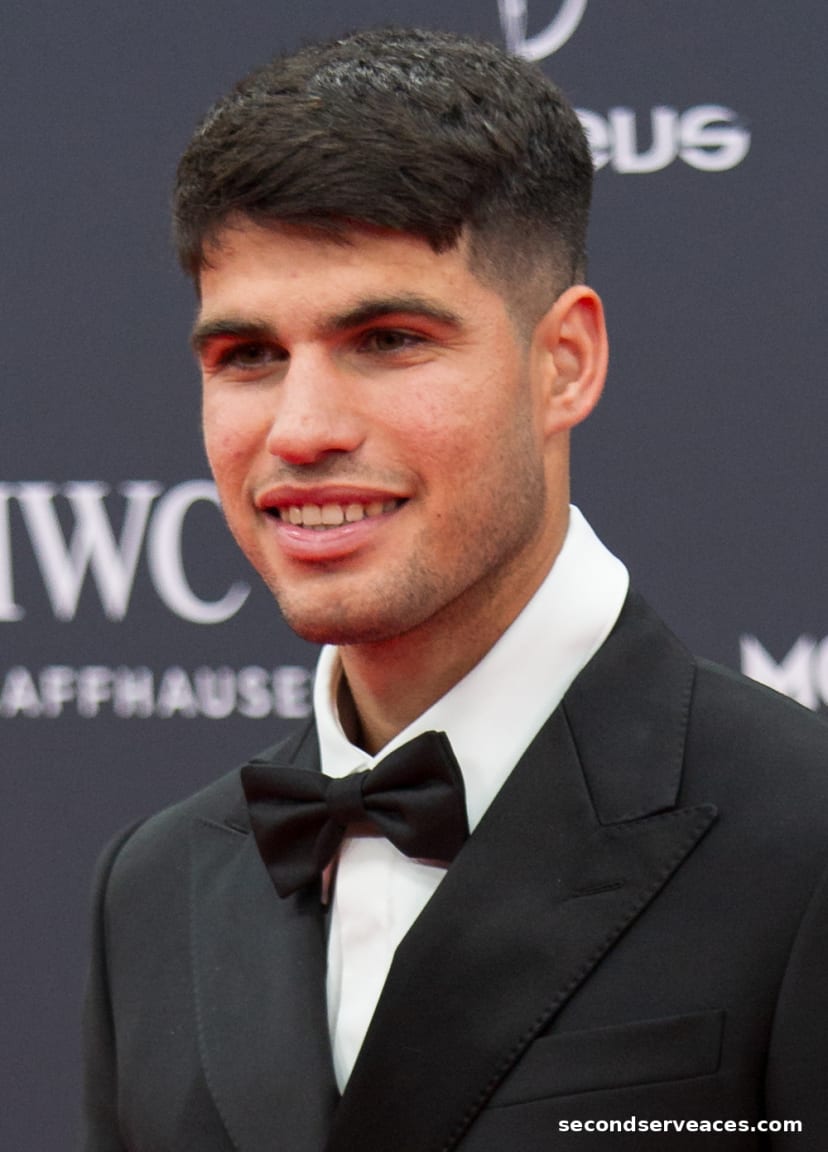
The landscape of Spanish tennis is currently shifting, marked by both the emergence of new blood and the sting of absence. With Carlos Alcaraz forced to withdraw from the 2026 French Open and Wimbledon due to a wrist injury, the spotlight on Jodar burns significantly brighter. The vacuum left by a superstar creates immense pressure for a teenager, yet Jodar appears to be the type of character who feeds on the noise rather than being silenced by it.
He stands on the shoulders of giants, acknowledging the blueprints left by the likes of Sergi Bruguera, who famously captured back-to-back titles in 1993 and 1994. The history of the sport is littered with those who tried to emulate the intensity of Björn Borg or the tactical craft of Stefan Edberg, but Jodar is carving his own path. He understands that while the legends provide the inspiration, he must provide the execution.
The absence of his compatriot Alcaraz creates a narrative void that many will look to Jodar to fill. It is a heavy mantle for a 19-year-old, but the mental fortitude he developed in Charlottesville has clearly prepared him for the volatility of the professional circuit. He is no longer just a prospect; he is a competitor who demands respect from the first ball.
Tactical Preparation for the Parisian Red Clay
Success on clay is a mathematical equation involving topspin, court positioning, and the ability to dictate from the back of the court. Jodar’s game has been honed to maximize these variables. His transition from the hard courts of college tennis to the heavy, sliding conditions of the French Open has been seamless because he treats every rally as a separate, high-stakes match.
We have often discussed how the best players manage their energy throughout a two-week event, as seen in our previous analysis of the French Open field. Jodar’s ability to remain composed during long service games and his efficiency on break points will be the ultimate litmus test for his seeding status. He doesn't just hit the ball; he plays with the patience of someone who has studied the masters.
The technical adjustments needed to succeed in Paris are specific: flatter backhands won't cut it against the top tier. Jodar has focused on heavy, dipping forehands that force opponents into uncomfortable positions. It is a tactical approach that prioritizes longevity in the rally, a hallmark of the Spanish school of thought that has dominated this surface for decades.
The Mental Grind of the Professional Circuit
Professional tennis is not just a game of skill; it is a game of attrition. Jodar’s ascent is built on the reality that your mental state is your greatest asset. When the crowd is against you and the humidity is sapping your energy, the training philosophy of 'suffering'—embracing the pain of the grind—becomes the only thing you can rely on.
He is an open book in his rivalries, never shying away from the intensity of the moment. Whether it is a tight tie-break or a marathon fifth set, his demeanor remains remarkably consistent. This is the hallmark of a player who has already internalized the lessons that take most pros years to learn.
As he prepares to walk onto the court in Paris, Jodar knows that the eyes of the tennis world are fixed upon him. He isn't just representing his country; he is representing a new generation that is hungry for the legacy left by the greats. The French Open is his stage now, and he is ready to perform.
What Carlos Alcaraz Plays With
Babolat Pure Aero 98
Babolat RPM Blast 1.30
Babolat VS Original (12-Pack)
Nike Vapor Pro 2
Analyze Rafael Jodar vs. Rafael Nadal
Predict tactical adjustments, momentum swings, and serve strategy options for this match-up using our AI simulator.
The Aces Tactical Panel
This report was curated and edited by Bhaskar Goel. Tactical analysis and technical insights were provided by our specialized panel of expert correspondents.
Julian Price
Senior Tactical Correspondent
Stuffy, pedantic British academic and historian specializing in match momentum and historical context.
Elena Cruz
Director of Analytical Research
Data scientist specializing in court surface physics and movement patterns.
Bhaskar
The Editor & Fan
Passionate tennis player and site editor bringing everyday amateur insights and relatable fan commentary.
Arthur Vance
Senior Existential Analyst
Deep, eccentric, and DFW-inspired. Models court metaphysics, kinetic beauty, and player psychology.
Leo Sterling
High-Performance Consultant
Hard-nosed ex-trainer from Melbourne with a no-nonsense view on tour fitness.
Related Reports
Quick Answers
How quickly did Rafael Jodar rise through the rankings?+
Rafael Jodar moved from approximately No. 700 in the world to a top 32 seed at the French Open within the span of one year.
What is the reason for Carlos Alcaraz's absence from the 2026 French Open?+
Carlos Alcaraz is missing the 2026 French Open and Wimbledon due to a wrist injury.
Where did Rafael Jodar play tennis before turning professional?+
Before his rapid rise on the professional tour, Jodar played collegiate tennis for the University of Virginia.