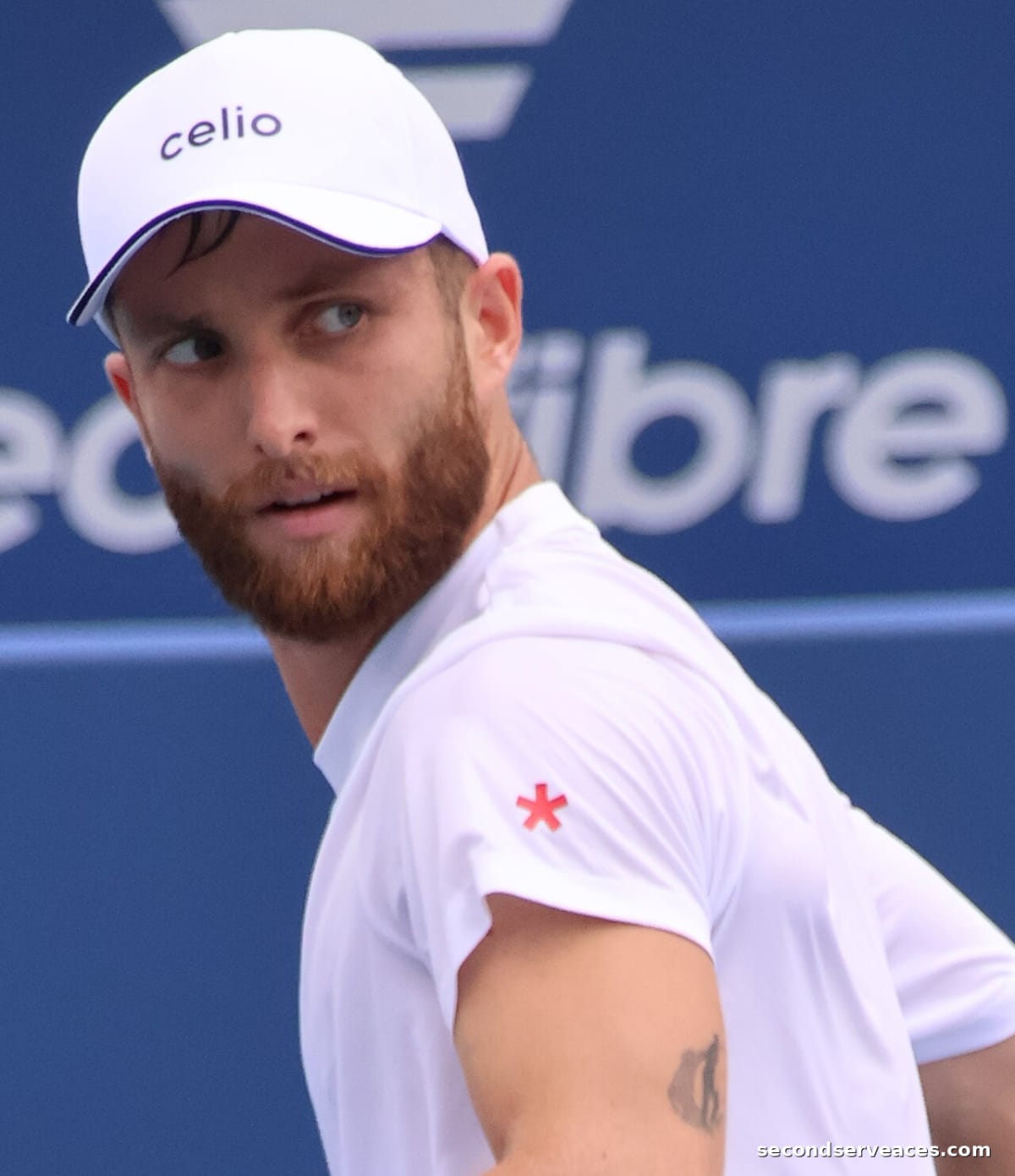
As we approach the 2026 French Open, the red clay at Roland Garros demands more than just endurance; it requires a precise calibration of technical components. The women's field is currently navigating a period of significant transition, with top contenders balancing personnel changes against the physical toll of a grueling spring season.
Listen to the Second Serve Podcast
Get our daily AI-synthesized audio briefings and match reviews on the go.
The Roig Coaching Transition and Iga Swiatek's Tactical Pivot
Iga Swiatek’s decision to enlist Francisco Roig—a Rafael Nadal coaching veteran—following her split with Wim Fissette in March 2026 signals a definitive move toward a more spin-heavy, clay-court-oriented methodology. Roig’s background is synonymous with high-RPM topspin and baseline stability, elements that define success in Paris.
This partnership is not merely a personnel swap; it is a technical recalibration. By shifting toward the philosophies that forged a clay-court dynasty, Swiatek aims to reinforce her defensive shell. The primary objective here is to maintain high first-serve percentages while mitigating the risk of unforced errors that plagued her early 2026 campaign.
Observers of our previous tactical breakdown will recognize that the transition to a Roig-led camp often emphasizes court positioning and shot-selection discipline. For Swiatek, the focus remains on controlling the center of the court to minimize opponent angles.
Aryna Sabalenka’s Physical Maintenance and Recovery Timeline
The health status of Aryna Sabalenka remains the central variable of the tournament. During her third-round exit at the 2026 Italian Open against Sorana Cîrstea, the Belarusian required medical intervention for a lower-back injury, a concern that has prompted rigorous physical therapy ahead of the Paris draw.
Back issues on clay are notoriously difficult to manage due to the increased kinetic load required to generate power from a sliding surface. Sabalenka’s durability hinges on her ability to rotate through her service motion without compensation, which could otherwise lead to decreased velocity or accuracy on her secondary serve.
As she enters the WTA premier event, the focus shifts to load management. Her team will be monitoring her output during practice sessions to ensure the lumbar region can withstand the friction of multiple best-of-three-set matches.
Coco Gauff and the Defense of the Parisian Crown
Defending champion Coco Gauff returns to the site of her greatest triumph with a clear mandate: consistency. Having secured the title last year, Gauff has spent the 2026 season refining her transition game and net approach, ensuring that her presence at the net remains a viable tactical option when rallies become protracted.
Gauff’s success is built upon high-percentage tennis, specifically her ability to save break points under pressure. As we noted in our analysis of emerging talent, the ability to reset after a lost service game is the hallmark of a true champion at Roland Garros.
With the field tightening, Gauff’s movement remains her strongest asset. Her capacity to cover the court on red clay is unmatched, allowing her to neutralize power hitters by forcing an extra shot in every exchange.
The Rising Contenders and the Stuttgart Benchmark
Elena Rybakina arrives in Paris as a primary challenger, fresh off her victory at the Stuttgart Tennis Grand Prix. Her performance on the indoor red clay in Germany demonstrated an ability to flatten out her groundstrokes, a tactic that effectively shortens points and reduces the effectiveness of heavy-spin opponents.
Tactically, Rybakina's success relies on the efficiency of her first-serve delivery. By maintaining a high first-serve percentage, she denies opponents the rhythm they need to establish themselves on the baseline, effectively dictating the pace of the match from the first strike.
As the tournament begins this Sunday, the question is not just who has the most power, but who can sustain their technical baseline under the unique atmospheric conditions of the Paris spring. Every player mentioned is currently fine-tuning their equipment and movement patterns to survive the opening week.
What Aryna Sabalenka Plays With
Wilson Blade 98 v9 (16x19)
Luxilon ALU Power 125
Wilson Pro Overgrip (12-Pack)
Analyze Corentin Moutet vs. Aryna Sabalenka
Predict tactical adjustments, momentum swings, and serve strategy options for this match-up using our AI simulator.
The Aces Tactical Panel
This report was curated and edited by Bhaskar Goel. Tactical analysis and technical insights were provided by our specialized panel of expert correspondents.
Julian Price
Senior Tactical Correspondent
Stuffy, pedantic British academic and historian specializing in match momentum and historical context.
Elena Cruz
Director of Analytical Research
Data scientist specializing in court surface physics and movement patterns.
Bhaskar
The Editor & Fan
Passionate tennis player and site editor bringing everyday amateur insights and relatable fan commentary.
Arthur Vance
Senior Existential Analyst
Deep, eccentric, and DFW-inspired. Models court metaphysics, kinetic beauty, and player psychology.
Leo Sterling
High-Performance Consultant
Hard-nosed ex-trainer from Melbourne with a no-nonsense view on tour fitness.
Related Reports
Quick Answers
Who is the new coach for Iga Swiatek at the 2026 French Open?+
Iga Swiatek has hired Francisco Roig, who is recognized for his history as a coach for Rafael Nadal.
What injury did Aryna Sabalenka sustain before the 2026 French Open?+
Aryna Sabalenka received medical treatment for a lower-back injury during her third-round loss at the 2026 Italian Open.
Which player won the 2026 Stuttgart Tennis Grand Prix?+
Elena Rybakina secured the title at the Stuttgart Tennis Grand Prix, which is played on indoor red clay.