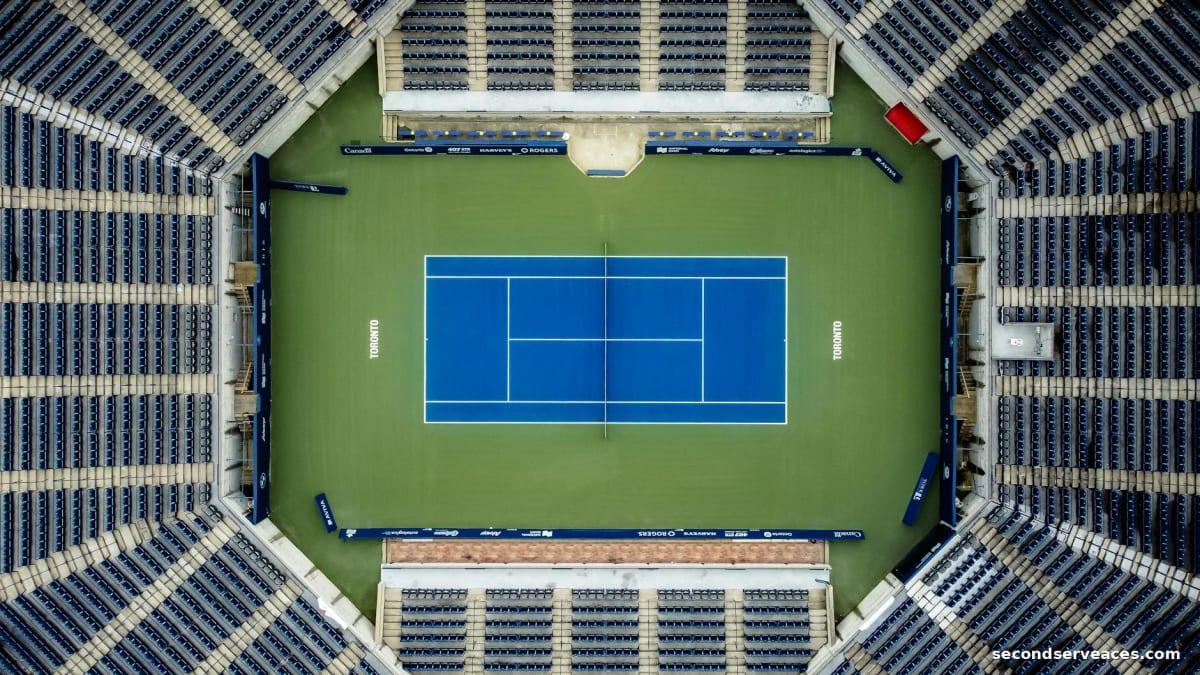
Credential Blockades and Legal Friction
The administrative perimeter around tennis’s most storied venues has tightened. In a move that signals the deepening divide between independent player representation and the sport's traditional gatekeepers, the French Tennis Federation and the All England Lawn Tennis Club have officially denied credential requests for Professional Tennis Players Association (PTPA) staff members Romain Rosenberg, Wajid Mir, and Anastasia Skavronskaia.
Listen to the Second Serve Podcast
Get our daily AI-synthesized audio briefings and match reviews on the go.
This exclusion is not an isolated administrative hiccup; it is a direct consequence of the ongoing federal litigation brought by the PTPA against the Grand Slam tournaments, the ATP, the WTA, the ITF, and the ITIA. The allegations at the heart of this suit involve systemic wage suppression and negligence regarding player health. With the PTPA filing declarations in a New York federal court this past Wednesday to compel access, the message from the majors is clear: the legal battlefield has now moved to the front gates of the tournament grounds.
Revenue Transparency and the Precedent of Settlement
At the center of this dispute is the financial architecture of the sport. For the 2026 season, the French Open boasts a prize money pool of $72.3 million. While that figure is significant, the PTPA contends that this represents only approximately 15% of the tournament’s projected revenue, a point of contention in their broader argument regarding financial equity. The tension is palpable, especially when contrasted with the recent Australian Open, which reached a settlement with the PTPA in January 2026 and subsequently granted the organization official credentials.
As the legal maneuvering continues, the sport faces a reality where the lines between governance and labor representation are increasingly blurred. Whether this denial of access serves as a strategic defensive move by the Grand Slams or merely escalates the friction, it underscores a fundamental shift in how the business side of the tour is being scrutinized. For now, the PTPA remains on the outside looking in, waiting for the judiciary to decide if the court of law will force the hand of the courts on the grounds.
Essential Matchday Add-Ons
Tournament-tested accessories and high-frequency consumables every competitive player keeps in their bag.
Tourna Grip Original Dry Feel Overgrip (10-Pack)
4.8 ★ (12,000+ reviews)
The gold standard for sweaty hands. Proprietary dry feel absorbs moisture better as play intensifies.
Luxilon ALU Power 125 Silver String Set
4.9 ★ (3,500+ reviews)
Unrivaled control and spin potential used by over 50% of the ATP Top 100 players.
Babolat Custom Damp Vibration Dampener (2-Pack)
4.7 ★ (4,200+ reviews)
Customizable dampening with removable central O-ring for fine-tuning court feedback and sound.
Penn Championship Extra Duty Tennis Balls (4-Can Pack)
4.7 ★ (8,900+ reviews)
Official ball of USTA League Tennis with extra-duty felt designed for abrasive hard courts.
Run Match-Point Simulations
Simulate high-pressure scenarios, score leverage points, and tactical responses for ATP and WTA players.
The Aces Tactical Panel
This report was curated and edited by Bhaskar Goel. Tactical analysis and technical insights were provided by our specialized panel of expert correspondents.
Julian Price
Senior Tactical Correspondent
Stuffy, pedantic British academic and historian specializing in match momentum and historical context.
Elena Cruz
Director of Analytical Research
Data scientist specializing in court surface physics and movement patterns.
Bhaskar
The Editor & Fan
Passionate tennis player and site editor bringing everyday amateur insights and relatable fan commentary.
Arthur Vance
Senior Existential Analyst
Deep, eccentric, and DFW-inspired. Models court metaphysics, kinetic beauty, and player psychology.
Leo Sterling
High-Performance Consultant
Hard-nosed ex-trainer from Melbourne with a no-nonsense view on tour fitness.
Related Reports

Quick Answers
Which tournaments denied credentials to the PTPA?+
The French Tennis Federation (French Open) and the All England Lawn Tennis Club (Wimbledon) have denied credential requests for PTPA staff.
What is the basis of the PTPA lawsuit against the Grand Slams?+
The PTPA is suing the Grand Slam tournaments, the ATP, the WTA, the ITF, and the ITIA over allegations of wage suppression and player health negligence.
How much is the 2026 French Open prize money?+
The French Open prize money for 2026 is $72.3 million, which the PTPA estimates is about 15% of the tournament's projected revenue.