
In a display of modern grass-court excellence that would have thoroughly pleased the traditionalists of the All England Club, Jannik Sinner successfully defended his Wimbledon title by defeating Alexander Zverev 6-7(7), 7-6(2), 6-3, 6-4 in the 2026 final. The young Italian, currently perched atop the ATP rankings, showcased an imperious service game on the pristine lawns of SW19. Sinner saved the solitary break point he faced during the entire final against Zverev, a remarkable feat of composure that mirrored his performance in the semifinals, where he did not concede a single break of serve to seven-time champion Novak Djokovic.
Listen to the Second Serve Podcast
Get our daily AI-synthesized audio briefings and match reviews on the go.
The Isner Blueprint Behind Sinner's Service Metamorphosis
This devastating serving display was no mere stroke of luck. According to American star Madison Keys, speaking on 'The Player's Box' podcast, the transformation was sparked by Sinner's coach, Darren Cahill. The veteran tactician instructed Sinner to select an elite server to study and emulate. Sinner chose none other than the American tower of power, John Isner. By analyzing and adopting elements of Isner's legendary motion, the Italian has turned his delivery into an unassailable weapon, prompting Jessica Pegula to humorously remark on the same podcast that Sinner's serve deserved the award for the most improved shot on tour.
This technical adjustment completely shifted the match momentum after Zverev snatched the opening set in a tense tiebreak. While previous iterations of Sinner's game might have faltered under such pressure, his newly robust delivery allowed him to breeze through his service games, eventually dominating the second-set tiebreak and breaking Zverev's resolve in the third and fourth sets. It was a performance reminiscent of the great serve-and-volley eras of yesteryear, albeit executed from the baseline with devastating topspin.
Zverev's Frustration and the Tactical Fallout on Centre Court
For Zverev, the defeat marks another agonizing near-miss on the grandest stage. Despite his best efforts to disrupt the Italian's rhythm, the German found himself constantly reacting to Sinner's heavy groundstrokes. As we noted in our discussion of how Alexander Zverev's Wimbledon final celebration was criticized by Rennae Stubbs in the past, the German's emotional volatility on court often contrasts sharply with Sinner's cool, almost stoic demeanor.
Sinner's ability to remain unbothered by Zverev's deep return positioning proved decisive. The Italian's tactical discipline, coupled with his newly acquired service prowess, ensured that the trophy would return to San Candido. Sinner now boasts 30 ATP Tour-level singles titles, cementing his status as the premier player of his generation on the ATP Tour.
Rivalry Matchup & Player Profiles
| Metric | Jannik Sinner | Jessica Pegula |
|---|---|---|
| Rank | World No. 1 (ATP, as of July 13, 2026) | World No. 3 (WTA, as of July 19, 2026) |
| Age | 24 | 32 |
| Country | Italy | United States |
| Height | 1.91 m (6 ft 3 in) | 5 ft 7 in (170 cm) |
| Handedness | Right-handed (two-handed backhand) | Right-handed (two-handed backhand) |
| Play Style | Aggressive baseliner with powerful groundstrokes and impressive agility | Powerful baseline game and tenacious playing style |
| Career Titles | 30 ATP Tour-level singles titles | 11 WTA Tour singles titles |
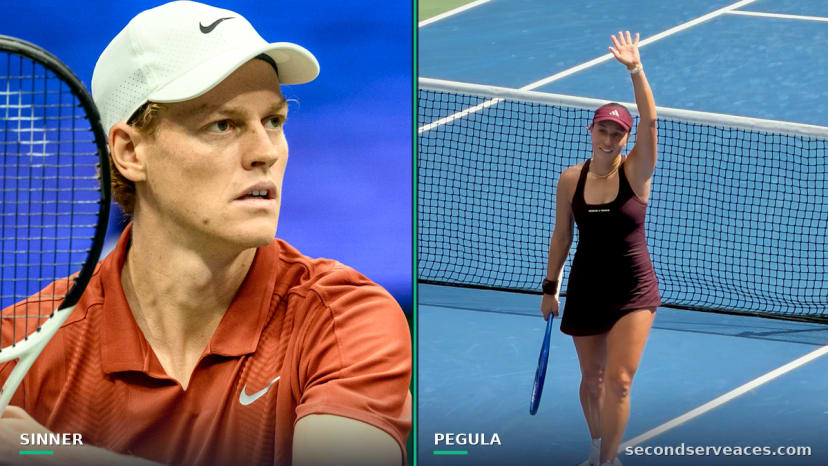
While Jannik Sinner and Jessica Pegula operate on different professional circuits—meaning they have no official head-to-head record (0-0)—both have established themselves as dominant forces in modern tennis. Sinner's ascent to the pinnacle of the men's game is mirrored by Pegula's consistent excellence on the women's tour, where her tenacious baseline play has secured her 11 WTA singles titles. Pegula's keen observation of Sinner's technical evolution, particularly his revamped serve, highlights the mutual respect and close observation shared among the sport's elite competitors across both tours.
What Jannik Sinner Plays With
Head Speed MP 2024
Head Hawk Touch 1.25
Head Prime Tour (12-Pack)
Nike GP Challenge 1
Analyze Jannik Sinner vs. Jessica Pegula
Predict tactical adjustments, momentum swings, and serve strategy options for this match-up using our AI simulator.
The Aces Tactical Panel
This report was curated and edited by Bhaskar Goel. Tactical analysis and technical insights were provided by our specialized panel of expert correspondents.
Julian Price
Senior Tactical Correspondent
Stuffy, pedantic British academic and historian specializing in match momentum and historical context.
Elena Cruz
Director of Analytical Research
Data scientist specializing in court surface physics and movement patterns.
Bhaskar
The Editor & Fan
Passionate tennis player and site editor bringing everyday amateur insights and relatable fan commentary.
Arthur Vance
Senior Existential Analyst
Deep, eccentric, and DFW-inspired. Models court metaphysics, kinetic beauty, and player psychology.
Leo Sterling
High-Performance Consultant
Hard-nosed ex-trainer from Melbourne with a no-nonsense view on tour fitness.
Related Reports


Quick Answers
Who did Jannik Sinner defeat to win the 2026 Wimbledon men's singles title?+
Jannik Sinner defeated Alexander Zverev in the final with a score of 6-7(7), 7-6(2), 6-3, 6-4.
Which former player did Jannik Sinner study to improve his serve?+
Sinner studied the service motion of former American player John Isner, on the advice of his coach Darren Cahill.
How many break points did Jannik Sinner face in the 2026 Wimbledon final?+
Sinner faced and successfully saved only one break point throughout the entire final match against Alexander Zverev.