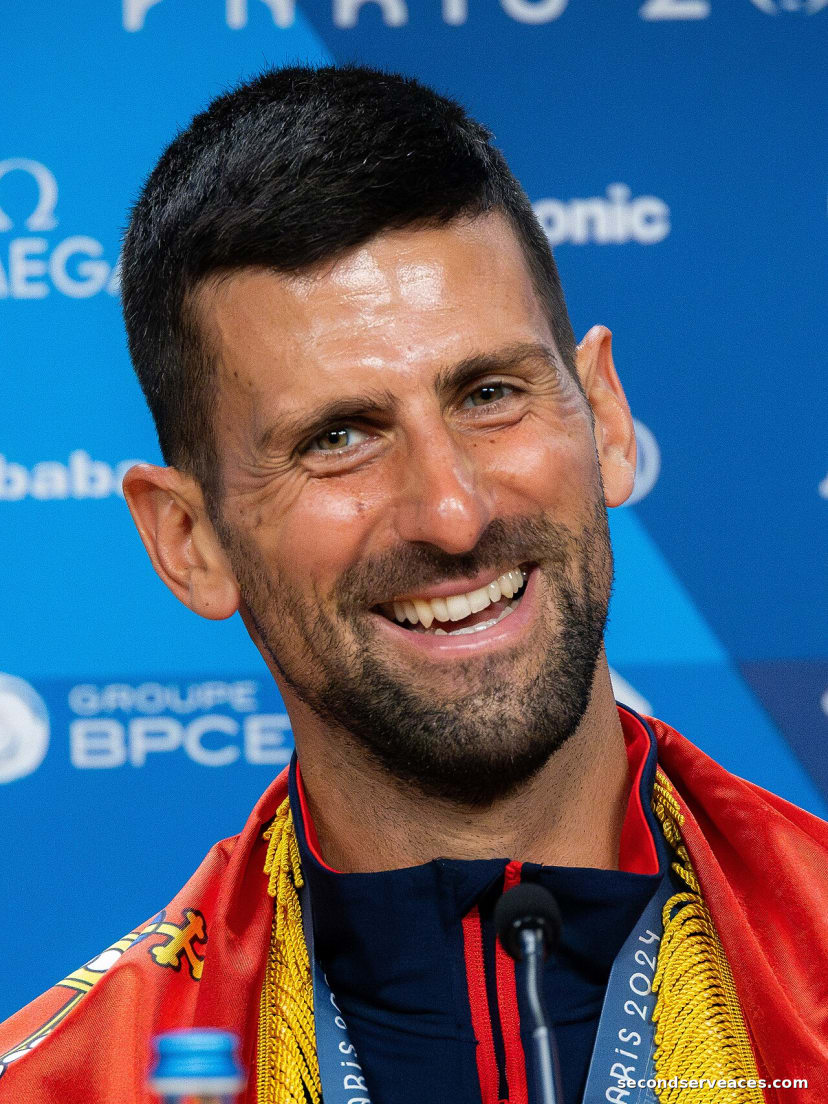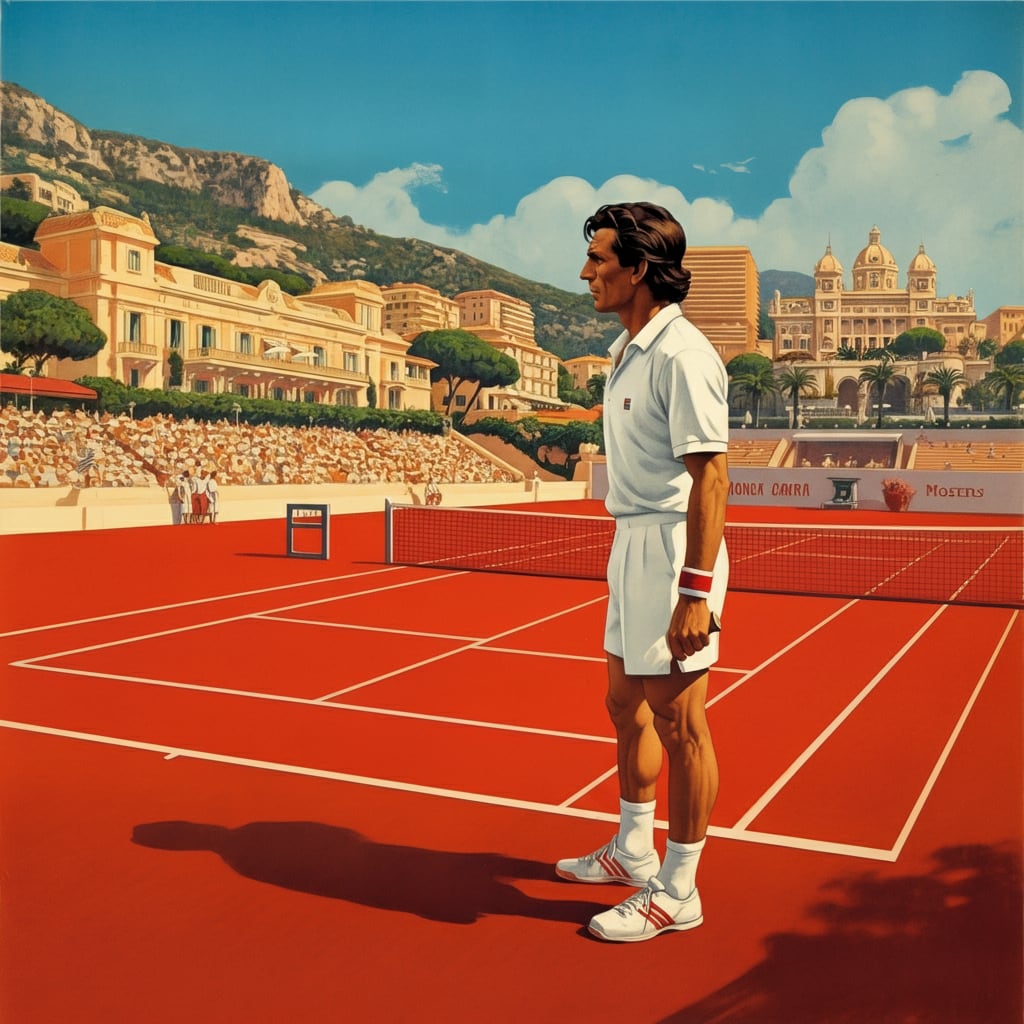
Springtime on the Mediterranean coastline usually features a familiar, rhythmic serenade: the clinking of espresso cups, the hum of luxury yachts, and Novak Djokovic sliding across the red dirt of the Monte-Carlo Country Club. Next month, however, that rhythm fractures. Djokovic has officially withdrawn from the upcoming Monte-Carlo Masters.
Listen to the Second Serve Podcast
Get our daily AI-synthesized audio briefings and match reviews on the go.
This decision alters the calculus of the European clay-court swing entirely. For the first time in 15 years—excluding the pandemic-erased 2020 season—the Serbian legend will not grace the Monegasque dirt. After a profoundly frustrating stretch, this strategic retreat reveals a veteran keenly aware of his physical economy.
Here are the crucial figures dictating this calendar shift:
- The Missing Act: Djokovic formally withdraws from next month's Monte-Carlo Masters.
- End of an Era: Breaks a 15-year continuous streak of participation (save for 2020).
- The 2025 Drought: Djokovic failed to register a single match victory across both the Monte-Carlo and Madrid tournaments during his 2025 campaign.
- The Roman Fortitude: He boasts six career titles at the Italian Open.
- Parisian Motivation: He fell to Jannik Sinner in the semifinals of last year's French Open, a hurdle he is desperate to clear this June.
The Tactical Breakdown
Why avoid the Principality? From a purely mechanical standpoint, the tennis required in Monaco is uniquely taxing. The courts sit precisely at sea level, and the damp, coastal air renders the red clay heavy and sluggish. This environment demands brutal rally tolerance, punishing the legs early in the spring. Djokovic’s game relies on kinetic chain efficiency and supreme baseline geometry. When you face an early clay season bereft of momentum—remembering his 2025 campaign yielded zero match victories in either Monte-Carlo or Madrid—the tactical imperative shifts from mere point accumulation to structural preservation.
Furthermore, the modern tour is ruthless regarding court positioning. Against aggressive ball-strikers like Carlos Alcaraz, who inject massive topspin to push defenders deep into the tarps, or a tactical disruptor like Alejandro Tabilo, who famously leverages sharp, heavy lefty angles on this surface to pull right-handers off the court, a veteran simply cannot afford dead legs. By resting now, the Belgrade native bypasses the grinding transition phase. This ensures his physical reserves remain optimal for the slightly quicker, more forgiving conditions of the Foro Italico in Rome, where the ball travels with just enough extra zip to reward his precise redirection of pace.
The Bigger Picture
Ultimately, every calendar adjustment is reverse-engineered from the Philippe Chatrier court in Paris. Last year, Djokovic navigated his way to the Roland Garros semifinals before falling to the blinding, flat-hitting pace of Jannik Sinner. To survive the best-of-five-set gauntlet against Sinner's suffocating baseline proximity, Djokovic knows he needs his lateral movement to be flawless.
The tour's landscape is evolving at a breakneck pace. Former world number one Andy Roddick frequently highlights how veteran pacing and scheduling are the final frontiers of tennis longevity. With a new generation of prodigies—exemplified by rising talents like Moise Kouame—beginning to bubble up from the junior ranks, and established champions like Alcaraz dictating the physical terms of engagement, pacing is survival.
Rome provides the perfect antidote to his 2025 early-spring woes. Djokovic owns six titles at the Italian Open. It offers the ideal, match-dense tune-up without subjecting his body to the two-month attrition of a complete, uninterrupted European dirt swing. Skipping Monte-Carlo is not a surrender; it is a meticulously calculated pause from a man plotting one final raid on the French capital.
What Novak Djokovic Plays With
Head Speed Pro
Luxilon ALU Power 125
Head Prime Tour (12-Pack)
Asics Court FF 3 Novak
Analyze Novak Djokovic vs. Jannik Sinner
Predict tactical adjustments, momentum swings, and serve strategy options for this match-up using our AI simulator.
The Aces Tactical Panel
This report was curated and edited by Bhaskar Goel. Tactical analysis and technical insights were provided by our specialized panel of expert correspondents.
Julian Price
Senior Tactical Correspondent
Stuffy, pedantic British academic and historian specializing in match momentum and historical context.
Elena Cruz
Director of Analytical Research
Data scientist specializing in court surface physics and movement patterns.
Bhaskar
The Editor & Fan
Passionate tennis player and site editor bringing everyday amateur insights and relatable fan commentary.
Arthur Vance
Senior Existential Analyst
Deep, eccentric, and DFW-inspired. Models court metaphysics, kinetic beauty, and player psychology.
Leo Sterling
High-Performance Consultant
Hard-nosed ex-trainer from Melbourne with a no-nonsense view on tour fitness.