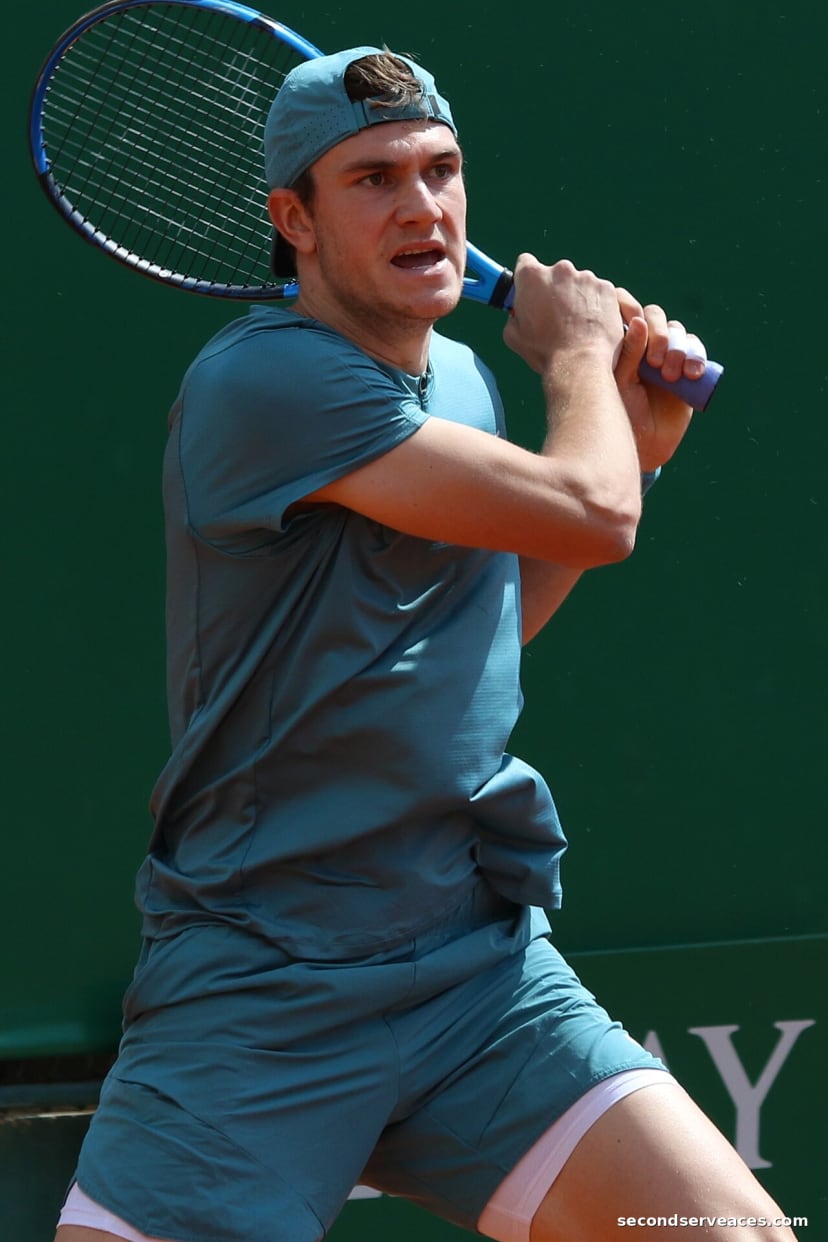
The Coachella Valley, an oasis of hyper-irrigated green surrounded by desiccated brown, serves as the crucible for the ATP's springtime gladiatorial theater. Here, the air is thick, the hard courts are notoriously gritty, and the bounce of a fluorescent yellow sphere is subject to a friction that seems almost intentionally punitive. It was upon this textured stage that Daniil Medvedev, the tour's resident contortionist and master of anomalous geometry, dethroned the defending champion, Jack Draper, in the quarter-finals.
Listen to the Second Serve Podcast
Get our daily AI-synthesized audio briefings and match reviews on the go.
But the autopsy of this match will not center purely on the physics of heavy topspin or the clinical execution of a break point. It centers, rather bizarrely, on an abstraction: the concept of hindrance.
The Metaphysics of the Hindrance Call
In professional tennis, every single shot is, on a philosophical level, an attempt to hinder the opponent. You hit the ball to corners they cannot reach; you apply spin that twists their racket face. Yet the rulebook designates very specific, non-kinetic acts as illegal interference. During this quarter-final clash, a highly controversial hindrance call emerged from the umpire's chair, fundamentally altering the match momentum and profoundly affecting Draper.
To watch a tennis match pivot on a bureaucratic intervention is always a slightly jarring experience, akin to watching a beautiful ballet interrupted by a zoning inspector. Even Medvedev, a man who generally feeds on the chaotic, localized energy of a hostile crowd, seemed burdened by the existential weirdness of the umpire's decision. "Do I feel good about it? Not really," Medvedev confessed post-match, capturing the lingering ontological discomfort of winning a critical juncture via adjudication rather than pure kinetic superiority.
The Tactical Breakdown
How does one deconstruct a Daniil Medvedev match without sounding like a graduate student in fluid dynamics? The Russian operates from a zip code entirely separate from the baseline, daring opponents to beat him with sheer pace through the heavy desert air. Against a defending champion like Draper, the tactical board looked something like this:
- The Lefty Equation: Draper's game is historically predicated on massive, left-handed topspin—whipping the ball to yank right-handers aggressively off the ad-court.
- Deep Return Geometry: Medvedev nullifies this traditional angle by retreating to the literal back fence (often standing so far back he is nearly out of the television frame). By increasing the court's physical dimensions, he extends his reaction time, effectively absorbing Draper's heavy artillery and returning it flat, deep, and without rhythm.
- Geometric Strangulation: Once the rally enters a neutral state, Medvedev thrives on rally tolerance. He hits balls that seem to possess no classical aesthetic beauty, yet they land within millimeters of the baseline. This constant, suffocating depth forces opponents into high-risk, low-percentage responses.
Ultimately, Medvedev didn't just out-hit Draper; he out-endured him, hunting for the decisive break point through sheer physical and mental attrition, capitalizing on the disrupted match momentum following the hindrance incident.
The Bigger Picture
Jack Draper arrived in the desert carrying the heaviest psychological luggage a professional tennis player can lug: the title of Defending Champion. The ghosts of a previous year's triumph tend to haunt the venue, turning every missed forehand into a referendum on one's current state of grace. For Draper, defending the Indian Wells crown was supposed to be the ultimate validation of his arrival in the ATP stratosphere. Instead, his exit—tainted by the bitter aftertaste of a controversial ruling—leaves a complex, frustrating narrative for his season going forward.
For Medvedev, the victory propels him deeper into a tournament on a surface he famously claims to despise. Hard courts in Indian Wells grab the ball, producing a high, slow bounce that theoretically punishes flat hitters of his archetype. Yet, Medvedev endures. His ability to survive both Draper's immense power and the psychic weirdness of the hindrance controversy speaks to a mental elasticity that few on the tour possess. He remains tennis’s great unsolvable puzzle—a player who wins not by looking beautiful, but by making his opponent look profoundly uncomfortable.
What Daniil Medvedev Plays With
Tecnifibre T-Fight 305 Isoflex
Tecnifibre Razor Soft
Analyze Daniil Medvedev vs. Jack Draper
Predict tactical adjustments, momentum swings, and serve strategy options for this match-up using our AI simulator.
The Aces Tactical Panel
This report was curated and edited by Bhaskar Goel. Tactical analysis and technical insights were provided by our specialized panel of expert correspondents.
Julian Price
Senior Tactical Correspondent
Stuffy, pedantic British academic and historian specializing in match momentum and historical context.
Elena Cruz
Director of Analytical Research
Data scientist specializing in court surface physics and movement patterns.
Bhaskar
The Editor & Fan
Passionate tennis player and site editor bringing everyday amateur insights and relatable fan commentary.
Arthur Vance
Senior Existential Analyst
Deep, eccentric, and DFW-inspired. Models court metaphysics, kinetic beauty, and player psychology.
Leo Sterling
High-Performance Consultant
Hard-nosed ex-trainer from Melbourne with a no-nonsense view on tour fitness.