Technical Fragility and the Cost of Nine Missed Opportunities
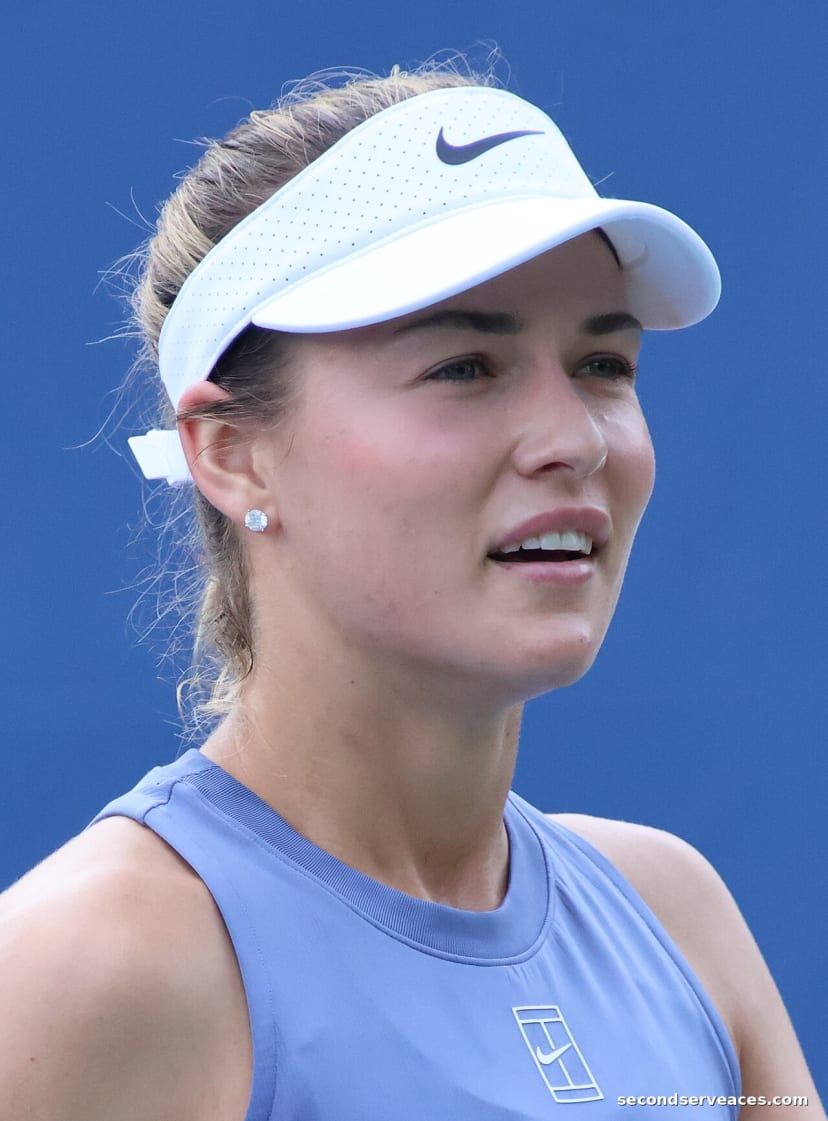
The numbers from the Italian Open are staggering, but in the case of Katerina Siniakova, they represent a profound collapse in match management. Over the course of a three-hour and 29-minute marathon, Siniakova held nine match points against Anna Kalinskaya, yet failed to convert a single one. This wasn't merely a matter of bad luck; it was a visible erosion of point construction under sustained pressure.
Listen to the Second Serve Podcast
Get our daily AI-synthesized audio briefings and match reviews on the go.
Siniakova entered the contest with a visible handicap, competing with a heavy wrap on her right knee—a lingering consequence of the Madrid Open doubles final. This restriction clearly limited her lateral explosiveness, particularly when she needed to drive through her backhand wing to seal the win. As the match momentum swung in the second set, Kalinskaya’s ability to force extra shots neutralized Siniakova’s attempts to shorten points, ultimately punishing the Czech player for her inability to close.
Racket Abuse and the Penalty of Lost Control
The frustration culminated in a visible breach of court decorum. Following a crucial lapse in the third set, Siniakova was issued a code violation for launching her racket at the advertising boards surrounding the court. In elite tennis, where the margin for error is measured in centimeters, this loss of composure often signals that the player is no longer processing the tactical demands of the next exchange, but rather dwelling on the previous unforced error.
While Siniakova fought valiantly through the WTA grind to push the match to 7-5 in the decider, the technical discipline required to finish the match had evaporated. Kalinskaya remained the steadier hand, exploiting the opening created by Siniakova’s physical fatigue and waning focus. It serves as a stark reminder that in professional tennis, the final point is often the most difficult to earn, especially when the opponent refuses to fold under the threat of elimination.
Essential Matchday Add-Ons
Tournament-tested accessories and high-frequency consumables every competitive player keeps in their bag.
Tourna Grip Original Dry Feel Overgrip (10-Pack)
4.8 ★ (12,000+ reviews)
The gold standard for sweaty hands. Proprietary dry feel absorbs moisture better as play intensifies.
Luxilon ALU Power 125 Silver String Set
4.9 ★ (3,500+ reviews)
Unrivaled control and spin potential used by over 50% of the ATP Top 100 players.
Babolat Custom Damp Vibration Dampener (2-Pack)
4.7 ★ (4,200+ reviews)
Customizable dampening with removable central O-ring for fine-tuning court feedback and sound.
Penn Championship Extra Duty Tennis Balls (4-Can Pack)
4.7 ★ (8,900+ reviews)
Official ball of USTA League Tennis with extra-duty felt designed for abrasive hard courts.
Analyze Katerina Siniakova vs. Anna Kalinskaya
Predict tactical adjustments, momentum swings, and serve strategy options for this match-up using our AI simulator.
The Aces Tactical Panel
This report was curated and edited by Bhaskar Goel. Tactical analysis and technical insights were provided by our specialized panel of expert correspondents.
Julian Price
Senior Tactical Correspondent
Stuffy, pedantic British academic and historian specializing in match momentum and historical context.
Elena Cruz
Director of Analytical Research
Data scientist specializing in court surface physics and movement patterns.
Bhaskar
The Editor & Fan
Passionate tennis player and site editor bringing everyday amateur insights and relatable fan commentary.
Arthur Vance
Senior Existential Analyst
Deep, eccentric, and DFW-inspired. Models court metaphysics, kinetic beauty, and player psychology.
Leo Sterling
High-Performance Consultant
Hard-nosed ex-trainer from Melbourne with a no-nonsense view on tour fitness.