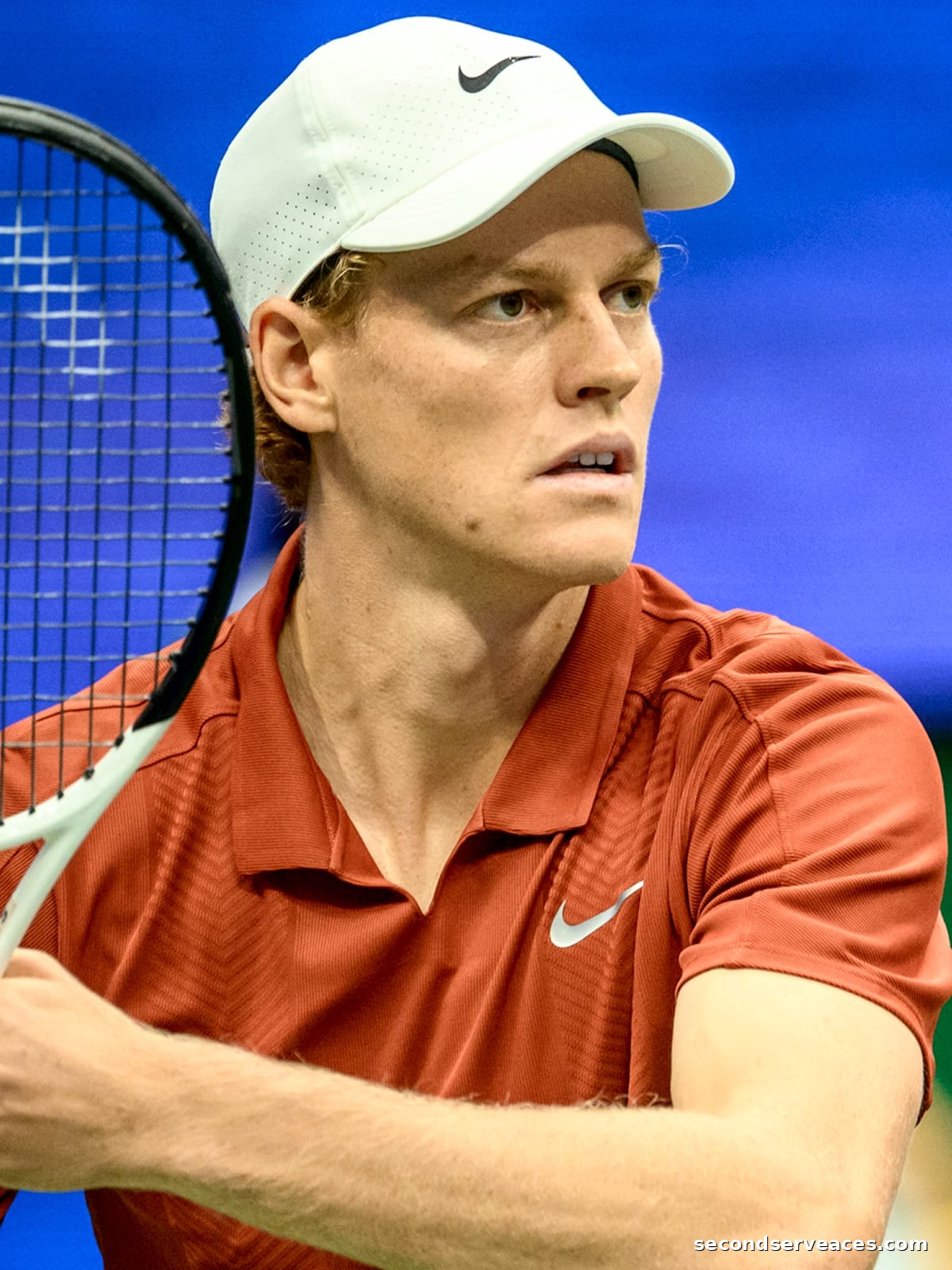
Are you kidding me? That is the only logical reaction to what we witnessed in Paris, and the shockwaves are still rattling the locker room. Jannik Sinner, the reigning king of SW19, went from looking like an absolute lock for another deep run to packing his bags after a second-round disaster. It was a mental and physical implosion that left everyone in the press box scratching their heads, and now, his entire grass-court campaign is being built on a massive, high-stakes gamble.
Listen to the Second Serve Podcast
Get our daily AI-synthesized audio briefings and match reviews on the go.
The Five-Set Meltdown Against Cerundolo
Let’s call it what it was: an absolute disaster. Sinner took the court at Roland Garros as a heavy favorite, only to fall apart in five agonizing sets against Juan Manuel Cerundolo. The most infuriating part? Sinner was leading 5-1 in the third set. Five-one! You do not let a player of Cerundolo’s caliber off the hook when you are that close to putting the hammer down. But the wheels didn't just fall off; they exploded into a million pieces.
Sinner’s footwork went completely flat, and his trademark intensity vanished. He looked physically compromised, struggling to find his rhythm as the match momentum shifted entirely to the other side of the net. Cerundolo began teeing off on passive, short balls, and Sinner had absolutely no answers. It wasn't just a tough day at the office; it was a glaring indictment of his current physical conditioning under high-pressure, five-set grand slam conditions.
The fallout from that match was immediate. While Alexander Zverev went on to capitalize on the chaos and capture the clay-court men's singles title, Sinner was left to pick up the pieces of his shattered confidence. It raised serious red flags about his durability. If you cannot close out a clay-court specialist from a double-break lead, how on earth are you going to survive seven rounds of brutal, low-bouncing grass-court tennis where the physical demands are completely unforgiving?
The Monte Carlo Rest Cure
Instead of rushing back onto the court to find his rhythm and erase the bitter taste of defeat, Sinner made the highly controversial decision to skip the Halle Open entirely. Let's be honest—it is a massive risk. Historically, champions need those competitive grass-court reps to adjust their movement from clay to turf. But Sinner has chosen to hole up in Monte Carlo, prioritizing physical recovery and absolute rest over competitive match play.
This unorthodox preparation echoes the high-stakes tactical decisions we highlighted in our coverage of the Sinner and Djokovic gamble on grass-court preparation. By staying in Monaco, Sinner is betting his entire summer on rest. He is banking on his raw, natural ball-striking ability to carry him through the early rounds in London without the benefit of a warm-up tournament. It is a bold, arrogant, or perhaps desperate strategy.
From a tactical standpoint, skipping Halle means Sinner will arrive at the All England Club with zero competitive grass matches under his belt this season. On grass, the margin for error is razor-thin. Your footwork must be impeccable from day one, and without match play to calibrate his low-defensive slides, Sinner is leaving himself incredibly vulnerable to an early-round ambush by a hot-hitting underdog.
The Historic Wimbledon Breakthrough
Let us not forget that Jannik Sinner is the defending champion for a reason. His historic run last year culminated in a breathtaking victory over Carlos Alcaraz, cementing his name in the history books as the first Italian man to capture a singles title at Wimbledon. That performance proved that his flat, aggressive groundstrokes and aggressive baseline positioning are perfectly suited for the lightning-fast lawns.
According to official ATP rankings data and historical grass-court metrics, Sinner’s serve is his ultimate weapon when the grass is fresh. When he won the title, his first-serve win percentage was elite, and his ability to redirect pace flat off both wings completely disarmed his opponents. He doesn't need heavy topspin on this surface; he needs clean, linear ball-striking, which he possesses in spades.
But defending a grand slam title is a completely different beast than winning your first. The pressure is immense, and every player in the draw is gunning for you. Sinner's career trajectory, detailed on his Wikipedia profile, shows he has the mental fortitude to handle the big stage, but his physical fragility remains the ultimate wild card. He cannot afford another physical breakdown if he wants to replicate last year's historic triumph.
The Absence of Alcaraz and the Draw Dynamics
The draw has already been blown wide open with the devastating news that Carlos Alcaraz has been forced to withdraw from the tournament due to injury. As we discussed in our report on the Alcaraz injury update, this completely alters the championship equation. Sinner's primary rival and the man he defeated in last year's final is out of the picture, removing a massive roadblock from his path.
With Alcaraz sidelined, the path to the trophy looks significantly less daunting on paper, but that only intensifies the pressure on Sinner's shoulders. He is now the undisputed target. If he cannot get his body right in Monte Carlo, he will waste a golden opportunity to defend his crown and assert his dominance over the grass-court season. There are no excuses left for the Italian.
It is time for Sinner to show us what he is made of. The physical collapse in Paris was unacceptable for a defending champion, and skipping Halle is a massive risk that could easily backfire. But if his body holds up, and those flat groundstrokes find their mark on the lawns of SW19, he might just prove all of us doubters wrong. The clock is ticking, and Monte Carlo better be giving him the answers he needs.
What Jannik Sinner Plays With
Head Speed MP 2024
Head Hawk Touch 1.25
Nike GP Challenge 1
Analyze Jannik Sinner vs. Juan Manuel Cerundolo
Predict tactical adjustments, momentum swings, and serve strategy options for this match-up using our AI simulator.
The Aces Tactical Panel
This report was curated and edited by Bhaskar Goel. Tactical analysis and technical insights were provided by our specialized panel of expert correspondents.
Julian Price
Senior Tactical Correspondent
Stuffy, pedantic British academic and historian specializing in match momentum and historical context.
Elena Cruz
Director of Analytical Research
Data scientist specializing in court surface physics and movement patterns.
Bhaskar
The Editor & Fan
Passionate tennis player and site editor bringing everyday amateur insights and relatable fan commentary.
Arthur Vance
Senior Existential Analyst
Deep, eccentric, and DFW-inspired. Models court metaphysics, kinetic beauty, and player psychology.
Leo Sterling
High-Performance Consultant
Hard-nosed ex-trainer from Melbourne with a no-nonsense view on tour fitness.
Related Reports

Quick Answers
Who did Jannik Sinner lose to at Roland Garros?+
Jannik Sinner suffered a shocking second-round defeat to Juan Manuel Cerundolo in five sets, despite holding a commanding 5-1 lead in the third set.
Why is Jannik Sinner skipping the Halle Open?+
Sinner is skipping the Halle Open to recover and rest in Monte Carlo following physical struggles during his early exit at Roland Garros.
Who won the men's singles title at Roland Garros?+
Alexander Zverev won the Roland Garros men's singles title following Sinner's early departure from the tournament.