The Architect of the Current Italian Era
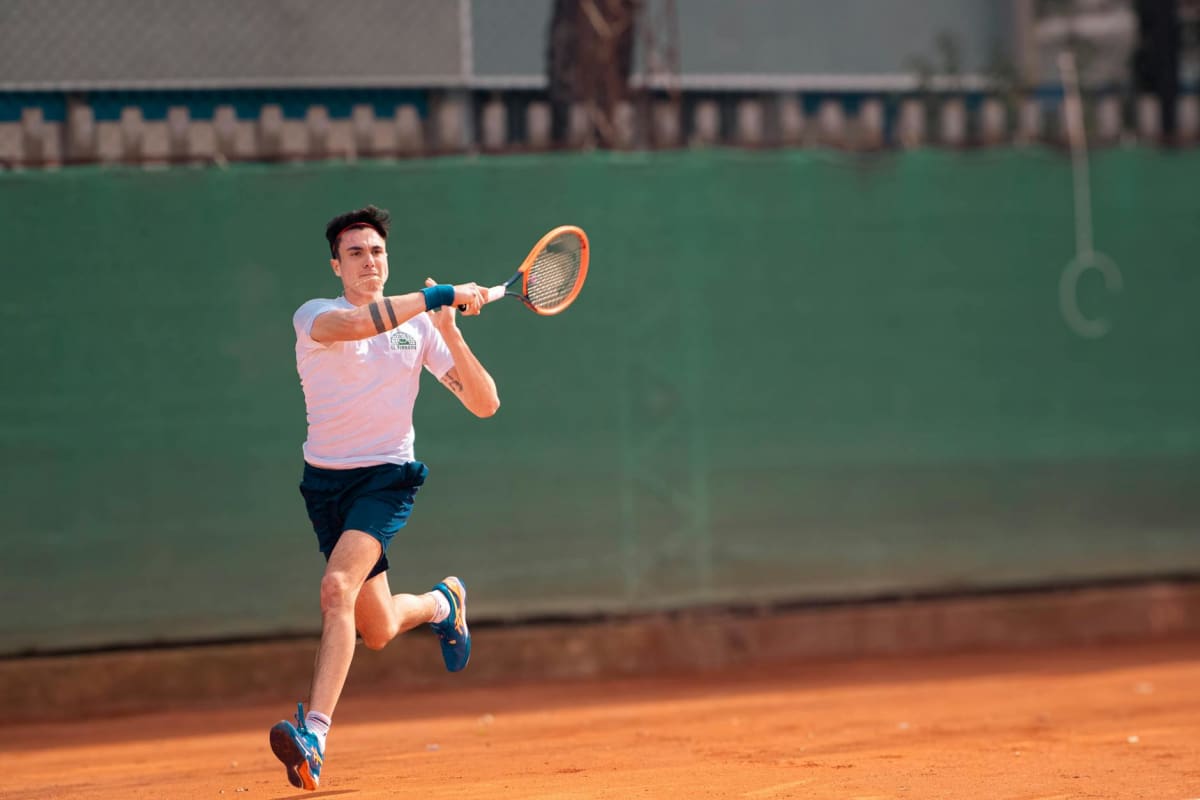
To watch Jannik Sinner navigate the Italian Open is to witness a specific type of kinetic burden. The 24-year-old enters the Foro Italico not merely as a participant, but as a gravitational center. Having already secured four Grand Slam titles by such a tender age, he exists in a bracket of rarefied air where the physics of his ball-striking—characterized by a low, blistering margin over the net—seem calibrated specifically to the stubborn, sliding nature of crushed brick.
Listen to the Second Serve Podcast
Get our daily AI-synthesized audio briefings and match reviews on the go.
The atmosphere in Rome is uniquely claustrophobic, a swirling vortex of national expectation that can either buoy a player or drag them into the red mire. Sinner describes this as an electric presence, a palpable frequency that vibrates through the stadium. He has learned that on clay, the ball’s transition from bounce to flight is the only true truth; there is no hiding behind raw pace when the surface is designed to dissipate the violence of a heavy topspin forehand.
It is worth noting that while Sinner commands the current narrative, the absence of Carlos Alcaraz—currently sidelined due to injury—leaves a vacuum in the high-stakes tactical chess matches that have come to define this generation. The sport is currently a series of movements and counter-movements, and without the Spaniard’s distinct brand of improvisational genius, the geometry of the tour shifts incrementally toward those who can sustain the longest, most physically taxing rallies.
The Old Guard and the Emergent Threats
The veteran perspective, voiced most notably by Marin Cilic, offers a stark reminder that the hierarchy of the ATP Tour is never truly static. Cilic, who is currently navigating his own return to competitive play, highlights Alexander Zverev and Casper Ruud as the most persistent thorns in the side of the status quo. Zverev, fresh from a deep run to the final at the Madrid Open, brings a serve that functions as a rhythmic disruptor, essentially preventing opponents from finding their footing.
Ruud remains perhaps the most honest practitioner of the clay-court craft. His game is a study in patience; he understands that the ATP rankings are not just numbers, but reflections of who can endure the mental degradation of a three-hour match. His heavy, looping forehand provides a structural base that makes him a terrifying prospect at Roland Garros, where the longer, looser clay rewards such persistence.
Cilic’s observations serve as a bridge between eras. He speaks with the cadence of someone who has stared down the barrel of peak-era dominance and survived. To hear him identify these specific threats is to understand that the clay-court season is not a singular event, but a slow, grinding accumulation of micro-victories that will eventually coalesce into a champion by the time the final point is played in Paris.
The Convergence of Historical Benchmarks
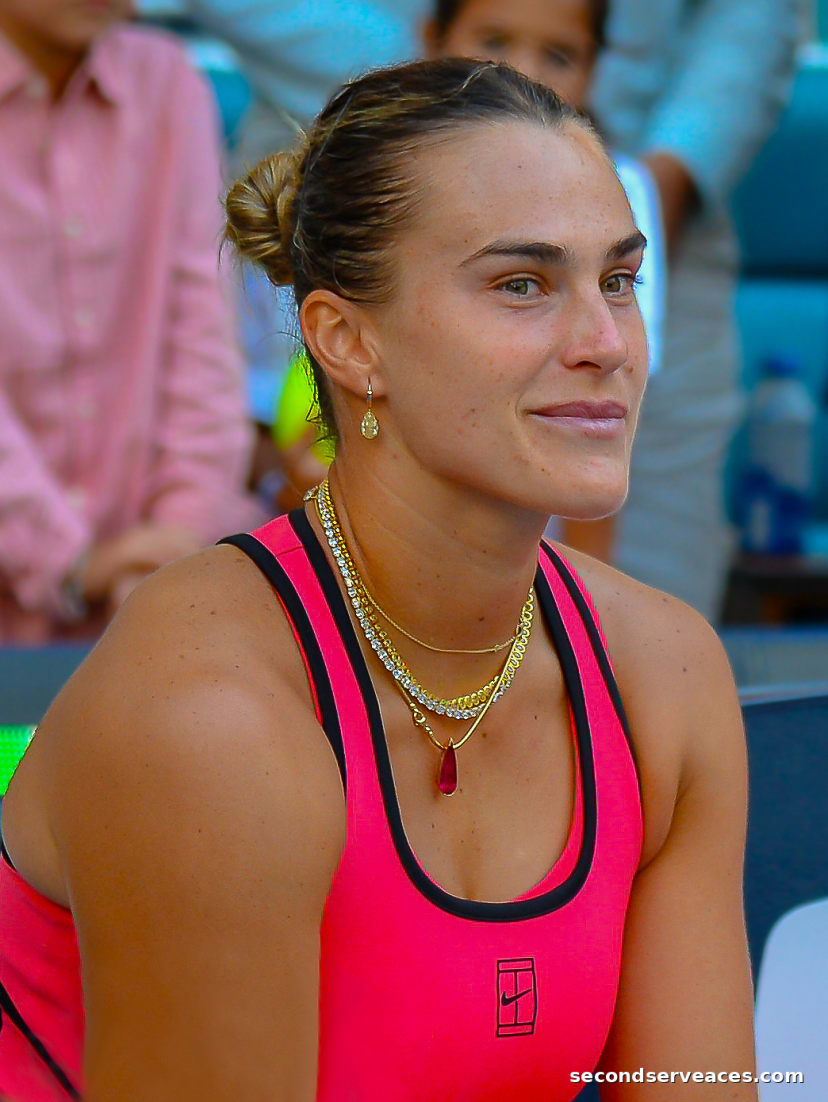
Parallel to the ATP’s tectonic shifts, the WTA circuit continues to produce anomalies of its own. Jessica Pegula, through a recent performance in Rome, has successfully mirrored a record long held by Venus Williams. This is the sort of statistic that feels purely mathematical until you place it in the context of the physical toll demanded by a modern schedule. It represents a consistency of output that is, in its own way, as impressive as the sheer, explosive power of Aryna Sabalenka.
These benchmarks are not merely trivia; they serve as a grounding mechanism for the sport. When a player hits a milestone set by a legend like Venus, it reinforces the continuity of the game. It suggests that while the racquets grow lighter and the biomechanics more precise, the core requirement—the ability to hold serve under duress and find the narrow alley of the court when the margin of error is razor-thin—remains constant.
Whether we are looking at Sinner’s accumulation of Grand Slam hardware or Pegula’s sustained excellence, we are witnessing the cold, beautiful mechanics of elite tennis. It is a sport of repetition and sudden, violent departures from that repetition. It is the physics of the spin meeting the geometry of the line, time and again, until only one player remains standing at the center of the stadium.
What Jannik Sinner Plays With
Head Speed MP 2024
Head Hawk Touch 1.25
Head Prime Tour (12-Pack)
Nike GP Challenge 1
Analyze Jannik Sinner vs. Carlos Alcaraz
Predict tactical adjustments, momentum swings, and serve strategy options for this match-up using our AI simulator.
The Aces Tactical Panel
This report was curated and edited by Bhaskar Goel. Tactical analysis and technical insights were provided by our specialized panel of expert correspondents.
Julian Price
Senior Tactical Correspondent
Stuffy, pedantic British academic and historian specializing in match momentum and historical context.
Elena Cruz
Director of Analytical Research
Data scientist specializing in court surface physics and movement patterns.
Bhaskar
The Editor & Fan
Passionate tennis player and site editor bringing everyday amateur insights and relatable fan commentary.
Arthur Vance
Senior Existential Analyst
Deep, eccentric, and DFW-inspired. Models court metaphysics, kinetic beauty, and player psychology.
Leo Sterling
High-Performance Consultant
Hard-nosed ex-trainer from Melbourne with a no-nonsense view on tour fitness.