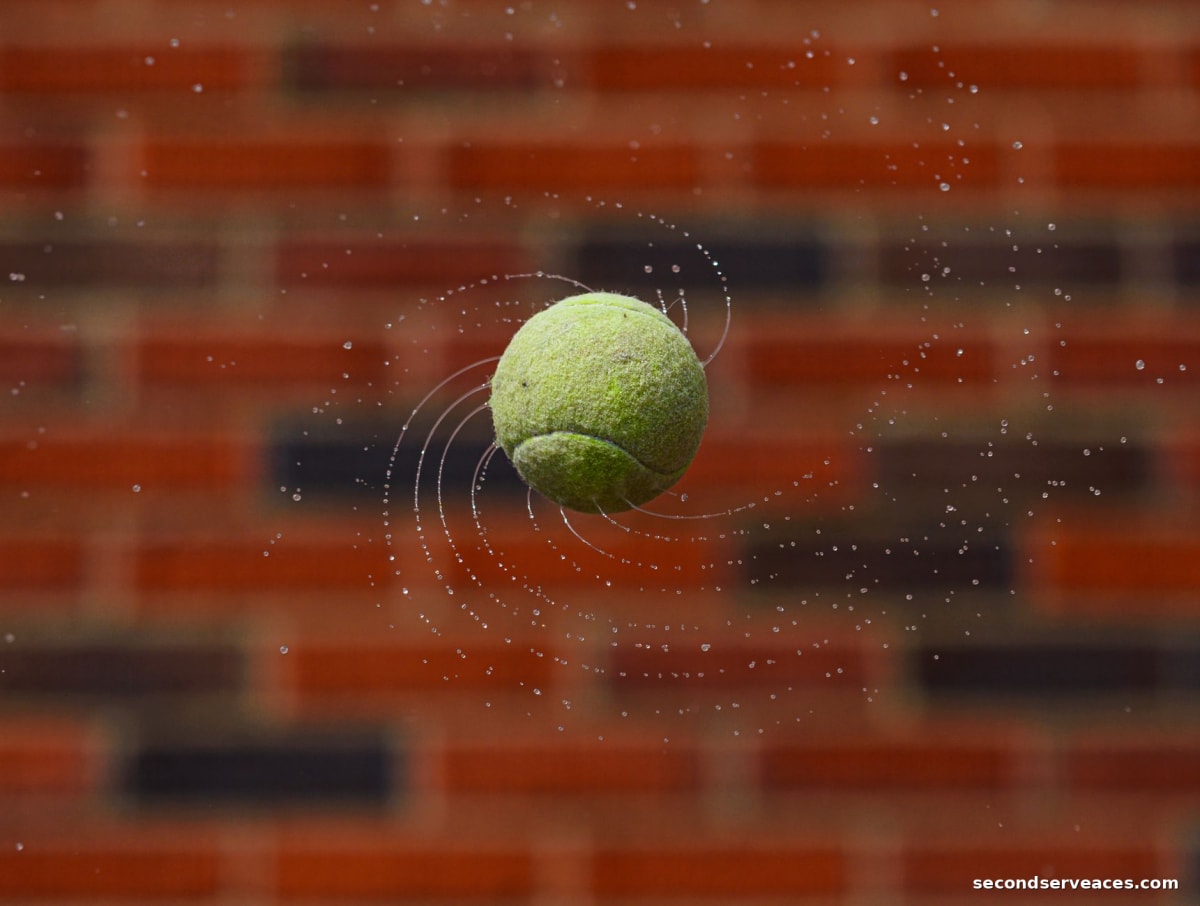
The Modern Power Serve: Weapon of Mass Destruction
Let’s be honest for a second. You cannot be serious if you think today’s serve is just a way to start the point. It is a weapon of absolute, unfiltered mass destruction. We’ve gone from the artistic, disguised deliveries of the wooden racket era to a biomechanical arms race that threatens to blow the very soul out of the game. If you watch modern tennis, you aren’t just watching a sport; you are watching human artillery at work.
Listen to the Second Serve Podcast
Get our daily AI-synthesized audio briefings and match reviews on the go.
The Biomechanical Monster: Launching from the Legs
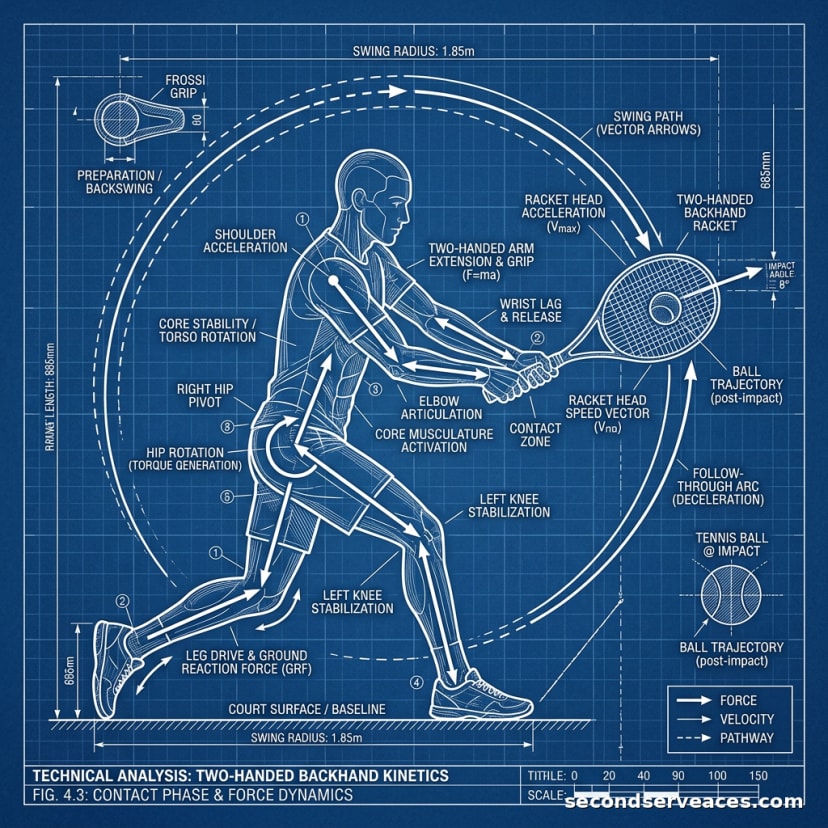
Back in my day, you kept your feet relatively quiet. You used your arm, you found your spots, and you volleyed. But today? The modern power serve is a full-body explosion. It starts in the dirt. Players coil their legs like steel springs, loading immense potential energy before launching upward and forward into the court. The kinetic chain is a marvel of physics—from the feet to the knees, through the hips, into the shoulder, and finally snapping through the wrist at contact heights that make your neck hurt just looking up.
But let’s get one thing straight: this isn’t just about raw muscle. It’s about racquet head speed. With modern graphite and composite frames, players can swing with violent acceleration without losing control of the ball. As we explored in From Wood to Carbon: The Engineering of the Modern Racket, the shift in equipment fundamentally rewired how players construct their service motion. Today’s players are taller, stronger, and backed by sports science that treats the serve like a ballistic missile launch.
The Death of Variety and the Rise of the Serve Bot
Look at the ATP Rankings. What do you see? A tour dominated by athletes who can routinely bomb 135 mph first serves on a bad day. The margin for error for the returner has shrunk to practically zero. We’ve entered the era of the "serve bot"—players who live and die by the ace, holding service games in under ninety seconds without ever having to hit a groundstroke. It’s efficient, sure. But is it beautiful? Absolutely not.
"We have traded the chess match of court geometry for a drag race. When every service game is a foregone conclusion, the drama of the break point—the ultimate crucible in tennis—is cheapened."
When you look at the greatest servers of the modern era, like Pete Sampras or Goran Ivanišević, there was still a sense of high-wire drama. They had to back up those massive deliveries with elite net play. But as we lamented in The Death of Serve-and-Volley: Tennis Lost Its Soul, the modern baseline-heavy game means that once that 140 mph bomb is hit, the server simply camps out on the baseline, waiting to swat away a weak return. It has turned what used to be a complex dialogue between server and returner into a shouting match.
Can the Return Ever Catch Up?
So, how do we fix it? How do we bring back the nuance? The governing bodies have tried slowing down the courts and fluffing up the balls, but human evolution and racket technology keep outrunning the rulebook. Returners are forced to stand deeper and deeper—sometimes practically in the front row of the stands—just to buy themselves a microsecond of reaction time. According to official player profiles on the ATP Tour Home, the average return position has drifted yards behind the baseline compared to thirty years ago. It’s a desperate survival tactic against an onslaught of pace.
Until we see a fundamental shift in court design or perhaps a limitation on racket power, the serve will remain the dictator of modern tennis. It’s brutal, it’s loud, and it’s not going away. But as much as I complain about the lack of volleys, you have to respect the sheer athletic audacity of a perfect 140 mph ace down the T on match point. That is theater, plain and simple.
Essential Matchday Add-Ons
Tournament-tested accessories and high-frequency consumables every competitive player keeps in their bag.
Tourna Grip Original Dry Feel Overgrip (10-Pack)
4.8 ★ (12,000+ reviews)
The gold standard for sweaty hands. Proprietary dry feel absorbs moisture better as play intensifies.
Luxilon ALU Power 125 Silver String Set
4.9 ★ (3,500+ reviews)
Unrivaled control and spin potential used by over 50% of the ATP Top 100 players.
Babolat Custom Damp Vibration Dampener (2-Pack)
4.7 ★ (4,200+ reviews)
Customizable dampening with removable central O-ring for fine-tuning court feedback and sound.
Penn Championship Extra Duty Tennis Balls (4-Can Pack)
4.7 ★ (8,900+ reviews)
Official ball of USTA League Tennis with extra-duty felt designed for abrasive hard courts.
Analyze Pete Sampras vs. Goran Ivanisevic
Predict tactical adjustments, momentum swings, and serve strategy options for this match-up using our AI simulator.
The Aces Tactical Panel
This report was curated and edited by Bhaskar Goel. Tactical analysis and technical insights were provided by our specialized panel of expert correspondents.
Julian Price
Senior Tactical Correspondent
Stuffy, pedantic British academic and historian specializing in match momentum and historical context.
Elena Cruz
Director of Analytical Research
Data scientist specializing in court surface physics and movement patterns.
Bhaskar
The Editor & Fan
Passionate tennis player and site editor bringing everyday amateur insights and relatable fan commentary.
Arthur Vance
Senior Existential Analyst
Deep, eccentric, and DFW-inspired. Models court metaphysics, kinetic beauty, and player psychology.
Leo Sterling
High-Performance Consultant
Hard-nosed ex-trainer from Melbourne with a no-nonsense view on tour fitness.
Related Reports

Quick Answers
How has racket technology impacted the speed of the modern tennis serve?+
The transition from wood to modern graphite and composite frames allows players to generate immense racket head speed and violent acceleration without losing control of the ball.
Why do modern tennis returners stand so far behind the baseline?+
Returners stand exceptionally deep behind the baseline as a survival tactic to buy themselves crucial microseconds of reaction time against serves exceeding 130 mph.
What is a 'serve bot' in modern professional tennis?+
A 'serve bot' is a colloquial term for a player who relies almost exclusively on an unreturnable, high-velocity serve to win service games quickly, often minimizing longer baseline rallies.