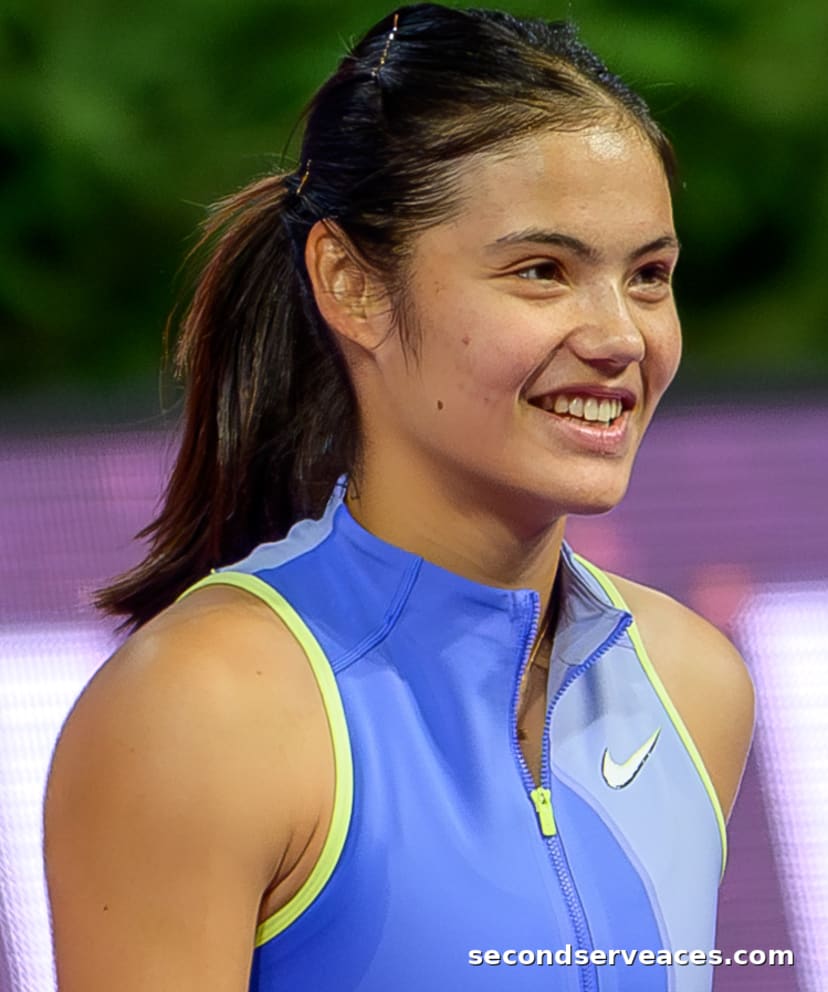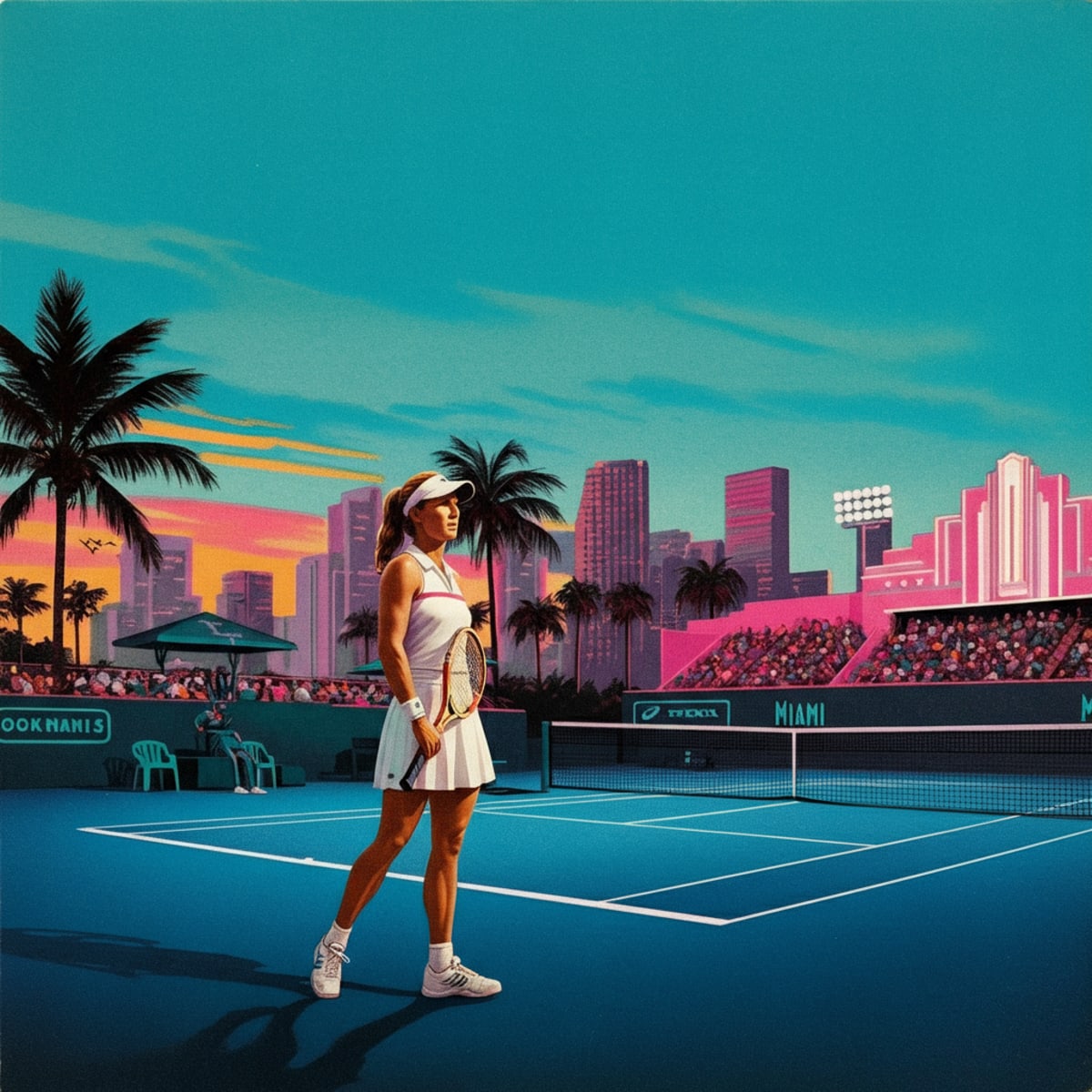
Welcome to the Magic City, where the neon glows bright and the hard courts bake under the relentless Florida sun. Unfortunately for the sun-kissed crowds at the Miami Open, the marquee will be missing a familiar and celebrated name. Our charming luminary, Emma Raducanu, has been forced to fold her hand early, withdrawing from the bustling tournament due to an unwelcome companion: lingering post-viral symptoms tracing back to a pesky February illness.
Listen to the Second Serve Podcast
Get our daily AI-synthesized audio briefings and match reviews on the go.
Rather than risk a perilous opening clash at less than full vitality, the Brit opted for caution. Slated as the 24th seed, she had safely pocketed a coveted first-round bye, yet the physical toll proved too steep a mountain to climb. Adding a layer of complexity to this sunbelt saga, the former Grand Slam champion currently navigates these turbulent competitive waters without a permanent coaching captain at the helm.
Recent Middle Eastern Stumbles
- Suffered opening-round defeats in the scorching deserts of Doha.
- Faced a subsequent early exit at the Dubai duty-free courts.
- Continues to search for a full-time tactical mentor to stabilize her traveling camp.
The Tactical Breakdown
Analyzing a withdrawal requires us to peek under the hood of Raducanu’s engine to understand precisely why stepping on court would be strategically disastrous. When firing on all cylinders, her tennis is an electric exhibition of first-strike baseline aggression. The talented baseline operator thrives on taking the ball exceptionally early, suffocating her opponent’s match momentum by stepping inside the baseline and rapidly redirecting pace.
However, executing such a high-wire tactical blueprint demands absolute physical perfection. Post-viral fatigue directly targets a player’s fast-twitch muscle fibers and cardiovascular endurance. To hit her trademark penetrating backhand down the line, Raducanu relies on crisp, explosive footwork to set the foundation. Without that spring in her step, optimal court geometry collapses. When energy reserves dwindle, players naturally drop a few feet further back from the baseline, allowing opponents to dictate the heavy topspin exchanges and easily exploit wide angles.
Furthermore, traversing this rough patch without a permanent coach leaves a significant strategic void. A seasoned voice in the box provides essential mid-match problem-solving, identifying when to flatten out a forehand or when to aggressively press on a critical break point. Lacking that distinct tactical sounding board, while simultaneously battling muscular lethargy, makes enduring the grinding rallies of modern hard-court tennis a near-impossible task.
The Bigger Picture
Navigating the unforgiving currents of the global tennis circuit is a marathon, not a sprint. This latest Miami setback is undoubtedly frustrating for the 2021 US Open champion, but it is merely a chapter in a much larger, ongoing volume.
Stepping back from the daily grind reveals a clear structural mandate for the Brit. Her priority now must shift entirely to physical rehabilitation and establishing a sturdy operational base. History reminds us that prodigies who burst onto the scene often endure a prolonged period of physiological realignment. Without the protective scaffolding of a permanent coaching team, the week-to-week transitions across varied climates—from the dry heat of the Middle East to the humid slog of Florida—become exponentially more taxing on the body.
Healing fully remains her paramount objective. Rushing back into the fray before shedding these lingering viral ghosts would only invite further disruption to her ranking trajectory. Once the physical foundation is robustly restored and a trusted tactician is hired to guide her daily training regimens, the tennis world knows precisely the caliber of play she is capable of unleashing.
Simulate Emma Raducanu Match Scenarios
Simulate high-pressure scenarios, score leverage points, and tactical responses for ATP and WTA players.
The Aces Tactical Panel
This report was curated and edited by Bhaskar Goel. Tactical analysis and technical insights were provided by our specialized panel of expert correspondents.
Julian Price
Senior Tactical Correspondent
Stuffy, pedantic British academic and historian specializing in match momentum and historical context.
Elena Cruz
Director of Analytical Research
Data scientist specializing in court surface physics and movement patterns.
Bhaskar
The Editor & Fan
Passionate tennis player and site editor bringing everyday amateur insights and relatable fan commentary.
Arthur Vance
Senior Existential Analyst
Deep, eccentric, and DFW-inspired. Models court metaphysics, kinetic beauty, and player psychology.
Leo Sterling
High-Performance Consultant
Hard-nosed ex-trainer from Melbourne with a no-nonsense view on tour fitness.