The Recursive Geometry of Coaching Stability
In the volatile, high-entropy ecosystem of professional tennis, the coaching carousel is often viewed as a mechanism for optimization—a frantic attempt to calibrate the human machine to the demands of the modern baseline. For Emma Raducanu, currently holding steady at world No. 27, the professional narrative since her 2021 surge has been defined by a constant, almost restless state of administrative flux. The announcement of her training block in Alicante with Andrew Richardson represents a distinct, if not desperate, retreat toward a known variable.
Listen to the Second Serve Podcast
Get our daily AI-synthesized audio briefings and match reviews on the go.
The return to the Ferrer Academy in Spain for this brief pre-tournament segment serves as a structural pivot point ahead of the 2026 Italian Open, which commences on May 5th. By engaging with Richardson, the mentor who oversaw her most frictionless period of transition, Raducanu is signaling a desire to simplify the external input variables that have cluttered her game since the January 2026 split with Francisco Roig.
There is a quiet, mathematical beauty in the concept of returning to the origin. Coaching, at its highest level, is an exercise in pattern recognition and trust. After cycling through a litany of high-profile names—Nigel Sears, Torben Beltz, Dmitry Tursunov, and others—Raducanu’s choice to re-anchor with Richardson suggests that the goal is not technical reinvention, but rather the recovery of a subconscious flow state that once characterized her groundstrokes.
The Tactical Geometry of the Clay in Rome
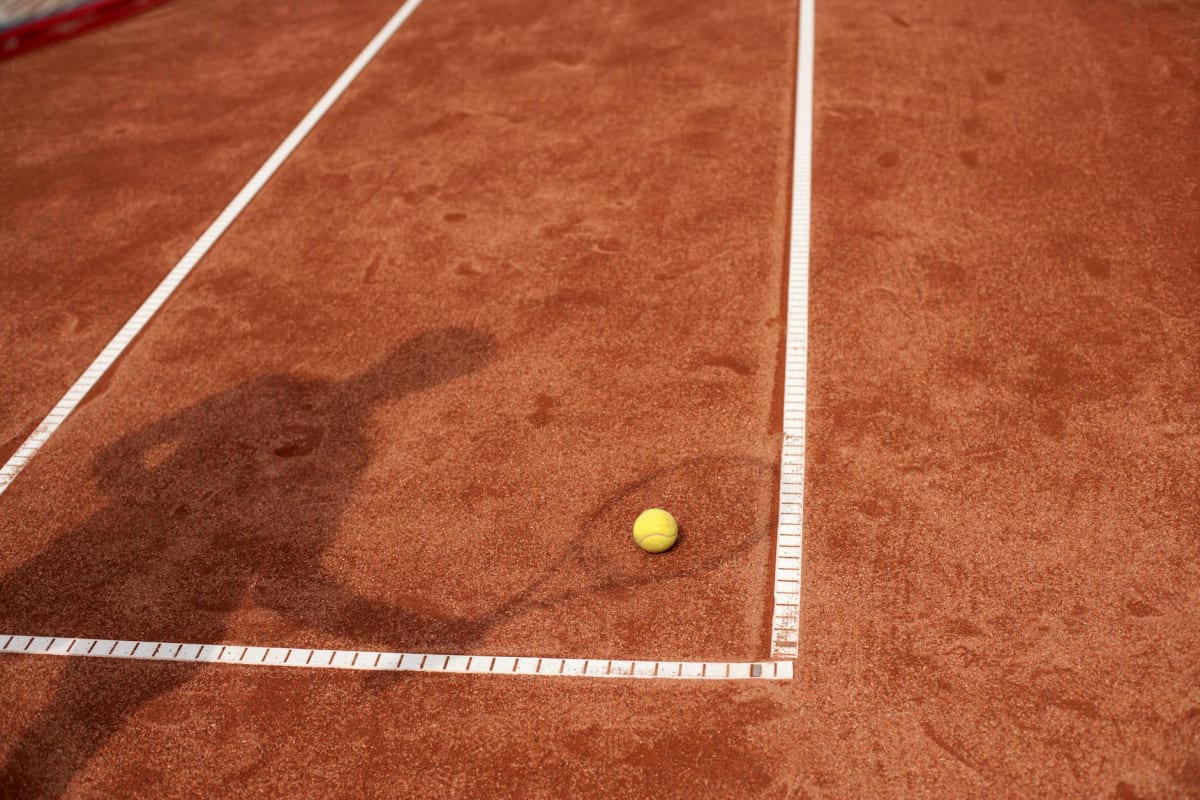
The WTA tour’s shift to the Italian red clay demands a specific, heavy-handed kinetic energy. The clay surface, with its characteristic frictional coefficient, forces a deviation from the linear, flat-hitting patterns that dominate faster hard courts. For a player who reached the fourth round in Rome in 2025, the challenge is recalibrating the depth of her penetration against the abrasive surface physics of the Foro Italico.
Richardson’s role in this limited-window training block is likely not to overhaul the biomechanics of the Raducanu forehand, but to stabilize the peripheral noise. In professional tennis, the difference between a winner and an unforced error often resides in a millisecond of hesitation—a cognitive lag caused by conflicting tactical instructions. The return to a trusted voice is essentially an attempt to prune these neural branches.
We must consider the historical precedent of players finding solace in past associations when the weight of expectation becomes a secondary opponent. Raducanu, standing at a junction in her twenties, is navigating a career path that is less a straight line and more a series of iterative corrections. The Italian Open represents a high-stakes crucible where this new-old partnership will be tested against the finest defensive specialists in the women’s game.
A Taxonomy of the Coaching Carousel
The litany of names in Raducanu’s professional history—Mark Petchey, Alexis Canter, Emma Stewart, and the organizational influences of people like Vladimir Platenik—reveals a player seeking a synthesis of styles. This is the hallmark of a modern wunderkind searching for an identity in a sport that relentlessly commodifies talent. The intensity of the spotlight on her coaching decisions is proportional to the singular nature of her initial success; the world expects a linear progression where, in reality, there is only the grind of the WTA Tour.
Whether the Richardson reunion provides the necessary equilibrium for a deep run in Rome remains to be seen. The physics of the game—the spin rates, the court speed, the precise placement of a cross-court backhand to pull an opponent wide—are immutable. What changes is the player’s internal state. By shedding the uncertainty of the post-Roig vacuum, Raducanu is attempting to clear the sensory intake valves.
Ultimately, the Italian Open will serve as the first raw data point for this second era of the Raducanu-Richardson dynamic. It is a calculated wager on consistency in an environment that rewards only the most stable of architectures. We watch not just for the score, but to see if the architecture holds.
What Coco Gauff Plays With
Head Boom MP 2024
Head Lynx Tour 1.25
Analyze Emma Raducanu vs. Francisco Roig
Predict tactical adjustments, momentum swings, and serve strategy options for this match-up using our AI simulator.
The Aces Tactical Panel
This report was curated and edited by Bhaskar Goel. Tactical analysis and technical insights were provided by our specialized panel of expert correspondents.
Julian Price
Senior Tactical Correspondent
Stuffy, pedantic British academic and historian specializing in match momentum and historical context.
Elena Cruz
Director of Analytical Research
Data scientist specializing in court surface physics and movement patterns.
Bhaskar
The Editor & Fan
Passionate tennis player and site editor bringing everyday amateur insights and relatable fan commentary.
Arthur Vance
Senior Existential Analyst
Deep, eccentric, and DFW-inspired. Models court metaphysics, kinetic beauty, and player psychology.
Leo Sterling
High-Performance Consultant
Hard-nosed ex-trainer from Melbourne with a no-nonsense view on tour fitness.