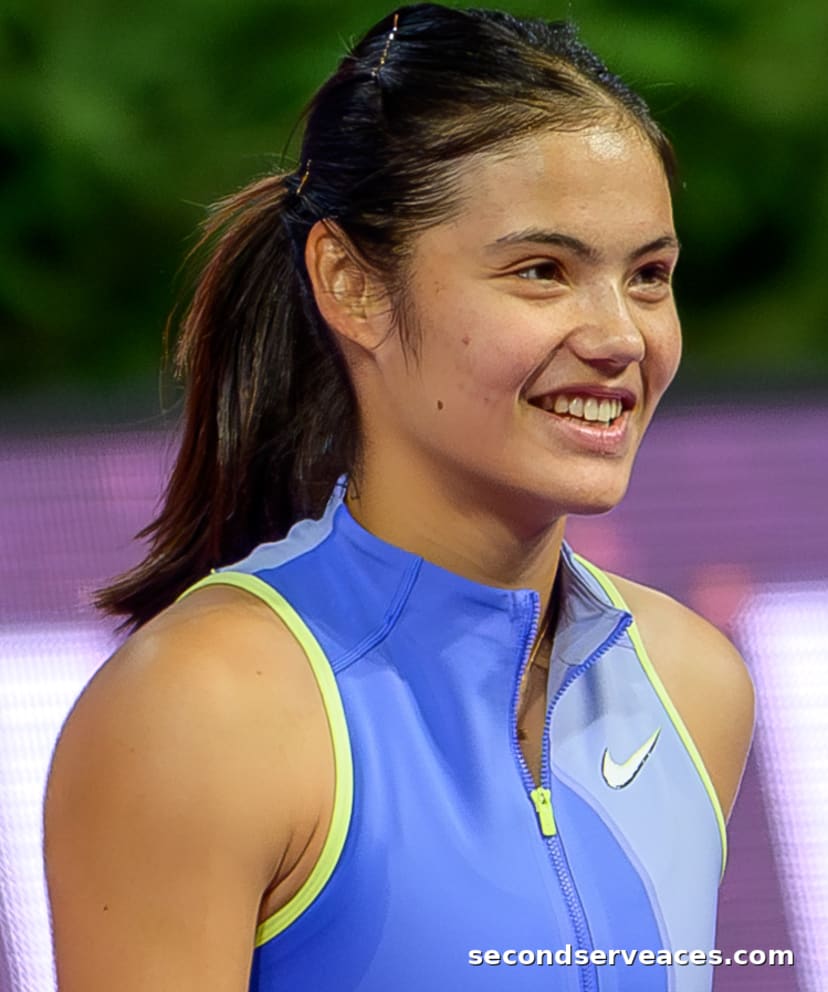
In this game, consistency is the ultimate currency. When the noise of the tour gets too loud, the only way to find your center is to strip it back to the fundamentals. Emma Raducanu has done exactly that, retreating to the Italian Open pre-tournament cycle with a familiar face: Andrew Richardson. At the David Ferrer Academy in Spain, the focus isn't on the flash of the WTA Tour, but on the raw, repetitive labor that wins matches.
Listen to the Second Serve Podcast
Get our daily AI-synthesized audio briefings and match reviews on the go.
The Architecture of the Ferrer Academy Training Block
There is a specific kind of silence in the Spanish sun when you’re working on your craft. By choosing the Ferrer Academy, Raducanu is betting on an environment that values relentless court coverage and high-intensity movement over the glitz of the tour. This is a deliberate tactical reset, an attempt to stabilize the baseline mechanics that have been tested by a disjointed start to the year.
Richardson, the architect of her most significant career milestone, provides more than just technical input; he offers a blueprint of familiarity. While the industry is quick to label every coaching reunion as a permanent shift, the reality is far more clinical. This is a short-term surgical adjustment, a diagnostic period designed to bridge the gap left by an absence from competition since the Indian Wells tournament in early March.
The coaching landscape for Raducanu has been a revolving door of influence, from Nigel Sears to Francisco Roig. Yet, the choice to return to Richardson for this training phase speaks volumes about where she feels her game needs to be physically and mentally. It isn't about rewriting history; it's about reclaiming the rhythm that defined her breakout.
Navigating the Physical Toll of a Fragmented Season
The physical grind of professional tennis is unforgiving, and for Emma Raducanu, the 2024 calendar has been anything but linear. A viral illness wiped out her appearances in Miami, forcing a withdrawal that ripple-effected into skipped events in Linz and Madrid. When you aren't playing, you aren't sharpening the instincts required to thrive in the red dust of European spring.
Recovery is often harder than the performance itself. The mental drain of being sidelined while your peers are hitting consistent winners in competitive environments is a unique kind of torture. By the time she steps onto the clay in Rome, the question won't be about potential, but about her capacity to withstand the prolonged rallies that define the surface. She needs to rebuild the aerobic base that was stunted by her mid-spring hiatus.
In Rome, the practice courts become the most vital theater of her season. Scheduled to hit with Eva Lys this Saturday, Raducanu is under the microscope. This isn't about winning a trophy yet; it’s about testing the durability of her serve and the depth of her penetration against a live opponent. The court doesn't lie—every double fault or short ball will tell her exactly where the fitness level sits.
The Myth of Permanent Coaching Stability
The tennis industry loves a narrative of 'long-term vision,' but the reality is often much grittier. Richardson’s presence at the Ferrer Academy is temporary, a tactical 'patch' rather than a long-term firmware update. In a sport where survival is dictated by the next break point, long-term contracts are often secondary to the immediate need for a trusted set of eyes.
Raducanu’s history—marked by rapid shifts in her entourage—reflects a player looking for a specific language of instruction. Whether it was her work with Alexis Canter or the tenure of other high-profile coaching veterans, the goal remains the same: finding a voice that resonates under the pressure of a third-set tiebreak. The Richardson reunion is a nod to a time when her game felt most explosive and instinctive.
Ultimately, the tennis court is an island. Once the chair umpire calls 'time,' no coach can swing the racket for you. Whether this stint in Spain provides the necessary spark for her to regain her competitive edge is entirely up to how she processes the workload. The clay doesn't hide weakness; it exposes it. We will see exactly how much this training has paid off when she makes her opening bow in Rome.
Analyze Emma Raducanu vs. Andrew Richardson
Predict tactical adjustments, momentum swings, and serve strategy options for this match-up using our AI simulator.
The Aces Tactical Panel
This report was curated and edited by Bhaskar Goel. Tactical analysis and technical insights were provided by our specialized panel of expert correspondents.
Julian Price
Senior Tactical Correspondent
Stuffy, pedantic British academic and historian specializing in match momentum and historical context.
Elena Cruz
Director of Analytical Research
Data scientist specializing in court surface physics and movement patterns.
Bhaskar
The Editor & Fan
Passionate tennis player and site editor bringing everyday amateur insights and relatable fan commentary.
Arthur Vance
Senior Existential Analyst
Deep, eccentric, and DFW-inspired. Models court metaphysics, kinetic beauty, and player psychology.
Leo Sterling
High-Performance Consultant
Hard-nosed ex-trainer from Melbourne with a no-nonsense view on tour fitness.