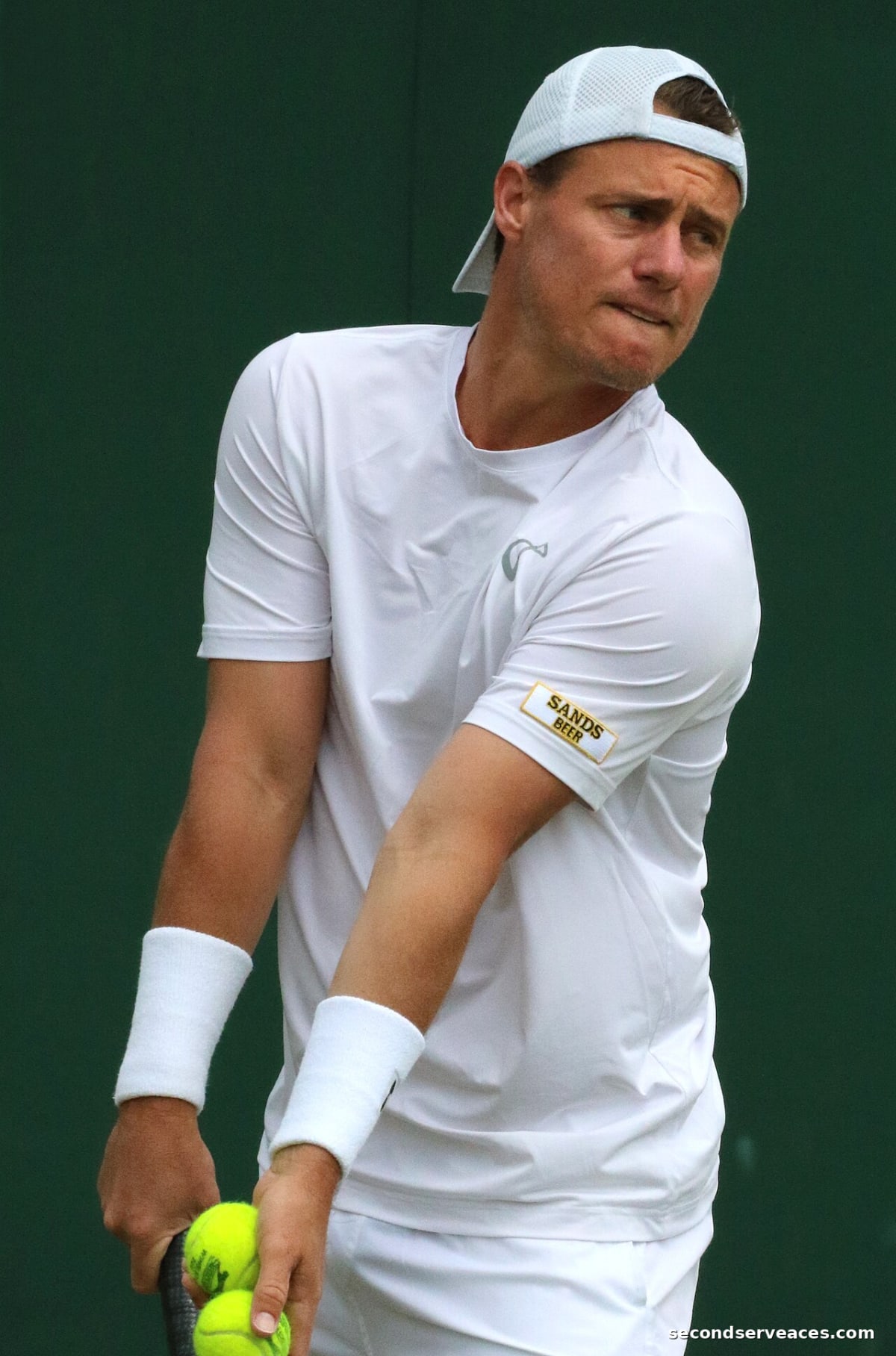
There is a unique kind of pressure that comes with carrying a legendary name onto the grass of SW19. You do not just play your opponent; you play the ghosts of championships past. Seventeen-year-old Cruz Hewitt stepped onto the court today not to escape his father’s shadow, but to carve out his own light. With a relentless display of modern power, the young Australian defeated the Netherlands' Thijs Boogaard 6-4, 6-4, booking his place in the boys' singles final without dropping a single set all week.
Listen to the Second Serve Podcast
Get our daily AI-synthesized audio briefings and match reviews on the go.
This victory marks a monumental moment for Australian tennis. Cruz is the first boy from his nation to reach the final at Wimbledon since Alex de Minaur accomplished the feat a decade ago. While his father, former World No. 1 and 2002 champion Lleyton Hewitt, watched from the player's box, the young prospect demonstrated that his game is built for the modern era—fusing the legendary grit of his bloodline with a devastating, contemporary serve-first arsenal.
Under the guidance of coach Wayne Arthurs, Cruz has refined his aggressive baseline game to suit the fast-paced grass courts. While his father was known for his counter-punching masterclasses, the younger Hewitt relies on proactive aggression to seize control of the match momentum. This strategic evolution was on full display throughout the 80-minute semifinal clash, keeping Boogaard under constant pressure.
The Serve-First Blueprint Destroys Boogaard's Baseline Defense
From the opening game, Cruz Hewitt made his tactical intentions clear. He did not look to engage in the marathon, grueling baseline exchanges that characterized his father's career. Instead, he relied on a blistering first serve that averaged 120mph (194kph). This raw pace constantly pulled Boogaard out of his comfort zone, yielding short returns that Hewitt eagerly punished with his aggressive forehand.
Boogaard, a highly capable clay-court slider, struggled to find his footing on the slick grass. Every time the Dutch player attempted to establish a rhythm from the back of the court, Hewitt disrupted the tempo. A single break of serve in each set was all the young Australian needed, protecting his own delivery with absolute authority and refusing to give Boogaard a single look at a comeback.
The tactical discipline displayed by Hewitt was remarkable for a seventeen-year-old. Under the watchful eye of mentor Lleyton Hewitt, the young prospect showed a maturity that mirrored the family's trademark competitive spirit. Rather than overplaying in pressure moments, he stayed committed to his patterns, using his height and leverage to dictate play from the center of the court.
Wayne Arthurs and the Evolution of the Hewitt Arsenal
The influence of former Australian player Wayne Arthurs in Hewitt's box cannot be overstated. Arthurs, famous during his playing days for possessing one of the most lethal left-handed serves on the tour, has successfully injected that aggressive DNA into Cruz's game. According to the official ATP Tour records, the modern game demands this blend of velocity and spot-serving, a stark contrast to the baseline grinding of the early 2000s.
This technical evolution has transformed Cruz into a highly dangerous grass-court player. While his father’s legendary footwork and defensive anticipation are still visible in his movement, Cruz's ability to win free points behind his first delivery gives him a distinct advantage on this surface. He is able to hold serve rapidly, putting immense scoreboard pressure on his opponents.
As we saw in our previous analysis of grass-court tactics in Muchova vs. Osaka: Grass Court Mastery and Czech Dominance, holding serve efficiently on grass allows players to take bigger risks on return games. Cruz executed this strategy to perfection, waiting for the precise moment to strike on Boogaard's second serve to secure the crucial breaks.
A Sunday Showdown Against America's Jordan Lee
The job is not yet finished. On Sunday, Cruz Hewitt will face Jordan Lee of the United States in the boys' championship match. Lee, who has shown exceptional tactical versatility throughout the tournament, will present a completely different set of challenges. It will be a classic battle of styles, pitching Hewitt's raw power against the tactical court crafting of the American.
The anticipation in the Australian tennis community is palpable. Not since the days of De Minaur has a junior prospect generated this much excitement on the lawns of London. With Lleyton Hewitt offering mentoring support and Wayne Arthurs fine-tuning the tactical game plan, Cruz has the ultimate support system to help him navigate the immense pressure of a Grand Slam final.
Whether he lifts the trophy or not, this run has proven that Cruz Hewitt is a force to be reckoned with. He has stepped out of the shadow of his father's 30 singles titles and established himself as a legitimate future star of the sport. Sunday's final promises to be an explosive contest where the young Australian will look to write his own chapter in Wimbledon history.
Rivalry Matchup & Player Profiles
| Metric | Cruz Lleyton Hewitt | Lleyton Glynn Hewitt |
|---|---|---|
| Rank | Current ATP singles No. 606 (as of June 22, 2026) | Former World No. 1 |
| Age | 17 (born December 11, 2008) | 45 (born February 24, 1981) |
| Country | Australia | Australia |
| Height | 1.85 m (6 ft 1 in) | 1.78 m (5 ft 10 in) |
| Handedness | Right-handed (two-handed backhand) | Right-handed |
| Play Style | Serve-oriented, aggressive (big serve, powerful forehand) | Aggressive baseliner (court speed, counter-punching) |
| Career Titles | 0 | 30 singles titles, 3 doubles titles |
While there is no professional singles head-to-head record between Cruz and his father Lleyton, their tennis connection runs deep. Cruz stands three inches taller than his father, a physical advantage that allows him to generate a much more imposing serve-centric game style. While Lleyton wore opponents down with unrelenting baseline play and legendary counter-punching, Cruz looks to dictate points early with his 120mph first serve and heavy forehand.
Lleyton Hewitt's transition from legendary competitor to mentor and doubles partner has provided Cruz with an invaluable mental edge. Having a former World No. 1 in your corner who understands the unique psychological demands of SW19 is a luxury few junior players possess. On Sunday, Cruz will attempt to join his father on the honor rolls of Wimbledon champions.
Essential Matchday Add-Ons
Tournament-tested accessories and high-frequency consumables every competitive player keeps in their bag.
Tourna Grip Original Dry Feel Overgrip (10-Pack)
4.8 ★ (12,000+ reviews)
The gold standard for sweaty hands. Proprietary dry feel absorbs moisture better as play intensifies.
Luxilon ALU Power 125 Silver String Set
4.9 ★ (3,500+ reviews)
Unrivaled control and spin potential used by over 50% of the ATP Top 100 players.
Babolat Custom Damp Vibration Dampener (2-Pack)
4.7 ★ (4,200+ reviews)
Customizable dampening with removable central O-ring for fine-tuning court feedback and sound.
Penn Championship Extra Duty Tennis Balls (4-Can Pack)
4.7 ★ (8,900+ reviews)
Official ball of USTA League Tennis with extra-duty felt designed for abrasive hard courts.
Analyze Cruz Hewitt vs. Lleyton Hewitt
Predict tactical adjustments, momentum swings, and serve strategy options for this match-up using our AI simulator.
The Aces Tactical Panel
This report was curated and edited by Bhaskar Goel. Tactical analysis and technical insights were provided by our specialized panel of expert correspondents.
Julian Price
Senior Tactical Correspondent
Stuffy, pedantic British academic and historian specializing in match momentum and historical context.
Elena Cruz
Director of Analytical Research
Data scientist specializing in court surface physics and movement patterns.
Bhaskar
The Editor & Fan
Passionate tennis player and site editor bringing everyday amateur insights and relatable fan commentary.
Arthur Vance
Senior Existential Analyst
Deep, eccentric, and DFW-inspired. Models court metaphysics, kinetic beauty, and player psychology.
Leo Sterling
High-Performance Consultant
Hard-nosed ex-trainer from Melbourne with a no-nonsense view on tour fitness.
Related Reports
Quick Answers
What was the score of Cruz Hewitt's semifinal match against Thijs Boogaard?+
Cruz Hewitt defeated Thijs Boogaard of the Netherlands 6-4, 6-4 to advance to the boys' Wimbledon final.
Who is coaching and mentoring Cruz Hewitt during his Wimbledon run?+
Cruz Hewitt is coached by Wayne Arthurs, while his father, former World No. 1 Lleyton Hewitt, serves as his mentor and supporter.
Who will Cruz Hewitt play in the boys' Wimbledon final?+
Cruz Hewitt will play Jordan Lee of the United States in the final on Sunday.