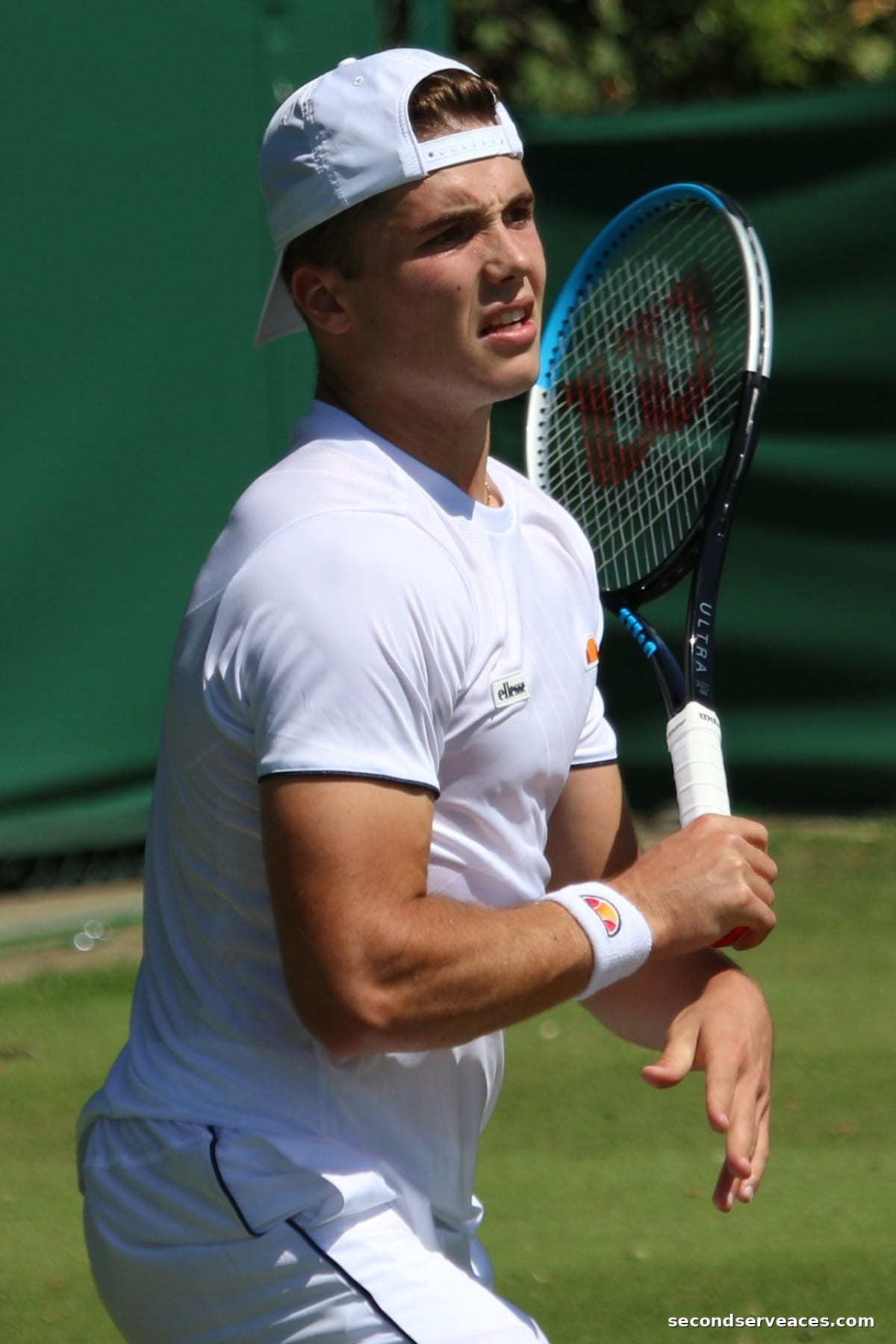
The fairytale run of Arthur Fery came to an end on the lawns of SW19. The 23-year-old British wildcard, who captured the imagination of the home crowd over the fortnight, was stopped in the semifinals by reigning French Open champion Alexander Zverev. Despite the defeat, Fery's performance throughout the tournament marks a monumental shift in his career trajectory, propelling him to a career-high ranking of world No. 36 and establishing him as the new British No. 1.
Listen to the Second Serve Podcast
Get our daily AI-synthesized audio briefings and match reviews on the go.
Entering the match, the tactical contrast was stark. Fery, standing at 1.74 meters, relies on variation, low slice, and sharp court positioning to disrupt his opponents. In contrast, the 1.98-meter Zverev brought his trademark heavy baseline depth and explosive serve to the court. While Fery fought valiantly to keep the German moving forward, Zverev's relentless consistency from the back of the court ultimately dictated the terms of the match.
The First-Set Tie-Break Turning Point
The opening set was a masterclass in tactical chess on grass. Fery utilized his low-bouncing slice to keep Zverev from finding a comfortable hitting zone, frequently coming to the net to finish points with delicate volleys. The British crowd rallied behind Fery as he matched the world No. 3 blow for blow, forcing a critical first-set tie-break. However, this is where Zverev's big-match experience proved decisive.
Zverev locked down his baseline play, refusing to commit unforced errors and punishing any short balls from the wildcard. The German swept through the tie-break with a flawless 7-0 scoreline. This sudden shift in match momentum proved difficult for Fery to overcome, as the physical and mental exertion of the tournament began to take its toll on the young Brit.
With the first set secured, Zverev wasted no time capitalizing on his advantage. He broke Fery's serve early in the second set, utilizing deep return-of-serve metrics to neutralize Fery's serve-and-volley attempts. Zverev wrapped up the second set in just 38 minutes, putting on a clinic of aggressive baseline tennis that left Fery searching for answers on the fast grass surface.
Fery's Road to the Final Four
Fery's journey to the semifinals was paved with remarkable grit and tactical intelligence. Before facing Zverev, Fery put on a spectacular display of counter-punching in the quarter-finals, where he defeated Italy's Flavio Cobolli. That victory, combined with his earlier triumph over Grigor Dimitrov, which we analyzed in our previous match report, solidified Fery's status as a legitimate threat on grass courts.
Throughout his breakthrough run, Fery demonstrated the value of variety. Lacking the raw power of the tour's giants, he relied on short angles, sudden drop shots, and transition play to keep his opponents off balance. His ability to change the pace of rallies frustrated more experienced baseline players, proving that tactical creativity still has a prominent place in the modern game.
While the semifinal loss hurts in the immediate term, the broader implications for Fery's career are immense. On Monday, he will officially ascend to the top spot in British men's tennis. This ranking surge will grant him direct entry into future Grand Slam main draws, ensuring he no longer has to rely on wildcards to test his skills against the world's elite.
Zverev's Net Transition and Grass Progression
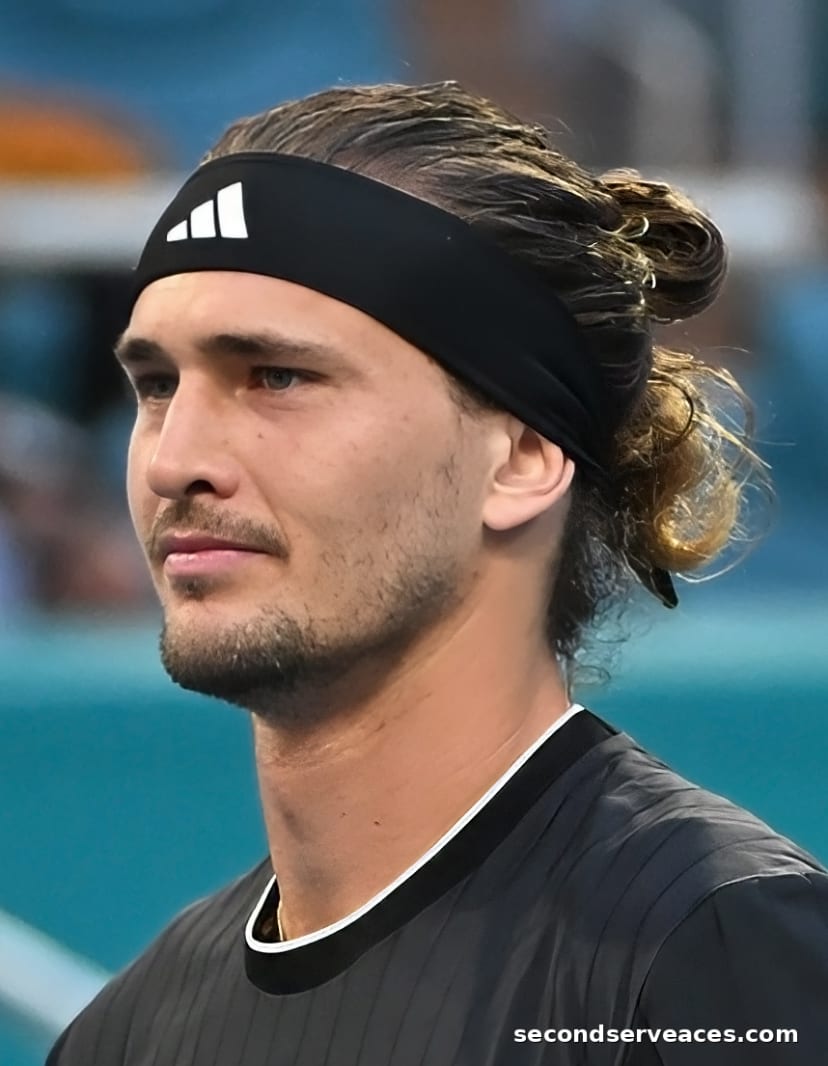
For Alexander Zverev, this victory represents another step forward in his adaptation to grass. Historically more comfortable on the clay of Paris or slow hard courts, the German has actively worked to incorporate more net play and aggressive positioning into his game. Against Fery, Zverev frequently moved forward, utilizing his massive wingspan to cut off passing shots and close out points quickly.
According to the official ATP Tour statistics, Zverev's first-serve percentage and points won behind his first delivery remained incredibly high throughout the match. This serving dominance prevented Fery from generating break point opportunities, allowing Zverev to play with immense freedom on his own return games.
Having reached the final four alongside Jannik Sinner, as predicted in our semifinal preview, Zverev looks primed to challenge for his maiden grass-court Grand Slam title. His clinical performance against Fery showed that he has the defensive capabilities and the offensive weapons required to master the quick, low-bouncing conditions of the All England Club.
Rivalry Matchup & Player Profiles
| Metric | Arthur Fery | Alexander Zverev |
|---|---|---|
| Rank | World No. 36 | World No. 3 |
| Country | Great Britain | Germany |
| Age | 23 | 29 |
| Height | 1.74 m (5 ft 9 in) | 1.98 m (6 ft 6 in) |
| Handedness | Right-handed (two-handed backhand) | Right-handed (two-handed backhand) |
| Play Style | Aggressive baseliner, touch & variation, serve-and-volley | Aggressive baseliner, powerful serve, solid two-handed backhand |
| Career Titles | 0 ATP Titles (5 Challenger/ITF) | 25 ATP Tour singles titles |
This semifinal clash marked the very first meeting on the main tour between Arthur Fery and Alexander Zverev, establishing a 1-0 head-to-head lead for the German. The matchup highlighted a fascinating clash of styles: Fery's low-slung, court-crafting variation operating against Zverev's towering, high-octane baseline rhythm. While Zverev's experience and power carried him through the key moments of their battle on the grass, Fery proved that his unique tactical identity can disrupt even the elite of the ATP rankings.
What Alexander Zverev Plays With
Head Gravity Pro
Head Hawk Touch 1.25
Head Prime Tour (12-Pack)
Analyze Arthur Fery vs. Alexander Zverev
Predict tactical adjustments, momentum swings, and serve strategy options for this match-up using our AI simulator.
The Aces Tactical Panel
This report was curated and edited by Bhaskar Goel. Tactical analysis and technical insights were provided by our specialized panel of expert correspondents.
Julian Price
Senior Tactical Correspondent
Stuffy, pedantic British academic and historian specializing in match momentum and historical context.
Elena Cruz
Director of Analytical Research
Data scientist specializing in court surface physics and movement patterns.
Bhaskar
The Editor & Fan
Passionate tennis player and site editor bringing everyday amateur insights and relatable fan commentary.
Arthur Vance
Senior Existential Analyst
Deep, eccentric, and DFW-inspired. Models court metaphysics, kinetic beauty, and player psychology.
Leo Sterling
High-Performance Consultant
Hard-nosed ex-trainer from Melbourne with a no-nonsense view on tour fitness.
Related Reports
Quick Answers
Who defeated Arthur Fery in the Wimbledon semifinals?+
Arthur Fery was defeated in the semifinals by the reigning French Open champion, Alexander Zverev.
What will Arthur Fery's ranking be after his Wimbledon run?+
Following his semifinal run, Arthur Fery will rise to a career-high ranking of world No. 36 and become the new British No. 1.
How long did the second set of the Fery vs. Zverev semifinal last?+
Alexander Zverev won the second set of the semifinal match in 38 minutes after winning the first-set tie-break 7-0.