The red clay of Roland-Garros isn't just a surface; it's a living, breathing crucible. When the mercury spikes, the dust rises, and the air grows thin, it becomes an open book of a player's physical and mental limits. During this year's tournament, that book was written in sweat, dizziness, and sheer survival as extreme temperatures transformed the second Grand Slam of the year into a battle against heat exhaustion.
Listen to the Second Serve Podcast
Get our daily AI-synthesized audio briefings and match reviews on the go.
The Clay Becomes an Oven for Ruud and Safiullin
Casper Ruud, a competitor built for the physical torture of clay-court tennis, found himself pushed past the brink of human endurance during his grueling five-set first-round clash against Roman Safiullin. Under a blistering 91.4°F (33°C) sun, the court acted as a thermal radiator, reflecting the heat directly back into the players' faces. What should have been a baseline chess match quickly degenerated into a brutal test of cardiovascular survival.
Ruud's post-match words cut straight to the bone. He described a "heat-stroke feeling" that settled into his chest early in the match, turning his limbs to lead and his mind to static. "I felt like a zombie out there," Ruud admitted, a confession that strips away the polished veneer of professional sports. It is the raw, unvarnished truth of what happens when the human engine is forced to redline in extreme conditions without adequate relief.
The match momentum swung not on tactical brilliance, but on who could survive the thermal onslaught. Every topspin rally felt like running through wet cement, demanding an agonizing toll on the lower back and thighs. For Ruud to navigate past Safiullin in five punishing sets was less a triumph of tennis and more a masterclass in sheer, stubborn survival—the kind of victory that leaves a permanent scar on a player's physical reserves for the rest of the fortnight.
Sinner's Nausea and the Brutal Toll of the Clay Court Grind
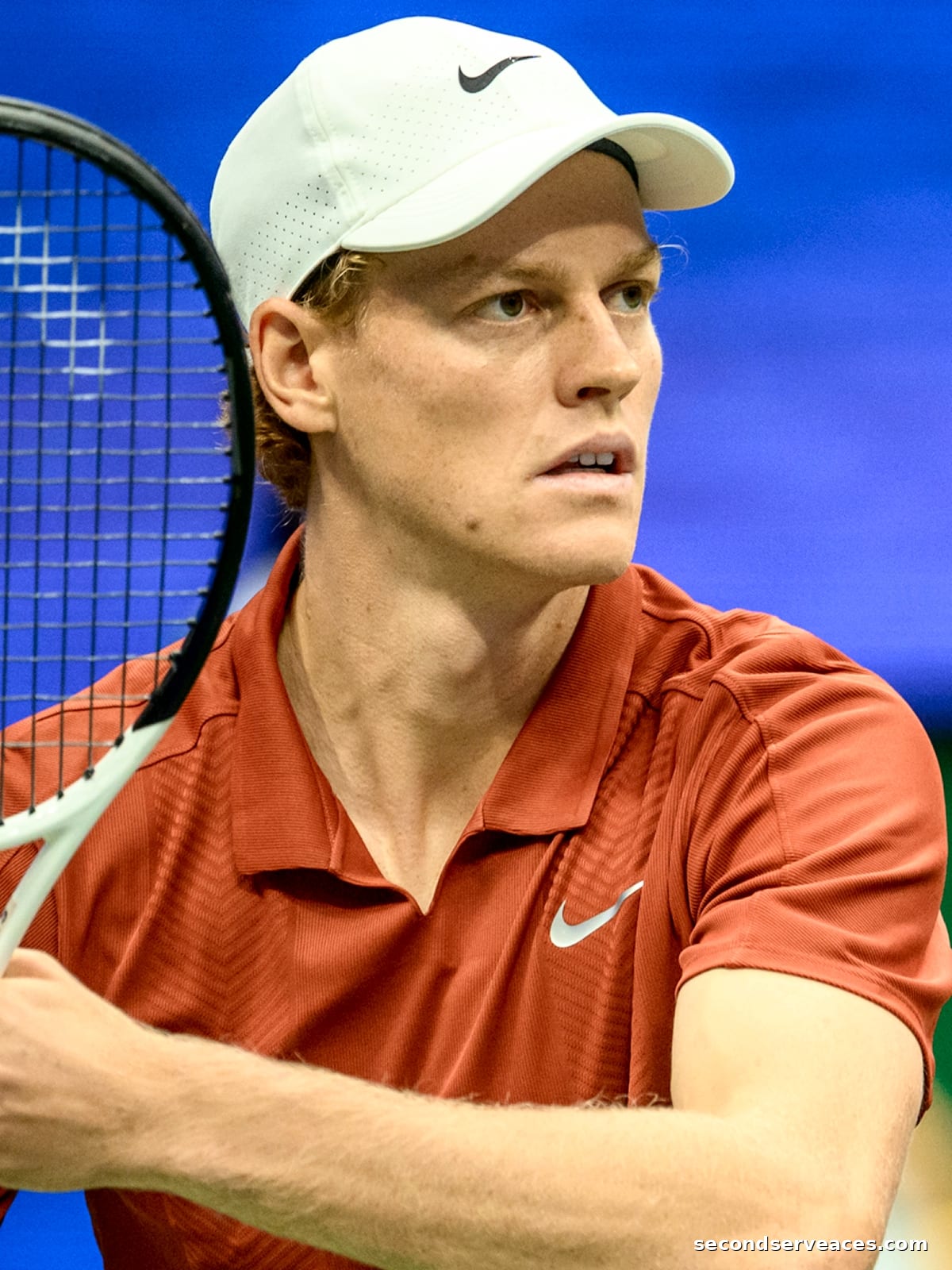
If Ruud barely escaped the furnace, Jannik Sinner was consumed by it. The young Italian, who entered the tournament with massive expectations as we analyzed in our breakdown of the Sinner and Rybakina Lead 2026 Wimbledon Odds, ran directly into a physical wall during his second-round match. Facing the relentless depth of Juan Manuel Cerúndolo, Sinner's body revolted under the oppressive Parisian skies.
Dizziness and acute nausea took hold of Sinner mid-match, turning the court into a spinning blur. The precise timing and explosive footwork that define his game evaporated under the weight of heat exhaustion. Cerúndolo capitalized on the drop in intensity, but the true opponent on the other side of the net was Sinner's own physiology refusing to cooperate. Sinner's second-round exit leaves a massive vacuum in the top half of the draw, throwing tournament seedings into chaos.
According to the latest ATP rankings, Sinner's early exit carries massive implications for his pursuit of the world number one spot. This wasn't a failure of talent or a lack of preparation; it was the brutal reality of the mental and physical grind. When a sudden spike in core temperature occurs, months of meticulous training can be dismantled in a matter of games, completely shifting the power dynamics at the top tier of men's tennis.
Red Alerts and Canceled Tournaments Across the French Landscape
The crisis at Stade Roland Garros is only the tip of a much larger, scorched iceberg. Across France, the extreme weather has forced tennis authorities to take unprecedented measures to protect competitors. The ITF was forced to cancel two prominent tournaments due to severe red heat wave alerts as temperatures soared to a staggering 107.4°F (41.9°C).
The women's W35 tournament in Périgueux and the men's M25 tournament in Montauban were completely halted. Playing tennis in 107-degree heat isn't just difficult; it's a medical emergency waiting to happen. The decision to cancel these events highlights the growing tension between traditional summer tournament schedules and the inescapable reality of global climate shifts.
This wave of cancellations has sent shockwaves through the lower tiers of professional tennis, where players rely on these events for vital ranking points and prize money. Unlike the stars at the Grand Slams, these athletes have no air-conditioned luxury suites or elite medical teams to nurse them back to health. When the tour shuts down due to extreme weather, their livelihoods are put on immediate ice, exposing the financial vulnerability of the sport's working class.
Regulatory Rigidity: Comparing Heat Policies to the ITIA's Iron Fist
Novak Djokovic did not hold back his frustration, launching a scathing critique of the French Open's outdated heat policy. Djokovic demanded that player welfare must take precedence over television broadcast windows and rigid scheduling. His comments ignited a fierce debate about the double standard in tennis governance, where players are held to incredibly strict regulatory standards while governing bodies fail to provide basic physical protection.
Consider the absolute rigidity of the International Tennis Integrity Agency (ITIA). Under the Tennis Anti-Doping Programme (TADP), players face career-ending consequences for administrative missteps. A prime example is the historical precedent of Viktor Troicki, who was handed a devastating multi-year ban under the ITIA's strict refusal clauses simply for delaying a blood test because he felt physically unwell. The contrast is stark: the sport will ban an athlete for years over a procedural error, yet it forces its marquee players to compete in hazardous 91°F heat without a comprehensive extreme weather protocol.
WTA stars have also raised their voices against this institutional neglect. Ons Jabeur spoke out about the suffocating conditions, stating, "You cannot breathe out there; it is not just about tennis anymore, it is about survival." Iga Swiatek echoed this sentiment, noting that the extreme humidity on clay makes recovery between points almost impossible. As the UK Met Office issues an extreme heat warning for England with forecasted temperatures up to 96°F (35.6°C) ahead of Wimbledon, the tennis world must confront a harsh truth: the grind is becoming unsustainable, and the rules must adapt before a tragedy occurs on center court.
What Jannik Sinner Plays With
Head Speed MP 2024
Head Hawk Touch 1.25
Head Prime Tour (12-Pack)
Nike GP Challenge 1
Analyze Jannik Sinner vs. Casper Ruud
Predict tactical adjustments, momentum swings, and serve strategy options for this match-up using our AI simulator.
The Aces Tactical Panel
This report was curated and edited by Bhaskar Goel. Tactical analysis and technical insights were provided by our specialized panel of expert correspondents.
Julian Price
Senior Tactical Correspondent
Stuffy, pedantic British academic and historian specializing in match momentum and historical context.
Elena Cruz
Director of Analytical Research
Data scientist specializing in court surface physics and movement patterns.
Bhaskar
The Editor & Fan
Passionate tennis player and site editor bringing everyday amateur insights and relatable fan commentary.
Arthur Vance
Senior Existential Analyst
Deep, eccentric, and DFW-inspired. Models court metaphysics, kinetic beauty, and player psychology.
Leo Sterling
High-Performance Consultant
Hard-nosed ex-trainer from Melbourne with a no-nonsense view on tour fitness.
Related Reports
Quick Answers
How did the extreme heat affect Casper Ruud at the French Open?+
Casper Ruud suffered from a 'heat-stroke feeling' and felt like a 'zombie' during his grueling five-set first-round match against Roman Safiullin in 91.4°F (33°C) weather.
Why did Jannik Sinner lose in the second round of the French Open?+
Jannik Sinner suffered from dizziness and nausea brought on by the extreme heat, leading to his second-round defeat against Juan Manuel Cerúndolo.
Which tennis tournaments were canceled due to the heat wave in France?+
A women's W35 tournament in Périgueux and a men's M25 tournament in Montauban were canceled as temperatures reached up to 107.4°F (41.9°C).