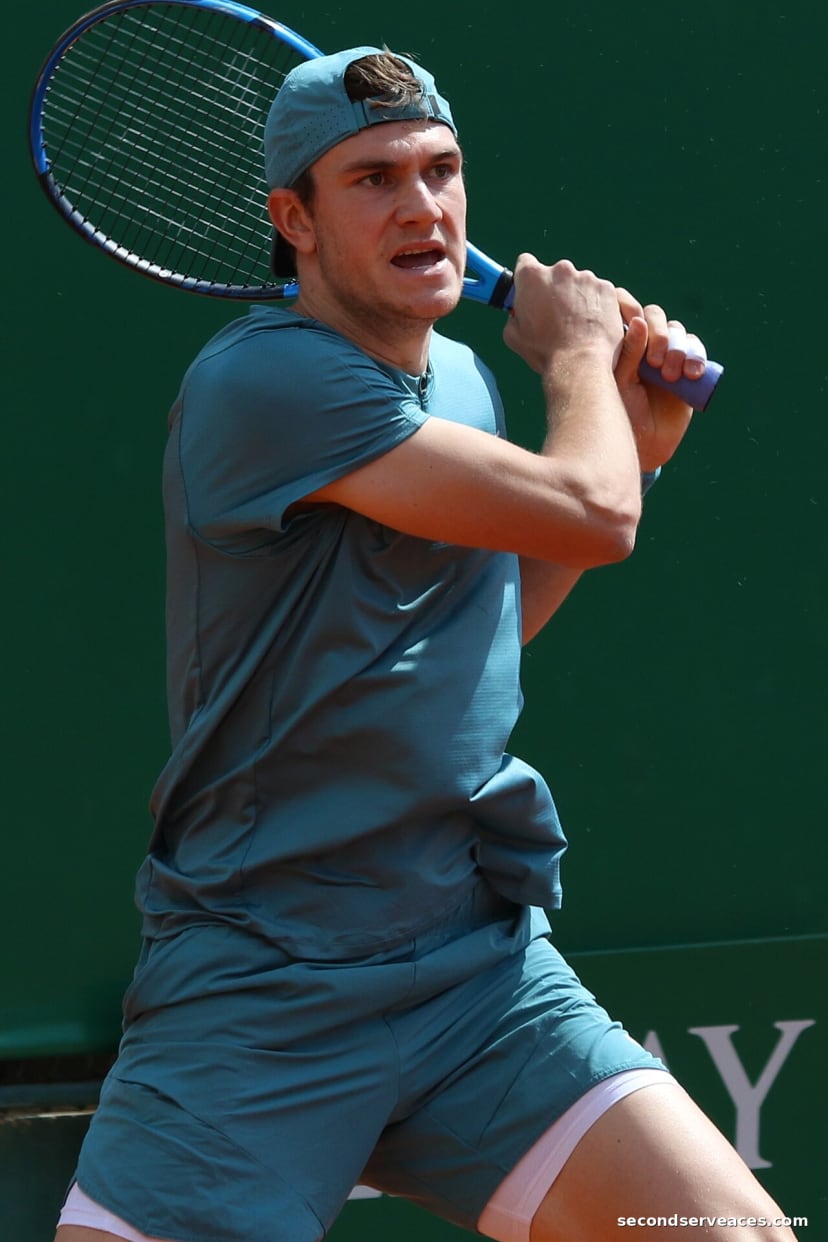
When you step onto the gritty, high-bouncing hard courts of the Indian Wells Tennis Garden, you expect baseline wars. You expect long, grueling rallies that test the lungs and the legs. What you do not expect is a singular force systematically removing the racquet from his opponent's hand. But that is exactly what Carlos Alcaraz did in his 6-1, 7-6 masterclass against Casper Ruud in the fourth round.
Listen to the Second Serve Podcast
Get our daily AI-synthesized audio briefings and match reviews on the go.
Let's get straight to the numbers that matter, because they are frankly staggering. With this victory, Alcaraz has catapulted his unblemished season record to a flawless 15-0. It takes a special kind of discipline to string together an undefeated run deep into the spring hard-court swing, especially when navigating the heavy topspin and tactical stubbornness of a player like Ruud.
While veterans and gritty lefties like Cameron Norrie have historically found ways to turn desert matches into dogfights, Alcaraz bypassed the trenches entirely. He stepped inside the baseline, dictated the terms of engagement, and walked off the court having achieved something no other man has ever done in the Coachella Valley. Here is how the young Spaniard turned a marquee fourth-round clash into a historic clinic.
The Tactical Breakdown
To understand the sheer dominance of this 6-1, 7-6 victory, we have to look closely at the serving dynamic. Alcaraz did not face a single break point throughout the entire match against Ruud. Read that again. Against one of the most consistent returners and heavy-ball strikers on tour, the Spaniard's service games were an impenetrable fortress.
How do you completely neutralize Ruud's return game on a slow hard court? It all comes down to serve placement patterns and immediate aggressive court positioning. Alcaraz's game is built around robbing his opponents of time. Ruud, naturally a clay-court specialist who thrives when given the luxury of time to set up his punishing forehand, prefers to drop deep behind the baseline to return.
Alcaraz exploited this deep positioning with ruthless efficiency:
- The Wide Slider: By utilizing a heavy slice serve out wide on the Deuce court, Alcaraz dragged Ruud into the doubles alley, immediately opening up the entire court for a simple, flat forehand put-away.
- First-Strike Tennis: Because Ruud's deep return often floated back with height rather than pace, Alcaraz stepped well inside the baseline to take his First Shot After Serve (Serve +1) on the rise. He didn't let the ball get above his shoulders; he took it early, hitting through the court before Ruud could recover to the center mark.
- Vertical Court Exploitation: When you pin a player like Ruud six feet behind the baseline, the drop shot becomes devastating. Alcaraz masterfully disguised his drop shots off the same swing path as his heavy topspin forehand, forcing Ruud into desperate, lunging sprints toward the net.
The first set, a breezy 6-1 affair, was a tactical masterclass in taking the ball on the rise. While the second set tightened up to a 7-6 tiebreak finish, the foundational dynamic never shifted. Alcaraz was the one pulling the strings; Ruud was merely reacting. When a player possesses both the raw power to hit through a slow court and the finesse to exploit the geometry of the front court, holding serve becomes a foregone conclusion.
The Bigger Picture
We are running out of superlatives for Carlos Alcaraz, but the history books are stepping in to do the talking for us. With this victory, Alcaraz became the first men's player in Indian Wells history to reach at least five quarterfinals before the age of 23. In a tournament that has hosted the absolute prime years of Roger Federer, Rafael Nadal, and Novak Djokovic, standing alone in a statistical category is incredibly difficult to achieve.
But the milestones do not stop there. If we zoom out and examine his broader trajectory, the numbers become even more terrifying for the rest of the ATP locker room. Alcaraz has now won 70 of his last 75 matches on tour. During that unfathomable span of consistency, he has secured three Major titles.
Historically, a 70-5 run over a 75-match stretch is the hallmark of an all-time great operating at the absolute peak of their powers. Alcaraz is doing this at the dawn of his twenties. This Indian Wells performance against Ruud is not just an isolated great day at the office; it is a continuation of a tectonic shift in men's tennis.
What this means for the rest of the season is profound. The slow hard courts of Indian Wells heavily mimic the grueling physical demands of the European clay-court swing that looms just around the corner. If Alcaraz is already moving with this level of fluidity, serving with zero break points faced, and striking his forehand with such devastating precision, the rest of the ATP Tour is officially on notice. The 15-0 start isn't just a hot streak; it is the establishment of a new world order.
What Carlos Alcaraz Plays With
Babolat Pure Aero 98
Babolat RPM Blast 1.30
Nike Vapor Pro 2
Analyze Carlos Alcaraz vs. Casper Ruud
Predict tactical adjustments, momentum swings, and serve strategy options for this match-up using our AI simulator.
The Aces Tactical Panel
This report was curated and edited by Bhaskar Goel. Tactical analysis and technical insights were provided by our specialized panel of expert correspondents.
Julian Price
Senior Tactical Correspondent
Stuffy, pedantic British academic and historian specializing in match momentum and historical context.
Elena Cruz
Director of Analytical Research
Data scientist specializing in court surface physics and movement patterns.
Bhaskar
The Editor & Fan
Passionate tennis player and site editor bringing everyday amateur insights and relatable fan commentary.
Arthur Vance
Senior Existential Analyst
Deep, eccentric, and DFW-inspired. Models court metaphysics, kinetic beauty, and player psychology.
Leo Sterling
High-Performance Consultant
Hard-nosed ex-trainer from Melbourne with a no-nonsense view on tour fitness.