A Season Interrupted in Barcelona
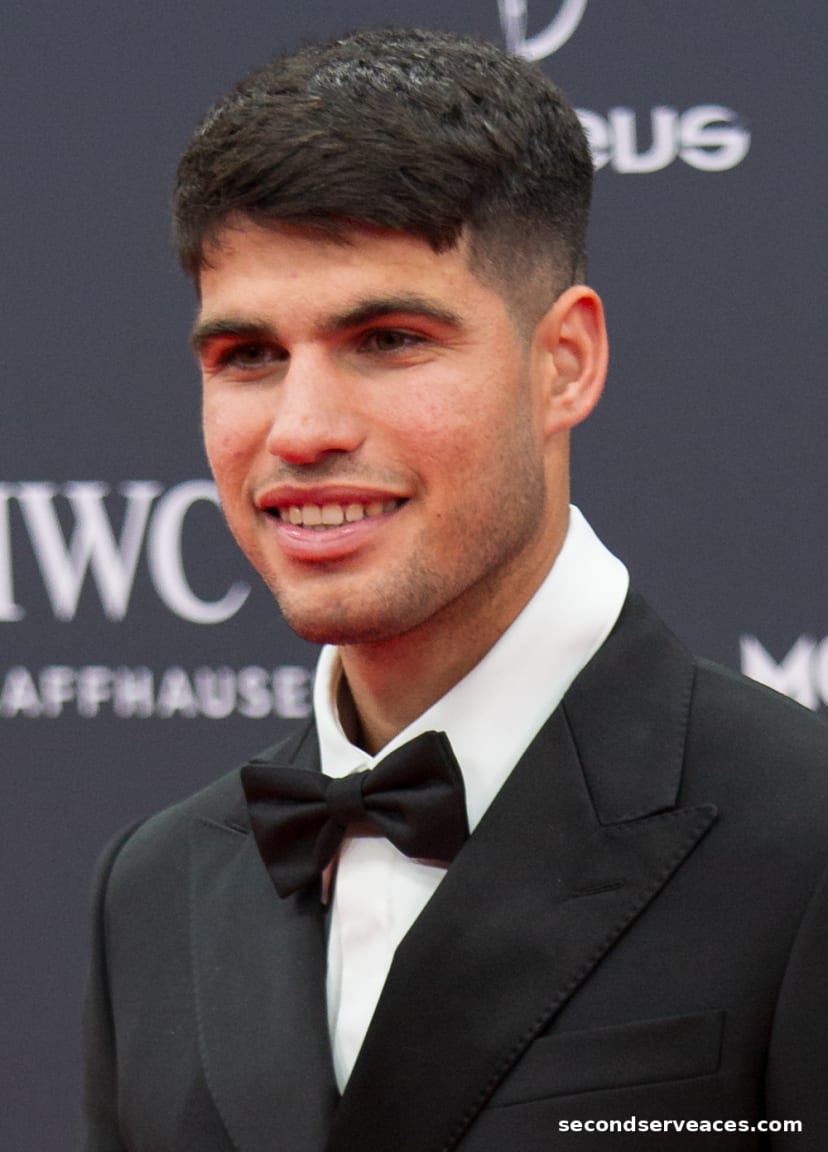
The rhythm of a professional tennis season is relentless, a metronome that never stops for fatigue. For Carlos Alcaraz, that rhythm has met a sharp, structural halt. The confirmation that he is suffering from a right wrist injury—a complication that trace its origins to his time in Barcelona—has effectively forced him out of the Italian Open and the impending battle at Roland Garros.
Listen to the Second Serve Podcast
Get our daily AI-synthesized audio briefings and match reviews on the go.
This isn't just about missing points or prize money. It is about the brutal reality of the ATP calendar, where the heavy topspin that defines Alcaraz’s game puts extreme, repetitive torque on the wrist joint. When the machine breaks, you don't keep running it. You strip it down, or you risk losing the engine entirely.
The timing is cruel, arriving just as the clay season hits its zenith. Fans looking for the Spaniard in Rome or Paris will be met with silence, a void in the draw that shifts the entire tactical equation for the rest of the field. The recovery, as we are learning, is not a linear path.
The Wisdom of Experience: Feliciano Lopez Weighs In
It is easy to look at the scoreboard and forget that these players are human beings whose tendons and ligaments have expiration dates. Feliciano Lopez, the Madrid Open Tournament Director and a man who spent decades navigating the professional grind, knows this pain intimately. He has confirmed experiencing a similar wrist injury during his own career, a reality check for those who think the game is played solely with heart and willpower.
Wrist injuries are notoriously fickle. They are the silent killers of momentum, requiring patience that is often at odds with a young athlete’s hunger to compete. Lopez’s perspective provides the necessary context: this isn't a minor tweak that can be taped over for a best-of-five encounter. It is a biological limitation that dictates the terms of engagement.
The industry is watching closely. When a veteran like Lopez speaks on the nature of these injuries, he isn't just discussing recovery; he is discussing the preservation of a career that is barely in its opening chapters. If the wrist isn't right, the forehand—the very weapon that has defined Alcaraz’s climb—becomes a liability.
The Specter of Uncertainty Over Wimbledon
If the clay season is now written off, the focus inevitably pivots to the grass courts of London. However, analysts are already bracing for a longer absence. Alex Corretja has publicly expressed doubt regarding the recovery timeline, casting a long shadow over the young Spaniard’s participation at Wimbledon.
Grass requires a specific dexterity and, more importantly, a stability in the wrist during the slice and the wide serve that a compromised joint may not support. To jump from the clay to the lawn without a complete healing process would be a tactical gamble that could cost Alcaraz months of additional recovery time.
The mental grind begins now. For a player who thrives on the kinetic energy of the crowd, the silence of the rehab room is the toughest opponent he will face all year. Whether he makes it to the grass is no longer a question of desire; it is a question of cellular repair.
The Broader Impact on the ATP Rankings
With Alcaraz sidelined, the ATP rankings and the race to finish at the summit will undergo a drastic reconfiguration. Players like Jannik Sinner, Casper Ruud, and Stefanos Tsitsipas suddenly find the path to the trophy cabinet less obstructed, but that in itself creates a new kind of pressure—the pressure to perform when the favorite is absent.
The vacuum left by a player of Alcaraz's caliber changes how opponents approach their tactical planning. Teams are likely already tearing up their scouting reports and re-evaluating their defensive strategies against the remaining top seeds. The game moves on, but the narrative of 2024 has fundamentally shifted.
We are left with a quiet spring and a summer full of questions. The health of the sport relies on its brightest stars being at their physical peak. Until that wrist heals, the tour feels a little smaller, a little less electric, and undeniably more precarious.
What Carlos Alcaraz Plays With
Babolat Pure Aero 98
Babolat RPM Blast 1.30
Nike Vapor Pro 2
Analyze Carlos Alcaraz vs. Coco Gauff
Predict tactical adjustments, momentum swings, and serve strategy options for this match-up using our AI simulator.
The Aces Tactical Panel
This report was curated and edited by Bhaskar Goel. Tactical analysis and technical insights were provided by our specialized panel of expert correspondents.
Julian Price
Senior Tactical Correspondent
Stuffy, pedantic British academic and historian specializing in match momentum and historical context.
Elena Cruz
Director of Analytical Research
Data scientist specializing in court surface physics and movement patterns.
Bhaskar
The Editor & Fan
Passionate tennis player and site editor bringing everyday amateur insights and relatable fan commentary.
Arthur Vance
Senior Existential Analyst
Deep, eccentric, and DFW-inspired. Models court metaphysics, kinetic beauty, and player psychology.
Leo Sterling
High-Performance Consultant
Hard-nosed ex-trainer from Melbourne with a no-nonsense view on tour fitness.