The Withdrawal Ripple Effect
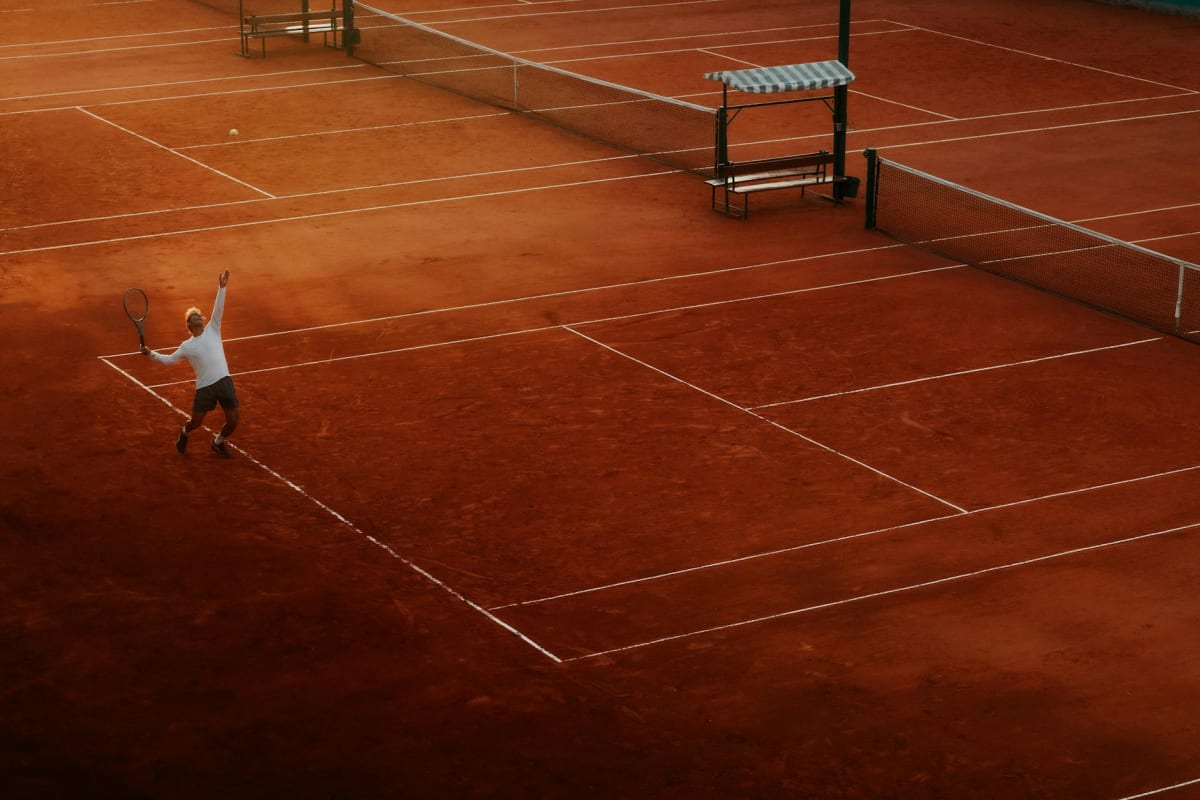
The news reverberating through the ATP Tour is stark: Carlos Alcaraz has been officially ruled out of the Internazionali BNL d'Italia in Rome and the upcoming Roland-Garros. For a player who thrives on the heavy topspin and court coverage requirements of the red dirt, this absence creates a massive hole in the European clay-court swing.
The math is unforgiving. Alcaraz is projected to hemorrhage approximately 3,000 points during this crucial stretch. When you stop playing, the ATP rankings don't pause to accommodate your recovery; they simply reflect the void left by a missing protagonist.
This is a tactical nightmare for any coaching team. The transition from clay to grass requires precise mechanical adjustments—shorter backswings and lower centers of gravity. By missing the conditioning and match-play of the clay season, Alcaraz risks entering the grass-court circuit without the necessary rhythm to defend his Wimbledon crown.
Listen to the Second Serve Podcast
Get our daily AI-synthesized audio briefings and match reviews on the go.
Roddick’s Assessment of the Grass-Court Stakes
Former world number one and 2003 US Open winner Andy Roddick has been vocal regarding the gravity of this injury. Hosting his show, Served with Andy Roddick, the American legend expressed genuine unease regarding the long-term impact on the Spaniard's schedule.
Roddick’s concern is not merely about the current tournament losses but the cumulative effect on a young player's physiological workload. When you miss blocks of the tour, you aren't just losing points; you are losing the battle-hardening that is essential for deep runs in high-pressure tournaments.
The historical precedent for coming back from extended injury layoffs on grass is notoriously difficult. Without the match-toughness gained in Rome and Paris, the quickness of the lawns often exposes players who haven't had enough court time to calibrate their serve-plus-one patterns.
The Ascent of Jannik Sinner
While the focus is on Alcaraz’s absence, we must address the shift in the baseline hierarchy. Jannik Sinner has been operating with ruthless efficiency, currently leading Alcaraz by more than 500 points in the live standings. Sinner’s recent form demonstrates a level of control from the back of the court that is increasingly difficult to dismantle.
Sinner and Alcaraz share a rivalry that defined last year, most notably in their final-round showdown at Wimbledon. Sinner’s ability to maximize his service games while maintaining aggressive court positioning has allowed him to capitalize on every opportunity presented by the current ATP landscape.
With Alcaraz sidelined, the burden falls on the rest of the field—including Casper Ruud and Stefanos Tsitsipas—to challenge Sinner’s current dominance. The tactical blueprint for beating Sinner requires immense defensive discipline, something the tour is currently struggling to find.
The Road to Physical Sustainability
The question of sustainability is the silent elephant in every press room. Carlos Alcaraz plays with an intensity that demands total physical peak. When that peak is compromised, the game style—built on explosive movement and heavy-spin engagement—becomes dangerous to maintain.
The medical team must now navigate a return that prioritizes health over the lure of immediate rankings recovery. Pushing through a premature return would only jeopardize the rest of the season and, potentially, the player's longevity.
We are watching a pivotal moment in the young Spaniard's career. Whether this is a momentary setback or a signal to recalibrate the frequency of his intensity, the ATP tour will look very different in his absence. The vacuum at the top is real, and the scramble to claim that space begins now.
What Carlos Alcaraz Plays With
Babolat Pure Aero 98
Babolat RPM Blast 1.30
Babolat VS Original (12-Pack)
Nike Vapor Pro 2
Analyze Carlos Alcaraz vs. Andy Roddick
Predict tactical adjustments, momentum swings, and serve strategy options for this match-up using our AI simulator.
The Aces Tactical Panel
This report was curated and edited by Bhaskar Goel. Tactical analysis and technical insights were provided by our specialized panel of expert correspondents.
Julian Price
Senior Tactical Correspondent
Stuffy, pedantic British academic and historian specializing in match momentum and historical context.
Elena Cruz
Director of Analytical Research
Data scientist specializing in court surface physics and movement patterns.
Bhaskar
The Editor & Fan
Passionate tennis player and site editor bringing everyday amateur insights and relatable fan commentary.
Arthur Vance
Senior Existential Analyst
Deep, eccentric, and DFW-inspired. Models court metaphysics, kinetic beauty, and player psychology.
Leo Sterling
High-Performance Consultant
Hard-nosed ex-trainer from Melbourne with a no-nonsense view on tour fitness.


