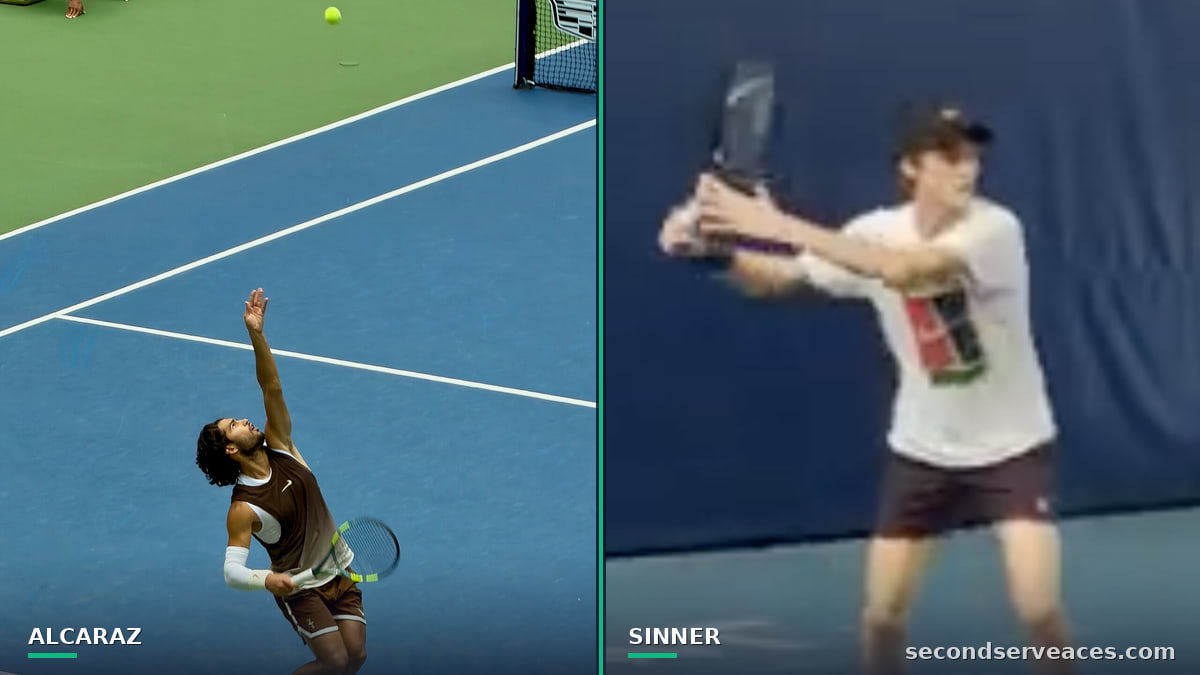
The grueling demands of the modern tennis calendar have once again forced the sport’s governing bodies to confront an uncomfortable reality. In an era where athleticism has been elevated to unprecedented heights, the physical toll on the world's finest competitors has reached an absolute breaking point. The governing body of men's tennis has finally decided to act, drafting a series of sweeping financial and structural reforms designed to curb the epidemic of injuries currently plaguing the tour's marquee attractions.
Listen to the Second Serve Podcast
Get our daily AI-synthesized audio briefings and match reviews on the go.
At the center of this administrative reckoning are the sport's two brightest young stars, whose recent physical struggles have exposed the fragility of the current system. With the competitive calendar running almost continuously from January to November, players are afforded precious little time for recuperation, prompting serious discussions about the long-term sustainability of the tour's current format. According to the latest ATP rankings, the top tier of the sport remains highly volatile due to these frequent physical interruptions.
As we observe these modern gladiators pushing their bodies to the absolute limit, one cannot help but feel a pang of nostalgia for the more measured pace of 1970s slam culture. In those days, players could navigate the circuit with a degree of physical autonomy that seems entirely foreign to the current generation. The proposed reforms represent a belated acknowledgment that the physical demands of the contemporary game require a fundamental structural intervention.
<## The Right Wrist Calamity of Carlos Alcaraz
Carlos Alcaraz Garfia, the spectacular young Spaniard often heralded as "The Boy from El Palmar," faced a highly disruptive physical setback during the heart of the season. The explosive right-hander was forced to miss four and a half months of competitive play, a devastating stretch that saw him sidelined for two consecutive Grand Slam tournaments between April and August. The culprit was a persistent right wrist injury, an ailment that directly threatened the mechanical foundation of his heavy topspin production.
For a player who relies so heavily on rapid racquet-head speed and extreme physical commitment, the wrist injury was a sobering reminder of the thin line between peak performance and physical disaster. His prolonged absence left a significant void in the summer draw sheets, depriving fans of his kinetic brilliance and disrupting his pursuit of the world number one ranking. This period of forced inactivity echoed the sudden, shocking absences of Björn Borg in the late 1970s, which similarly left the tennis world feeling adrift.
This unfortunate layoff severely disrupted his match momentum and highlighted the perils of the modern schedule. As we previously noted in our analysis of his competitive return, particularly during the Alcaraz Shocked by Bergs in Shanghai Masters Upset, physical vulnerability often leaves a player tactically exposed. Without adequate time to rebuild his physical baseline, the young Spaniard found himself rushed back into high-stakes competition.
The Heavy Toll of the SW19 Triumph for Jannik Sinner
Jannik Sinner, the formidable Italian known to many as "The San Candido Sentinel," experienced his own physical crisis immediately following his crowning achievement on the lawns of Wimbledon. Shortly after hoisting the trophy, Sinner announced that he would sit out the remainder of the season. The decision was forced by severe, persistent inflammation in his right knee, an injury that made further competition impossible without risking long-term joint damage.
Sinner's sudden withdrawal from the year-end events sent shockwaves through the tennis community, underscoring the brutal physical toll of playing high-intensity tennis on unforgiving hard courts. The Italian's slide-and-strike baseline game, while highly effective, subjects his lower joints to immense friction and deceleration forces. His decision to prioritize his long-term health over immediate competitive glory was widely discussed in our previous coverage, Sinner Ends 2026 Season Early: Pegula and Keys React.
The absence of the reigning World No. 1 from the season's final stretch deprived the tour of its most compelling rivalry. It raised serious questions about whether the human body can realistically endure the transition from spring clay to summer grass, followed immediately by the grueling hard-court swing. For traditionalists, Sinner’s knee issues are a clear indication that the athletic demands of the modern baseline duel have surpassed reasonable physical limits.
Andrea Gaudenzi and the Restructuring of the Ranking Points
In response to these high-profile casualties, ATP chairman Andrea Gaudenzi has unveiled a comprehensive proposal aimed at restructuring the tour's competitive incentives. The centerpiece of Gaudenzi's plan is a major redistribution of ranking points, which would award a significantly higher concentration of points to players who reach the semi-finals and finals of the largest tournaments. The administrative logic is clear: by rewarding deep runs at major events, the ATP hopes to discourage top players from overplaying in smaller tournaments.
Under the current system, players often feel compelled to enter lower-tier events simply to defend their ranking positions, a cycle that inevitably leads to physical exhaustion. By shifting the weight of the ranking system to the latter stages of Masters 1000 and Grand Slam events, the ATP aims to give elite players the luxury of a more selective schedule. It is a pedantic but necessary mathematical adjustment designed to protect the tour's most valuable human assets.
To further sweeten the transition, the ATP is proposing a massive increase in the year-end bonus pool, elevating the total fund from $21.5 million to an unprecedented $50 million. This financial cushion is intended to compensate players who choose to rest rather than chase appearance fees at smaller events. By aligning financial security with physical preservation, the tour hopes to ensure that its top stars remain healthy for the sport's biggest stages.
The Desert Expansion and the Tenth Masters 1000 Venture
However, the ATP's reform package is not without its contradictions, most notably the planned expansion of the elite calendar. The governing body is currently finalizing preparations to introduce a new Masters 1000 tournament in Saudi Arabia, a move that will raise the annual number of events at this mandatory level to ten. While the financial benefits of this expansion are immense, it adds yet another high-stakes commitment to an already overcrowded schedule.
For critics of the modern calendar, adding a tenth Masters 1000 event seems entirely counterproductive to the goal of reducing player fatigue. The physical demands of competing in another mandatory, multi-day tournament will inevitably clash with the ATP's stated desire to protect player health. It forces competitors to make difficult choices regarding their tournament entries, turning the quest for ranking points into a delicate balancing act.
Whether the proposed ranking point redistribution and the expanded bonus pool can successfully mitigate the physical strain of this new event remains the central question facing the tour. The ATP must ensure that its quest for global commercial expansion does not come at the expense of the players' physical well-being. As the sport moves forward into this lucrative but demanding new era, the balance between commerce and conservation has never been more delicate.
Rivalry Matchup & Player Profiles
| Metric | Carlos Alcaraz | Jannik Sinner |
|---|---|---|
| Rank | World No. 2 | World No. 1 |
| Age | 23 | 25 |
| Country | Spain | Italy |
| Height | 1.83 m (6 ft 0 in) | 1.91 m (6 ft 3 in) |
| Handedness | Right-handed | Right-handed |
| Play Style | Aggressive baseliner | Aggressive baseliner |
| Career Titles | 27 | 30 |
The head-to-head rivalry between Carlos Alcaraz and Jannik Sinner has quickly established itself as the premier matchup of the modern era. Across their 17 professional meetings, Alcaraz holds a narrow 10-7 lead, with both players trading high-stakes victories on the grandest stages. Their contrasting physical builds but similarly aggressive baseline styles have produced some of the most spectacular, physically punishing rallies in recent memory.
As the ATP Tour seeks to implement these sweeping structural changes, the preservation of this specific rivalry remains paramount. Should these physical struggles continue to interrupt their competitive cycles, the sport risks losing the very matchups that define this generation. The success of Andrea Gaudenzi's proposed reforms will ultimately be judged by whether they can keep these two extraordinary athletes healthy and on a collision course for years to come.
What Carlos Alcaraz Plays With
Babolat Pure Aero 98
Babolat RPM Blast 1.30
Babolat VS Original (12-Pack)
Nike Vapor Pro 2
Analyze Carlos Alcaraz vs. Jannik Sinner
Predict tactical adjustments, momentum swings, and serve strategy options for this match-up using our AI simulator.
The Aces Tactical Panel
This report was curated and edited by Bhaskar Goel. Tactical analysis and technical insights were provided by our specialized panel of expert correspondents.
Julian Price
Senior Tactical Correspondent
Stuffy, pedantic British academic and historian specializing in match momentum and historical context.
Elena Cruz
Director of Analytical Research
Data scientist specializing in court surface physics and movement patterns.
Bhaskar
The Editor & Fan
Passionate tennis player and site editor bringing everyday amateur insights and relatable fan commentary.
Arthur Vance
Senior Existential Analyst
Deep, eccentric, and DFW-inspired. Models court metaphysics, kinetic beauty, and player psychology.
Leo Sterling
High-Performance Consultant
Hard-nosed ex-trainer from Melbourne with a no-nonsense view on tour fitness.
Related Reports


Quick Answers
How long was Carlos Alcaraz sidelined with his wrist injury?+
Carlos Alcaraz missed four and a half months of competition, including two Grand Slam tournaments, between April and August.
Why did Jannik Sinner decide to sit out the rest of the year?+
Jannik Sinner chose to end his season early due to persistent inflammation in his right knee following his Wimbledon triumph.
What are the key financial changes proposed by the ATP?+
The ATP proposes increasing the year-end player bonus pool from $21.5 million to $50 million alongside a redistribution of ranking points.