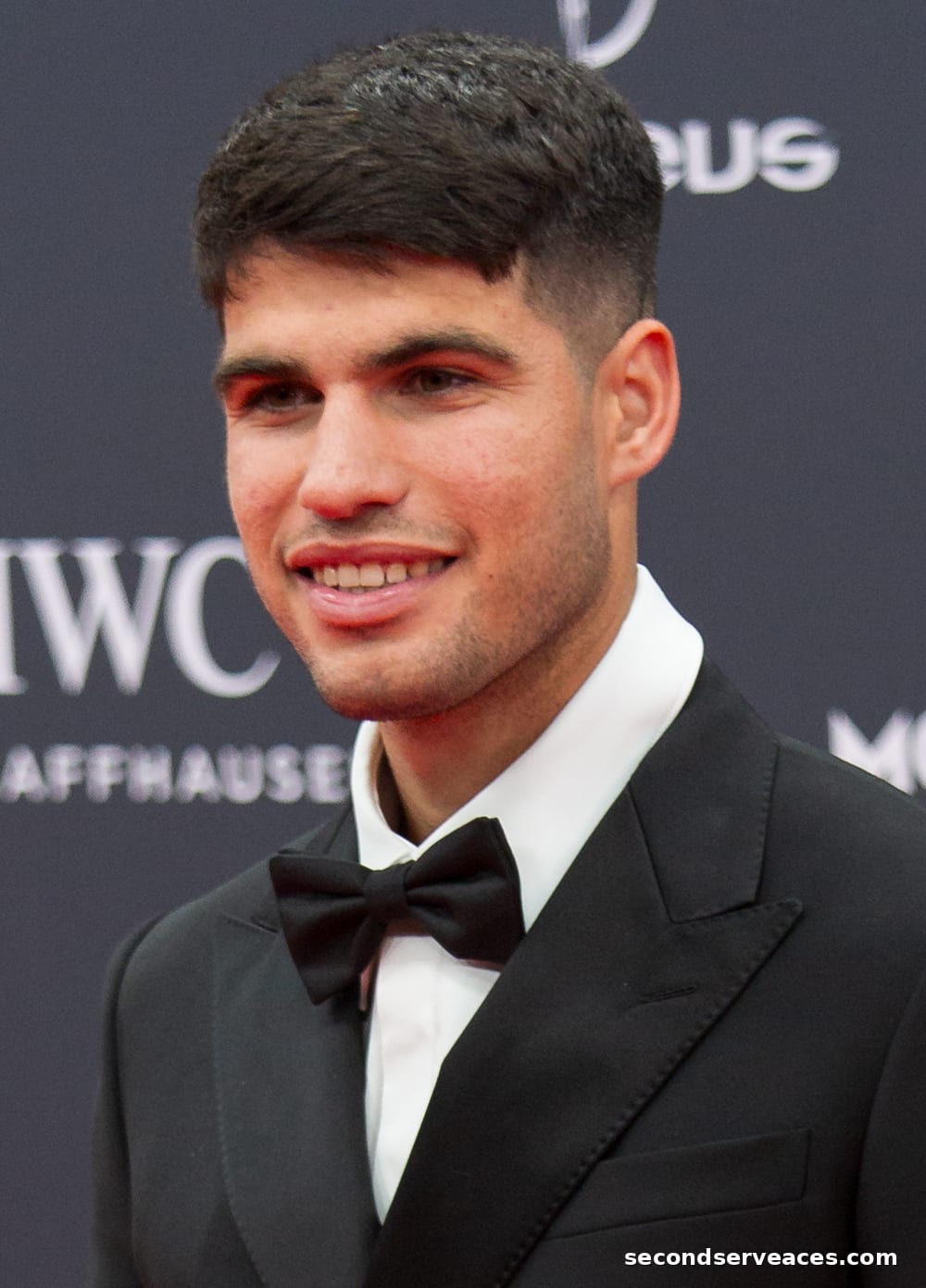
Carlos Alcaraz’s 2026 campaign took a devastating turn during the spring clay-court swing when a severe right wrist injury sustained in April sidelined the young Spaniard. This physical setback forced him to withdraw from consecutive tournaments, ultimately keeping him away from the competitive arena during the year's most critical months. The recovery process was grueling, demanding intense rehabilitation to restore the structural integrity of his wrist joint and forearm muscles.
Listen to the Second Serve Podcast
Get our daily AI-synthesized audio briefings and match reviews on the go.
By the time the tour moved to the North American hard courts, Alcaraz had missed two consecutive Grand Slam tournaments and four ATP Masters 1000 events. The absence from these high-stakes tournaments severely impacted his standing in the ATP rankings, creating a massive vacuum at the top of the men's game. His return in late August was a testament to his resilience, though it was clear his physical conditioning would require time to catch up to his competitive ambitions.
From a technical perspective, the wrist injury directly impacted Alcaraz's signature heavy topspin forehand. The biomechanical stress of his extreme semi-western grip requires immense wrist snap and forearm pronation to generate high RPMs. During his initial comeback matches, observers noted a slightly flatter ball flight and a more conservative racket-head speed as he protected the joint from reinjury, adjusting his court positioning to compensate for the reduced depth of his groundstrokes.
A Mentally Recharged Champion Navigating Physical Adaptation in Shanghai
As Alcaraz took to the courts at the Shanghai Masters, his tactical approach reflected a player balancing physical limitations with supreme mental clarity. The Spaniard openly admitted that his body has not yet fully adapted to the intense, repetitive strain of elite, best-of-three hard-court tennis. However, the five-month competitive hiatus yielded an unexpected benefit: a profound sense of mental freshness that many of his weary peers currently lack at this late stage of the season.
Tactically, Alcaraz is compensating for his physical adjustment phase by refining his court positioning. Rather than engaging in long, attritional baseline rallies, he is actively seeking to shorten points. By standing closer to the baseline on return and taking the ball earlier on the rise, he effectively robs his opponents of reaction time. This aggressive positioning allows him to dictate play with sharp angles rather than relying solely on raw power.
His baseline game in Shanghai showcases a deliberate mix of variety. When forced deep, he uses a heavy, looping topspin shot to buy time, but his primary objective remains stepping inside the baseline to deploy his disguised drop shot. This tactical variation exploits the deep positioning of his opponents, forcing forward movement and testing their vertical agility. While his physical endurance remains a work in progress, his tactical execution remains sharp.
The Vacant Throne and Zverev's Ascent to World Number One
The landscape of the ATP Tour underwent a massive shift during Alcaraz’s absence, further compounded by physical setbacks to his closest rival. Jannik Sinner, who had dominated the early half of the year, was forced to shut down his season following the Wimbledon final due to persistent physical issues, as detailed in our previous coverage of Sinner's physical struggles. This double absence left the door wide open for the rest of the field.
Alexander Zverev capitalized on this power vacuum, capturing two major titles during the summer to secure enough points to guarantee his rise to the world number one ranking. Zverev's consistent baseline play and elite serving allowed him to dominate the draw in the absence of the tour's two brightest young stars. For Alcaraz, Zverev's ascent serves as a clear benchmark for the level required to regain his status at the summit of the sport.
Former British number one Greg Rusedski noted that the current dynamic presents a unique challenge for Alcaraz. With Zverev holding the top spot and Sinner sidelined, the Spaniard must navigate a highly motivated field in Shanghai. Every opponent is eager to test his physical durability, making his tactical discipline and shot selection more critical than ever as he builds momentum for the final stretch of the year.
Rivalry Matchup & Player Profiles
| Metric | Carlos Alcaraz | Jannik Sinner |
|---|---|---|
| Rank | No. 3 | No. 1 |
| Age | 23 | 25 |
| Country | Spain | Italy |
| Height | 1.83 m (6 ft 0 in) | 1.91 m (6 ft 3 in) |
| Handedness | Right-handed | Right-handed |
| Play Style | All-court / Aggressive baseliner | Aggressive baseliner |
| Career Titles | 27 | 30 |
This era-defining rivalry has seen Alcaraz hold a 10-7 advantage over Sinner on the ATP Tour, showcasing some of the most explosive baseline tennis of the modern era. Their contrasting styles—Alcaraz's kinetic, all-court variety versus Sinner's relentless, linear power—have produced classic encounters across all surfaces. Their last meeting took place in the 2026 Monte-Carlo Rolex Masters final, where Sinner defeated Alcaraz 7-6(5), 6-3 in a high-octane baseline battle.
With Sinner currently sidelined, Alcaraz's return to form is crucial for restoring the competitive balance at the top of the game. As Alcaraz continues his rehabilitation and physical adaptation on the hard courts of Shanghai, tennis fans eagerly await the next chapter of this rivalry once both players return to full physical health.
What Carlos Alcaraz Plays With
Babolat Pure Aero 98
Babolat RPM Blast 1.30
Babolat VS Original (12-Pack)
Nike Vapor Pro 2
Analyze Carlos Alcaraz vs. Jannik Sinner
Predict tactical adjustments, momentum swings, and serve strategy options for this match-up using our AI simulator.
The Aces Tactical Panel
This report was curated and edited by Bhaskar Goel. Tactical analysis and technical insights were provided by our specialized panel of expert correspondents.
Julian Price
Senior Tactical Correspondent
Stuffy, pedantic British academic and historian specializing in match momentum and historical context.
Elena Cruz
Director of Analytical Research
Data scientist specializing in court surface physics and movement patterns.
Bhaskar
The Editor & Fan
Passionate tennis player and site editor bringing everyday amateur insights and relatable fan commentary.
Arthur Vance
Senior Existential Analyst
Deep, eccentric, and DFW-inspired. Models court metaphysics, kinetic beauty, and player psychology.
Leo Sterling
High-Performance Consultant
Hard-nosed ex-trainer from Melbourne with a no-nonsense view on tour fitness.
Related Reports
Quick Answers
Why did Carlos Alcaraz miss the majority of the 2026 season?+
Carlos Alcaraz missed the bulk of the 2026 season after sustaining a severe wrist injury in April, which sidelined him for five months.
Who became the new ATP world number one during Alcaraz's absence?+
Alexander Zverev became the new world number one after winning two major titles while Alcaraz and Jannik Sinner were sidelined.
How is Carlos Alcaraz adapting his game physically at the Shanghai Masters?+
Alcaraz admitted his body is not yet fully used to demanding matches, but he is compensating by maintaining mental freshness and using aggressive court positioning to shorten points.