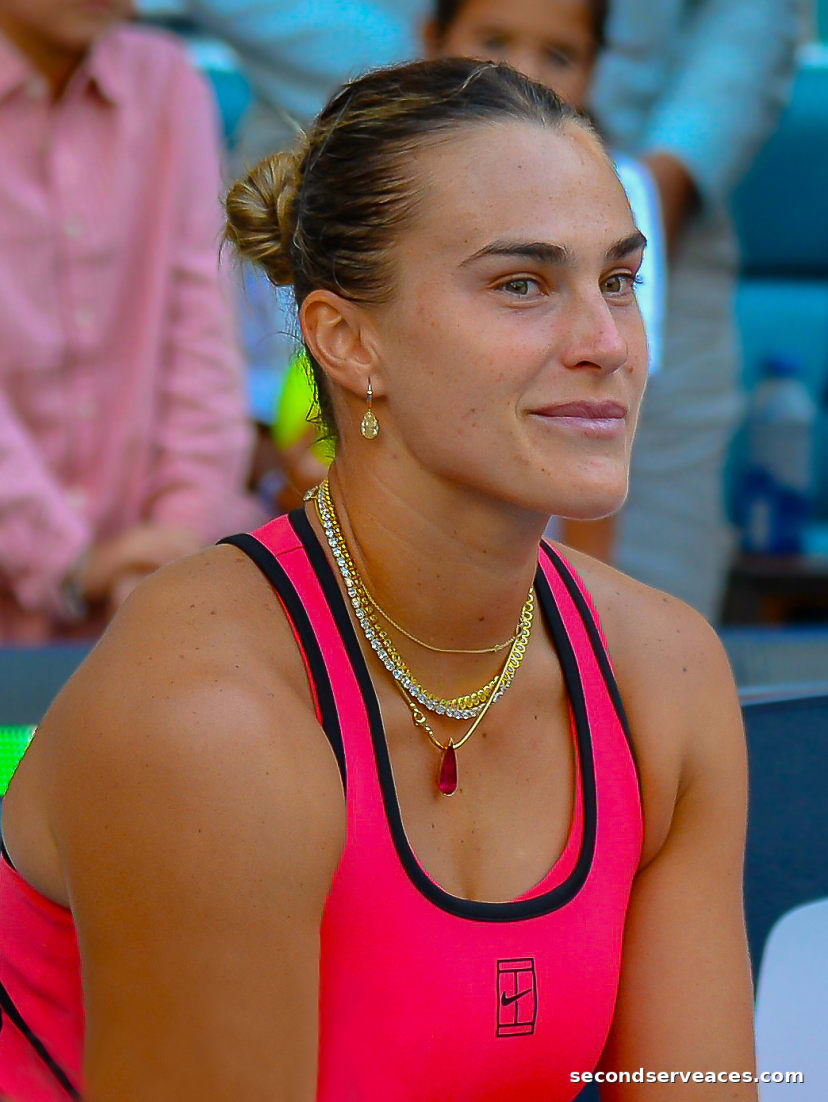
Professional tennis is, at its most fundamental level, a brutal negotiation between the body’s limitations and the schedule’s relentless gravity. For Aryna Sabalenka, the current occupant of the WTA’s summit, this negotiation has reached a definitive impasse. The announcement that she will withdraw from the Porsche Tennis Grand Prix, commencing April 13, 2026, is not merely a medical note—it is a strategic pivot designed to protect her long-term viability on the tour.
Listen to the Second Serve Podcast
Get our daily AI-synthesized audio briefings and match reviews on the go.
The Weight of the Red Dirt
Sabalenka cites an injury sustained in the aftermath of the Miami Open as the primary catalyst for her absence. To watch the WTA rankings is to understand the precariousness of this position; with the Roland Garros clay looming, the preservation of connective tissue and joint integrity becomes more valuable than any individual trophy, even one as coveted as the Porsche 911 Carrera S Cabriolet—a machine valued at approximately $222,000 that has eluded her grasp despite four final appearances in the last five years.
A History of Near-Misses
The Stuttgart clay has been a site of both frustration and profound consistency for the world number one. Her track record at the Porsche Tennis Grand Prix—marked by those four finals—reveals a player who understands the nuances of the surface intimately. However, the prestige of the event is currently subordinate to the reality of physical recovery. Her absence leaves a void in the draw, a tournament historically dominated by the likes of Ash Barty (2021), Iga Swiatek (2022, 2023), and the explosive Jelena Ostapenko (2025).
Ultimately, Sabalenka’s choice reflects the maturation of the modern elite competitor. Rather than chasing the immediate adrenaline of a high-profile draw, she is choosing the slow, disciplined path toward the physical readiness required for a major run in Paris. It is a calculated retreat, acknowledging that the season’s most meaningful points remain ahead.
What Aryna Sabalenka Plays With
Wilson Blade 98 v9 (16x19)
Luxilon ALU Power 125
Wilson Pro Overgrip (12-Pack)
Analyze Aryna Sabalenka vs. Ash Barty
Predict tactical adjustments, momentum swings, and serve strategy options for this match-up using our AI simulator.
The Aces Tactical Panel
This report was curated and edited by Bhaskar Goel. Tactical analysis and technical insights were provided by our specialized panel of expert correspondents.
Julian Price
Senior Tactical Correspondent
Stuffy, pedantic British academic and historian specializing in match momentum and historical context.
Elena Cruz
Director of Analytical Research
Data scientist specializing in court surface physics and movement patterns.
Bhaskar
The Editor & Fan
Passionate tennis player and site editor bringing everyday amateur insights and relatable fan commentary.
Arthur Vance
Senior Existential Analyst
Deep, eccentric, and DFW-inspired. Models court metaphysics, kinetic beauty, and player psychology.
Leo Sterling
High-Performance Consultant
Hard-nosed ex-trainer from Melbourne with a no-nonsense view on tour fitness.