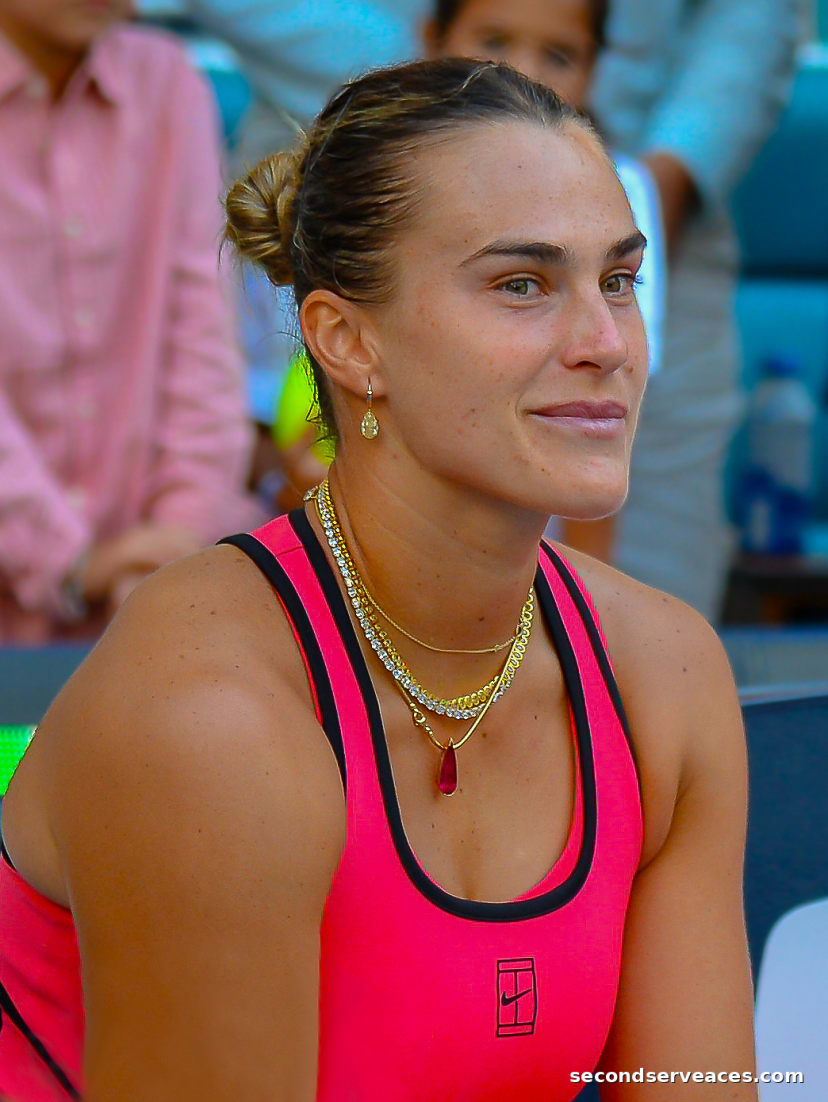
Aryna Sabalenka continues to fundamentally rewrite the architectural landscape of the modern WTA Tour. Advancing to the Miami Open semi-finals with an authoritative straight-sets victory over Hailey Baptiste, the world number one secured far more than merely another deep tournament run. She anchored herself in elite historical company, achieving a degree of bi-coastal consistency unseen in over a decade.
Listen to the Second Serve Podcast
Get our daily AI-synthesized audio briefings and match reviews on the go.
By securing her spot in the penultimate round in South Florida, Sabalenka became the first player in 12 years to reach four consecutive semi-finals across the grueling Sunshine Double—spanning both Indian Wells and the Miami Open. The last athlete to sustain that level of structural dominance across these two uniquely demanding hard-court events was Serena Williams.
At a time when the tour is increasingly characterized by intense physical demands and deepening fields, replicating a Williams milestone from a dozen years ago highlights a shifting paradigm. The era of chaotic, revolving-door parity at the top of the women's game appears to be yielding to a new chapter of consolidated, predictable power.
The Tactical Breakdown
To understand how Sabalenka executes this level of week-to-week consistency, one must look at the mechanics of her baseline geometry. Her straight-sets dismissal of Baptiste was not born of flashy shot-making, but of relentless, suffocating court positioning. Sabalenka's overarching strategy relies on overwhelming early-point aggression, specifically utilizing the plus-one forehand to dictate the terms of engagement.
Against a highly athletic opponent like Baptiste, the tactical imperative is to shrink the court. Sabalenka typically achieves this through her return positioning. By stepping inside the baseline on second serves, she intercepts the ball early, rushing her opponent's recovery steps and forcing them to play defensive slices or looped balls from their heels.
Furthermore, Sabalenka’s serving patterns have evolved from raw velocity to tactical placement. Her frequent use of the wide slice serve on the deuce court pulls the returner out of the doubles alley, exposing a massive expanse of the ad-side court for her next strike. By dictating this aggressive rally tempo, she successfully neutralized Baptiste's natural variety, forcing the American into lateral scrambling rather than forward-moving offense.
The Bigger Picture
Tactics aside, the broader context of Sabalenka’s 2026 season borders on the absurd. Following her victory over Baptiste, the world number one now holds a staggering 21-1 win-loss record for the 2026 campaign. Compiling a win rate of that magnitude well into the spring requires not just physical endurance, but immense psychological calibration.
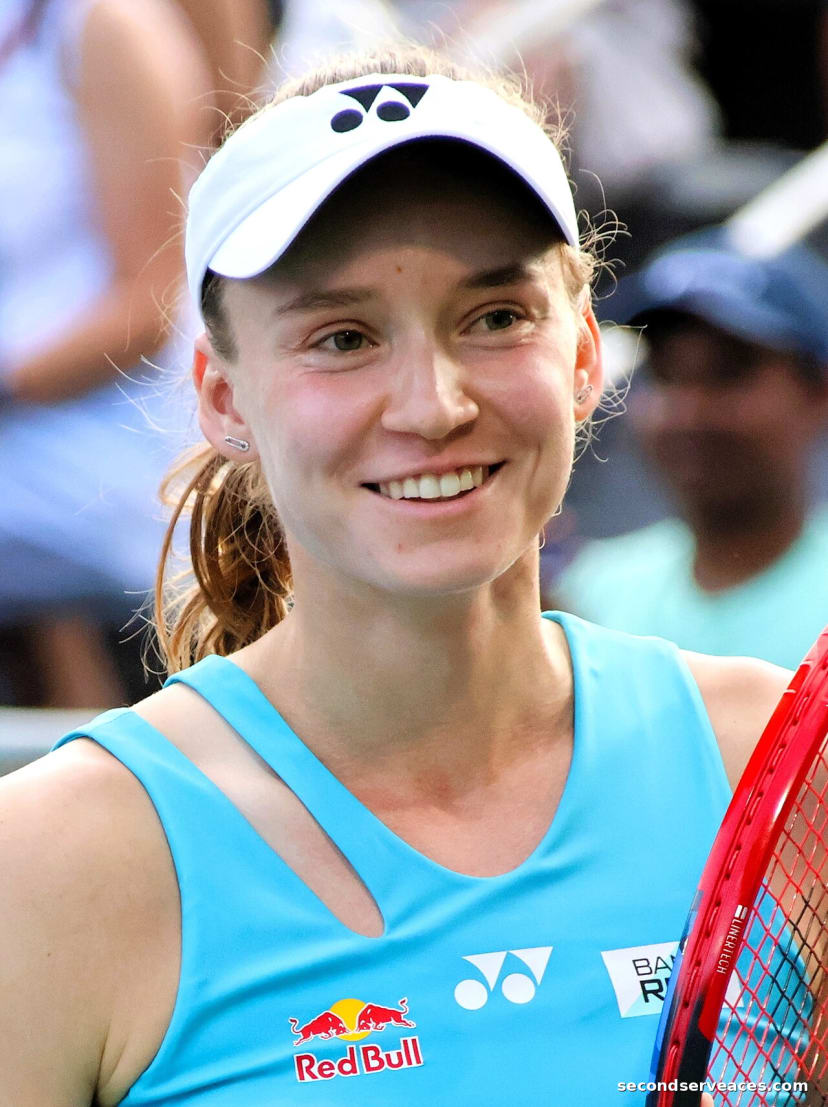
Her singular blemish this year occurred in January—a defeat against Elena Rybakina in the Australian Open final. Yet, despite dropping that high-stakes major title to a primary rival, the cumulative ranking math reveals a stark reality. Sabalenka's week-in, week-out consistency across various tournament tiers has created an enormous buffer at the summit of the sport.
Key Metrics Defining the 2026 Season:
- A Historic Streak: Four consecutive semi-finals across the Indian Wells and Miami Open hard courts, matching a 12-year-old Serena Williams benchmark.
- Season Dominance: An imposing 21-1 match record across all tour-level events in 2026.
- The Points Chasm: There are currently more than 2,000 ranking points separating world number one Sabalenka from her closest rival, world number two Elena Rybakina.
This 2,000-point chasm illustrates a significant buffer against the rest of the tour's elite. While competitors like Iga Swiatek, Jessica Pegula, Victoria Azarenka, and Katie Boulter continue to jockey for position within the top ten, Sabalenka is operating on a distinct statistical plane. She has successfully engineered a season where even her worst weeks yield deep tournament runs, a hallmark trait of true, generational world number ones.
As the Miami Open progresses, the narrative surrounding Sabalenka is no longer just about raw power or potential. It is about a player who has learned to synthesize her imposing physical gifts into a repeatable, nearly unbreakable tactical formula.
What Aryna Sabalenka Plays With
Wilson Blade 98 v9 (16x19)
Luxilon ALU Power 125
Wilson Pro Overgrip (12-Pack)
Analyze Aryna Sabalenka vs. Hailey Baptiste
Predict tactical adjustments, momentum swings, and serve strategy options for this match-up using our AI simulator.
The Aces Tactical Panel
This report was curated and edited by Bhaskar Goel. Tactical analysis and technical insights were provided by our specialized panel of expert correspondents.
Julian Price
Senior Tactical Correspondent
Stuffy, pedantic British academic and historian specializing in match momentum and historical context.
Elena Cruz
Director of Analytical Research
Data scientist specializing in court surface physics and movement patterns.
Bhaskar
The Editor & Fan
Passionate tennis player and site editor bringing everyday amateur insights and relatable fan commentary.
Arthur Vance
Senior Existential Analyst
Deep, eccentric, and DFW-inspired. Models court metaphysics, kinetic beauty, and player psychology.
Leo Sterling
High-Performance Consultant
Hard-nosed ex-trainer from Melbourne with a no-nonsense view on tour fitness.