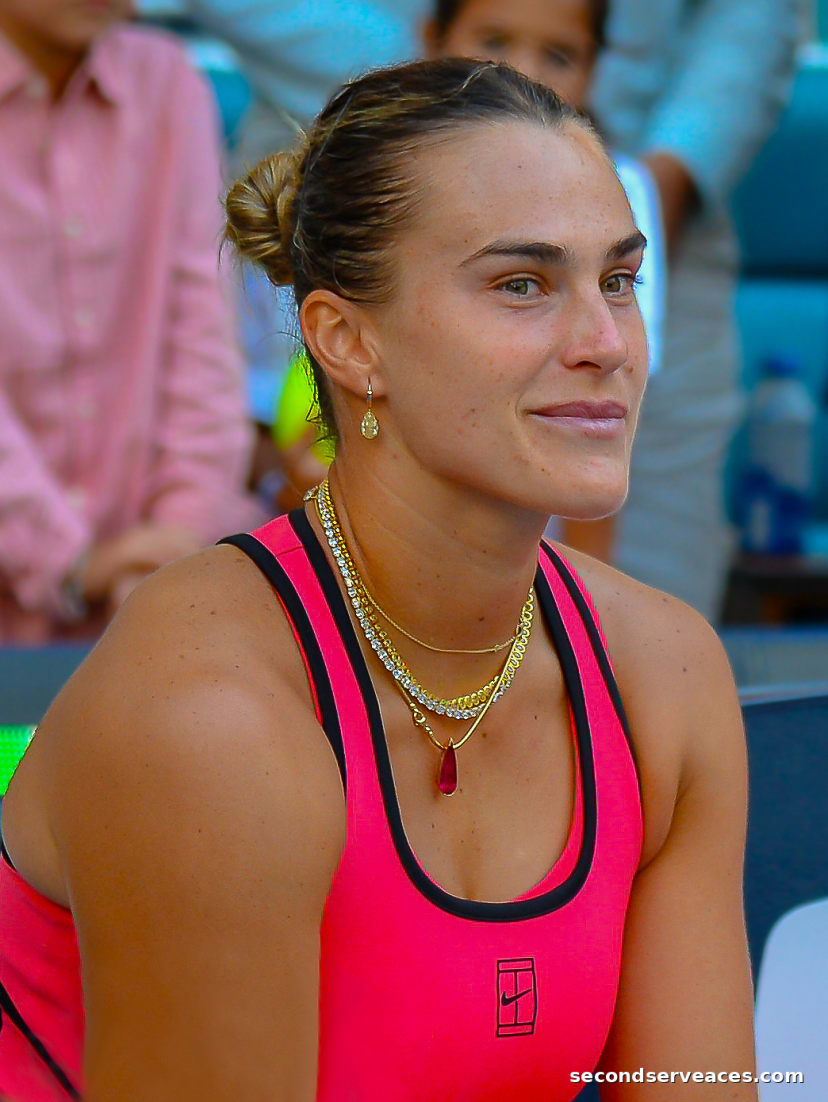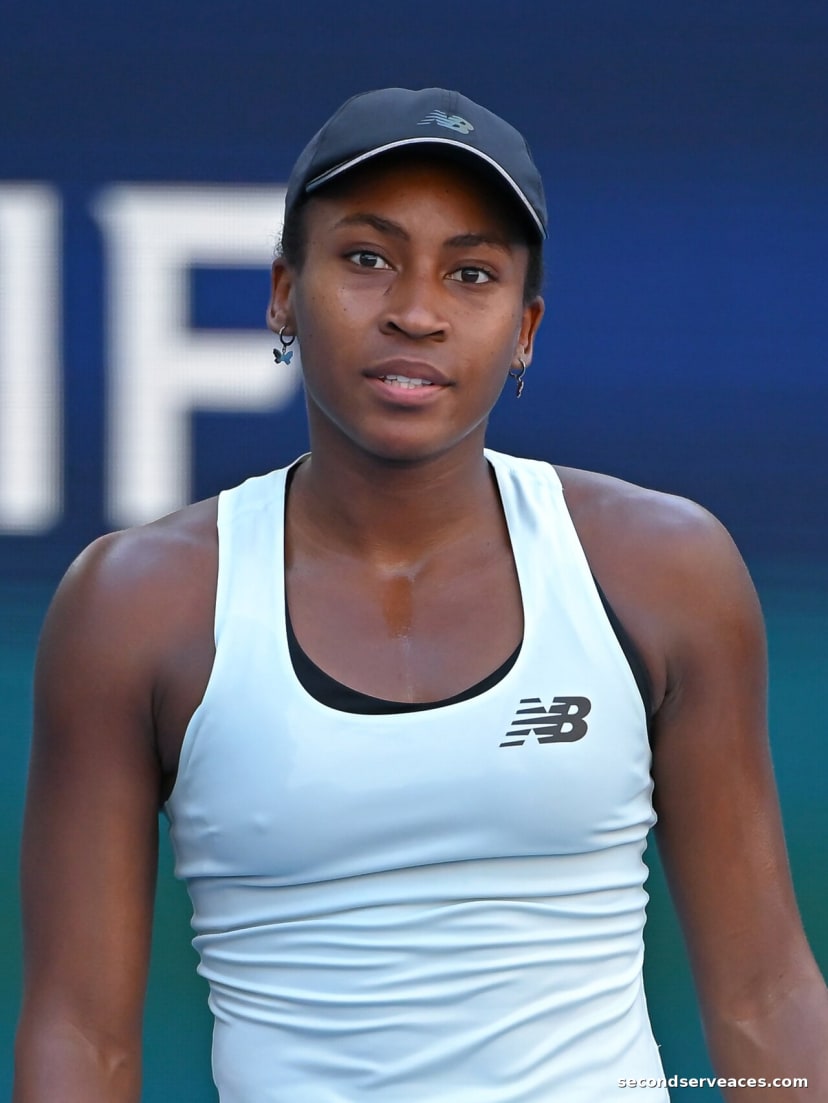
The kinetic chain of a professional tennis career is inherently fragile—a complex algorithm of muscle memory, joint elasticity, and the psychological ballast provided by the voice in the player's box. There is a distinct, almost mathematical melancholy in the dissolution of a successful tennis partnership. The announcement of Amanda Anisimova severing her nearly two-year coaching relationship with Rick Vleeshouwers arrives not with a thunderous crash, but with the quiet, reverberating thud of a fourth-round departure at the Miami Open. The immediate catalyst? A defeat at the hands of the 12th seed, Belinda Bencic.
Listen to the Second Serve Podcast
Get our daily AI-synthesized audio briefings and match reviews on the go.
What makes this dissolution so violently interesting is the sheer aerodynamic altitude the pair achieved merely a calendar year ago. Under Vleeshouwers’s architectural gaze in 2025, Anisimova was a force of pure, unadulterated baseline geometry. She hoisted WTA 1000 hardware in both Qatar and China, charting a trajectory that culminated in two Grand Slam final appearances at Wimbledon and the US Open. She was hitting the ball with the kind of clean, concussive force that makes the poly strings hum a terrifying, resonant middle-C.
Yet, the topography of 2026 has been distinctly uneven, forcing us to ask a deeply uncomfortable question about the physics of expectation: At what point does an objectively elite season register as a failure? Anisimova's resume prior to the split featured an Australian Open quarterfinal and a semifinal run in Dubai—results that would represent a career zenith for most of the tour’s proletariat. For a player of Anisimova’s calibrated ambitions, however, these deep runs apparently registered as a form of aerodynamic drag, a signal that the engine was no longer producing maximum thrust.
The Tactical Breakdown
To understand the friction that leads to a mid-season coaching split, one must look at the specific geometry of Anisimova's game. Her foundation is built on early-strike velocity. She hits a remarkably flat, penetrating ball off both wings, deliberately compressing the court and suffocating her opponent's recovery time. It is a game of magnificent, high-wire aggression.
But against a player like Belinda Bencic, who essentially treats the baseline like an elevated ping-pong table—taking the ball exceptionally early and redirecting pace rather than absorbing it—the margins for error shrink to microscopic slivers. When Anisimova's timing is even fractionally compromised by an opponent who refuses to yield baseline real estate, the flat trajectory that usually produces spectacular winners instead yields agonizing unforced errors into the net or deep beyond the baseline.
A coach's role in these microscopic tactical adjustments is paramount. Perhaps the dissonance in the Anisimova-Vleeshouwers camp arose from how to solve this specific physical equation: how do you generate organic pace or alter spin rates when the opponent is systematically robbing you of time? When Plan A—brute-force baseline suffocation—is neutralized by a superior redirector, the strategic pivot requires a deep, almost cellular trust between player and coach. When that trust frays beneath the South Florida sun, the partnership inevitably dissolves.
The Bigger Picture
Coaching relationships in modern tennis possess the half-life of a radioactive isotope. The transition from a phenomenal 2025 to a subjectively "struggling" 2026 highlights the ruthless calculus of the WTA's upper echelon. This split is less a condemnation of Vleeshouwers’s methods than it is a testament to Anisimova’s unrelenting pursuit of the absolute pinnacle of the sport.
Historically, when players with this specific brand of lethal, flat ball-striking hit a plateau—consider the mid-career pivots of Madison Keys or the subtle, highly effective re-calibrations of Aryna Sabalenka in recent years—they seek new voices to refine their rally tolerance and defensive transition. You cannot simply hit through everyone, especially on hardcourts where the friction coefficient slows the ball just enough to allow elite defenders to lay a racket on the passing shot.
The Miami Open, with its humid, heavy air changing the flight path of the ball, has long been a crucible for such existential tour decisions. Moving forward, the question isn't whether Anisimova has the raw physical tools to capture a Major; her dual appearances in the Wimbledon and US Open finals last year answered that definitively. The question now is who possesses the specific neurological key to unlock her tactical evolution when the tour's premier counter-punchers refuse to break.
What Jannik Sinner Plays With
Head Speed MP 2024
Head Hawk Touch 1.25
Head Prime Tour (12-Pack)
Nike GP Challenge 1
Analyze Amanda Anisimova vs. Belinda Bencic
Predict tactical adjustments, momentum swings, and serve strategy options for this match-up using our AI simulator.
The Aces Tactical Panel
This report was curated and edited by Bhaskar Goel. Tactical analysis and technical insights were provided by our specialized panel of expert correspondents.
Julian Price
Senior Tactical Correspondent
Stuffy, pedantic British academic and historian specializing in match momentum and historical context.
Elena Cruz
Director of Analytical Research
Data scientist specializing in court surface physics and movement patterns.
Bhaskar
The Editor & Fan
Passionate tennis player and site editor bringing everyday amateur insights and relatable fan commentary.
Arthur Vance
Senior Existential Analyst
Deep, eccentric, and DFW-inspired. Models court metaphysics, kinetic beauty, and player psychology.
Leo Sterling
High-Performance Consultant
Hard-nosed ex-trainer from Melbourne with a no-nonsense view on tour fitness.