
As the professional tennis circuit barrels toward its late-season crescendo, the physical and mental toll on the world's elite has reached a boiling point. Alexander Zverev, set to rise to World No. 2 in the ATP rankings on November 2, has laid bare the unsustainable friction of the current calendar. Speaking during his campaign at the Erste Bank Open in Vienna, the German powerhouse confirmed his participation in the upcoming Davis Cup Final 8 but flatly ruled out representing Germany at the United Cup in Australia, branding the relentless schedule as absolute "nonsense."
The Breaking Point of a Fractured Tennis Calendar
Zverev’s vocal frustration shines a harsh spotlight on a sport continually wrestling with its own structural demands. The modern tour offers virtually no off-season, forcing top-tier athletes to choose between national representation, ranking points, and physical preservation. Zverev, who has logged heavy mileage as a towering 6'6" aggressive baseliner, argued that the transition from late-November team events to early-January mixed-team competitions in Australia leaves zero window for active recovery or technical rebuilding.
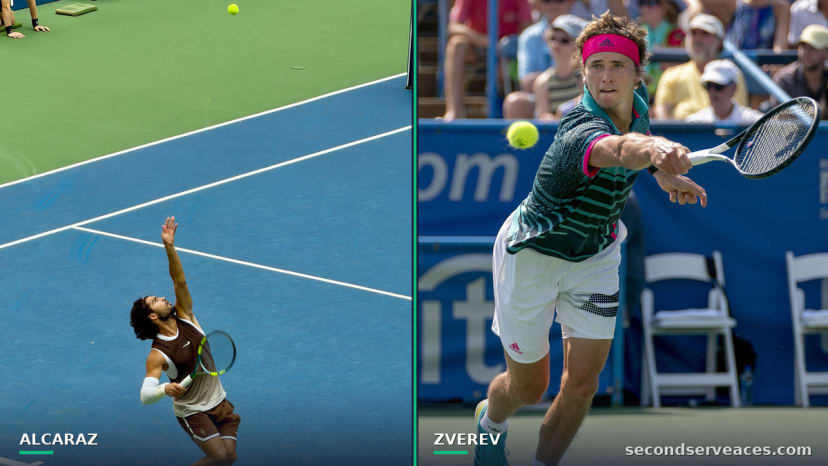
The consequences of this continuous wear and tear are not theoretical. One only has to look at Carlos Alcaraz, who missed approximately four and a half months between April and August due to a stubborn wrist injury, to understand the vulnerability of today's elite. When players of Alcaraz's kinetic caliber are sidelined for large chunks of the season, it exposes the fragility of a system that prioritizes entertainment volume over player longevity. Zverev's decision to skip the United Cup is a calculated self-preservation tactic designed to avoid similar physical breakdowns.
Listen to the Second Serve Podcast
Get our daily AI-synthesized audio briefings and match reviews on the go.
For Zverev, the decision is also tactical. By bypassing the multi-city United Cup, he avoids the jarring environmental and time-zone shifts that disrupt early-season preparation. Instead, he can focus his physical resources on targeted training blocks, a necessity for a player whose deep-court defensive coverage requires peak physical conditioning to remain effective against the world's most explosive ball-strikers.
Choosing Malaga Over Sydney: The Davis Cup Tactical Trade-Off
While the United Cup is off his itinerary, Zverev remains deeply committed to Germany's quest for international glory. He confirmed he will lead the German squad in the Davis Cup quarterfinals against Great Britain on November 26. Under the guidance of captain Michael Kohlmann, the German team boasts a highly balanced lineup including Zverev, the hard-hitting Jan-Lennard Struff, and the elite doubles tandem of Kevin Krawietz and Tim Pütz. This squad possesses the exact tactical variety needed to navigate the quick, low-bouncing indoor hard courts of the knock-out stage.
Zverev's presence completely alters Germany's tactical dynamic. His ability to anchor the singles lineup as a reliable point-winner allows Kohlmann to deploy Struff as a highly disruptive second singles option. We previously analyzed Zverev's indoor efficiency in our strategic analysis of his Vienna run, where his first-serve percentage hovered above 70%, neutralizing opponents before rallies could even develop. This serving dominance will be Germany’s primary weapon against a deep British team.
However, committing to the Davis Cup means Zverev will be competing at the highest intensity level just weeks before the new season commences. The quick turnaround between the Davis Cup finals and the Australian swing creates an incredibly narrow preparation window. By opting out of the United Cup, Zverev is attempting to balance this equation, ensuring he does not arrive in Melbourne already physically spent from team commitments.
The Structural Strain on Modern Aggressive Baseliners
To understand Zverev's scheduling rebellion, one must analyze the physical blueprint of his game. Unlike short-point specialists, Zverev relies on grueling, extended baseline exchanges to wear down opponents. His lateral movement is extraordinary for his height, but it demands an immense amount of eccentric muscle load and joint stability. Over a ten-month season, this style of play inflicts cumulative micro-trauma on the knees and lower back, making rest periods non-negotiable.
The statistical reality of Zverev's season highlights this burden. He consistently ranks among the top players in terms of total miles run per match, a metric driven by his preference to return from deep behind the baseline. This court positioning gives him a clean look at the ball but forces him to cover significantly more ground than players who take the ball on the rise. Without a dedicated block of physical conditioning in December, maintaining this level of court coverage is a recipe for soft-tissue injuries.
Furthermore, the mental fatigue of constant travel cannot be overstated. Players are required to adjust to different ball brands, court speeds, and atmospheric conditions on a weekly basis. By calling the calendar "nonsense," Zverev is echoing a growing sentiment within the player locker room. The demand for a restructured tennis calendar is no longer a quiet whisper; it is a public campaign led by the sport's biggest stars who are demanding a more sustainable path forward.
Rivalry Matchup & Player Profiles
| Metric | Alexander Zverev |
|---|---|
| Rank | World No. 2 (as of Nov 2) |
| Age | 29 |
| Country | Germany |
| Height | 6 ft 6 in (198 cm) |
| Handedness | Right-handed |
| Play Style | Aggressive baseliner |
| Career Titles | 26 |
Alexander Zverev’s career has been defined by his remarkable consistency at the game's highest levels, a trait underscored by his 26 career singles titles. As a premier representative of Germany on the international stage, his commitment to the ITF's Davis Cup highlights his dedication to team competition, even when it conflicts with his individual schedule. His physical profile as a 6'6" athlete allows him to generate immense leverage on his serve, making him one of the most formidable indoor hard-court players on the planet.
To track his career achievements and detailed match history, fans can explore his official profile on Wikipedia. Zverev's ability to maintain a top-five ranking despite the grueling nature of his baseline-centric game is a testament to his elite physical conditioning. However, as he approaches his late twenties, the need for smart scheduling becomes paramount to extending his career at the absolute pinnacle of the sport.
As the tennis world watches how Germany fares in the Davis Cup Final 8, Zverev's scheduling decisions will likely serve as a blueprint for other top players. The battle between player health and the commercial demands of the tour is far from over, but Zverev has made his opening move, prioritizing his long-term physical integrity over short-term exhibition events.
What Alexander Zverev Plays With
Head Gravity Pro
Head Hawk Touch 1.25
Head Prime Tour (12-Pack)
Adidas Ubersonic 4
Simulate Alexander Zverev Match Scenarios
Simulate high-pressure scenarios, score leverage points, and tactical responses for ATP and WTA players.
The Aces Tactical Panel
This report was curated and edited by Bhaskar Goel. Tactical analysis and technical insights were provided by our specialized panel of expert correspondents.
Julian Price
Senior Tactical Correspondent
Stuffy, pedantic British academic and historian specializing in match momentum and historical context.
Elena Cruz
Director of Analytical Research
Data scientist specializing in court surface physics and movement patterns.
Bhaskar
The Editor & Fan
Passionate tennis player and site editor bringing everyday amateur insights and relatable fan commentary.
Arthur Vance
Senior Existential Analyst
Deep, eccentric, and DFW-inspired. Models court metaphysics, kinetic beauty, and player psychology.
Leo Sterling
High-Performance Consultant
Hard-nosed ex-trainer from Melbourne with a no-nonsense view on tour fitness.
Related Reports
Quick Answers
Why is Alexander Zverev skipping the United Cup?+
Zverev has ruled out the United Cup to avoid the physical strain of the relentless tennis calendar, which he criticized as 'nonsense.'
Will Alexander Zverev play in the Davis Cup Final 8?+
Yes, Zverev has confirmed he will represent Germany in the Davis Cup quarterfinals against Great Britain starting November 26.
Who else is included in Germany's Davis Cup squad?+
Germany's squad, named by captain Michael Kohlmann, features Alexander Zverev, Jan-Lennard Struff, Kevin Krawietz, and Tim Pütz.