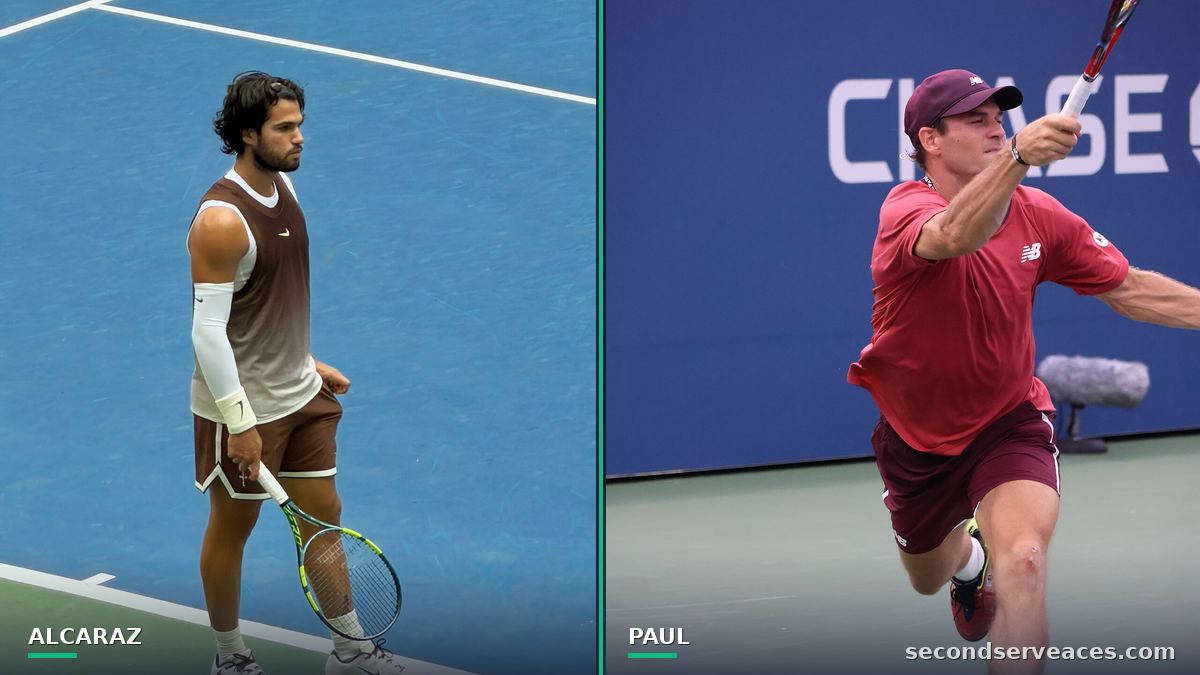
My dear tennis purists, there is an understated elegance in watching a virtuoso navigate an afternoon when the racquet feels more like a blunt instrument than a finely tuned Stradivarius. Such was the spectacle in Austria, where Carlos Alcaraz secured a straight-sets victory over Tommy Paul to reach the semifinals of the Vienna Open. The encounter, which consumed exactly one hour and 50 minutes of high-intensity indoor tennis, was less about aesthetic perfection and far more about competitive resilience.
While the scoreboard suggests a routine passage, the reality on the court was a tense affair. Alcaraz, currently positioned as the World No. 3 in the ATP rankings, found himself locked in a physical chess match where his usual flair was replaced by tactical pragmatism. As we observed in our previous coverage of the Vienna quarterfinals, the quick indoor conditions of the tournament demand absolute precision—a commodity that was in short supply for both competitors during several critical junctures of this contest.
The Zero-for-Five Break Point Deficit: Paul's Red-Zone Inefficiency
The defining statistical story of this match lies in Tommy Paul’s inability to capitalize on his opportunities. The American generated five break-point opportunities over the course of the one-hour-and-50-minute contest, yet he failed to convert a single one. In the modern game, where service holds on indoor hard courts are of paramount importance, such profligacy is akin to tennis suicide. Paul repeatedly established footholds in Alcaraz's service games, only to falter when the Spaniard raised his defensive shield.
Listen to the Second Serve Podcast
Get our daily AI-synthesized audio briefings and match reviews on the go.
Alcaraz's ability to save all five break points speaks to his supreme composure under duress. Rather than panicking when down in his service games, the young Spaniard served with immense clarity, forcing Paul into uncomfortable contact points. This red-zone inefficiency from Paul ultimately deflated his challenges in both sets, allowing Alcaraz to maintain scoreboard pressure and dictate the terms of the engagement without ever having to chase from behind.
Baseline Shot Confidence: Deconstructing Alcaraz's Groundstroke Dip
In his post-match reflections, Alcaraz made a candid admission that will certainly pique the interest of tactical observers: he felt significantly less confident in his baseline shots compared to his performance the previous day. This sudden dip in groundstroke rhythm recalls the classic baseline struggles of Manuel Orantes, who often had to rely on sheer competitive guile when his timing deserted him on quicker surfaces. The Spaniard's trademark explosive forehand lacked its usual depth, forcing him to engage in longer, more cautious rallies than he typically prefers.
The indoor court in Vienna seemed to disrupt the natural geometry of Alcaraz's sweeping strokes, leading to a higher error count from the back of the court. Rather than stubbornly hitting through the court, however, Alcaraz adjusted his court positioning, occasionally retreating to buy himself the fraction of a second required to control the ball. This tactical flexibility prevented Paul from exploiting Alcaraz's temporary crisis of confidence from the baseline.
The 2023 Barrier: Paul's Ongoing Struggle to Match Alcaraz's Depth
With this latest defeat, Tommy Paul’s search for a formula to defeat the Spaniard continues to elude him, with his last victory against Carlos Alcaraz remaining in the 2023 season. Paul's athletic court coverage and flat backhand are well-suited to trouble Alcaraz, but the American lacked the clinical edge required to dismantle a member of the tennis elite when the opportunity presented itself.
Alcaraz’s defensive versatility remains the ultimate differentiator in this matchup. Even on an afternoon where his baseline confidence was compromised, the Spaniard's sheer physical coverage of the court forced Paul to hit an extra ball, leading to unforced errors at crucial moments. It is this championship pedigree that allows Alcaraz to emerge victorious even when his primary weapons are functioning at less than maximum capacity.
Rivalry Matchup & Player Profiles
To better understand the competitive landscape of this matchup, we examine the profile of the victorious Spaniard, whose rapid ascent continues to rewrite the modern record books.
| Metric | Carlos Alcaraz Profile Details |
|---|---|
| Rank | World No. 3 |
| Country | Spain |
| Age | 23 |
| Height | 1.83 m (6 ft 0 in) |
| Handedness | Right-handed |
| Play Style | Aggressive all-court baseliner |
| Career Titles | 27 |
At just 23 years of age, Alcaraz has already amassed an astonishing 27 career titles, a testament to his tactical versatility across all surfaces. His aggressive, all-court style allows him to transition seamlessly from defensive baseline grinding to explosive net play, making him a nightmare matchup for pure counter-punchers like Tommy Paul. While Paul possesses the footwork to match Alcaraz's speed, he lacks the sheer weight of shot required to keep the Spaniard pinned behind the baseline over the course of a multi-hour match.
What Carlos Alcaraz Plays With
Babolat Pure Aero 98
Babolat RPM Blast 1.30
Babolat VS Original (12-Pack)
Nike Vapor Pro 2
Analyze Carlos Alcaraz vs. Tommy Paul
Predict tactical adjustments, momentum swings, and serve strategy options for this match-up using our AI simulator.
The Aces Tactical Panel
This report was curated and edited by Bhaskar Goel. Tactical analysis and technical insights were provided by our specialized panel of expert correspondents.
Julian Price
Senior Tactical Correspondent
Stuffy, pedantic British academic and historian specializing in match momentum and historical context.
Elena Cruz
Director of Analytical Research
Data scientist specializing in court surface physics and movement patterns.
Bhaskar
The Editor & Fan
Passionate tennis player and site editor bringing everyday amateur insights and relatable fan commentary.
Arthur Vance
Senior Existential Analyst
Deep, eccentric, and DFW-inspired. Models court metaphysics, kinetic beauty, and player psychology.
Leo Sterling
High-Performance Consultant
Hard-nosed ex-trainer from Melbourne with a no-nonsense view on tour fitness.
Related Reports


Quick Answers
How long did the match between Carlos Alcaraz and Tommy Paul in Vienna last?+
The match lasted exactly one hour and 50 minutes before Carlos Alcaraz secured his straight-sets victory.
How many break points did Tommy Paul fail to convert during the match?+
Tommy Paul failed to convert all five break-point opportunities he generated against Carlos Alcaraz.
When was Tommy Paul's last victory against Carlos Alcaraz?+
Tommy Paul's last victory against Carlos Alcaraz occurred during the 2023 season.