
There is a certain administrative restlessness that has long characterized the season-ending showcase of women’s professional tennis. It is a nomadic existence that has, in recent seasons, felt less like a prestigious victory lap and more like a series of frantic, last-minute logistical scrambles across disparate time zones. Now, however, the governing body of the women's game has signaled a profound desire for stillness, structural permanence, and absolute operational autonomy.
Listen to the Second Serve Podcast
Get our daily AI-synthesized audio briefings and match reviews on the go.
The High-Stakes Institutional Pivot to North Carolina
The WTA is fundamentally rewriting its business model, abandoning the volatile licensing-fee framework that previously saw its marquee event bounce between temporary homes from Shenzhen to Guadalajara, Fort Worth, Cancún, and Riyadh. Starting in 2027, the tour will assume complete operational ownership of the season-ending tournament. This is an assertive reclamation of institutional identity, a corporate declaration that the tour's crown jewel should no longer be treated as a high-priced mercenary for hire, but rather as a self-sustained commercial engine.
The chosen destination for this three-year tenure is Charlotte, North Carolina—a city historically synonymous with banking giants and stock-car racing, now poised to become the geographic center of gravity for women's professional tennis. This transition represents far more than a mere change of venue on the global calendar; it is a calculated bet on market stability. By managing the event internally, the tour aims to cultivate a predictable, premium environment that appeals directly to long-term broadcast partners and domestic sponsors.
In our previous examinations of tour logistics, particularly when analyzing the infrastructure issues that shadowed recent majors, we have observed how administrative instability directly compromises the quality of play. Athletes arriving at the year-end finals have too often been greeted by hastily constructed temporary courts or erratic high-altitude ball flights. A fixed, three-year commitment to a world-class metropolitan hub offers a desperately needed competitive equilibrium, allowing the players to focus entirely on the physical poetry of their craft.
Spectrum Center and the Financial Architecture of the Ten-Million-Dollar Purse
At the center of this transition sits the Spectrum Center, the cavernous indoor arena that serves as the home court for the NBA’s Charlotte Hornets. The choice of an established, modern indoor arena is a tactical masterstroke, shielding the elite eight singles players and doubles teams from the elements. The physical reality of indoor hard-court tennis—where wind is a non-factor and the lighting is uniform—allows for the purest expression of raw ball-striking, free from the chaotic atmospheric variables that often plague outdoor autumn events.
To match this physical upgrade, the financial stakes are being elevated to a baseline that commands instant respect. The inaugural Charlotte edition in 2027 will feature a staggering $10 million prize money pool. This eight-figure sum is not merely a symbolic gesture; it is a concrete mechanism to ensure that the sport's exhausted elite remain incentivized to push through the grueling autumn swing and deliver peak athletic performances on the indoor stage.
This financial commitment reflects a broader trend within the WTA Tour to achieve prize parity and commercial self-sufficiency. By moving away from the licensing model, where local promoters absorb profits or losses, the WTA is betting on its own ability to generate premium sponsorship and ticket revenue. It is a high-wire act of corporate self-belief, wagering that the sport's intrinsic athletic drama can sustain a major American market.
Relocating the Hearth: From Sunshine State to the Queen City
Perhaps the most surprising element of this multi-faceted deal is the physical relocation of the WTA’s global headquarters. Since its inception, the administrative heart of the women's game has beaten in St. Petersburg, Florida. By packing up its offices and moving north to Charlotte, the tour is consolidating its administrative and operational forces under one roof, establishing a singular, centralized fortress of tennis governance.
This corporate migration suggests a desire to escape the sleepy, retirement-haven vibes of the Gulf Coast in favor of Charlotte’s hyper-connected, corporate-friendly ecosystem. The proximity to major financial institutions and sports marketing agencies provides the WTA with immediate access to power players who can help fund and scale the next generation of the sport. It is a literal and figurative relocation to the fast lane of modern sports commerce.
For the employees and executives who shape the daily realities of the tour, the move represents a profound cultural shift. It aligns the administrative staff directly with the venue of their flagship event, fostering a synergistic environment where the people selling the sport are living in the very community hosting its ultimate showcase. This is a level of operational integration rarely seen in professional tennis, where governing bodies are typically siloed far from the actual battlegrounds.
How Elite Competitors Like Elena Rybakina Will Navigate the New Landscape
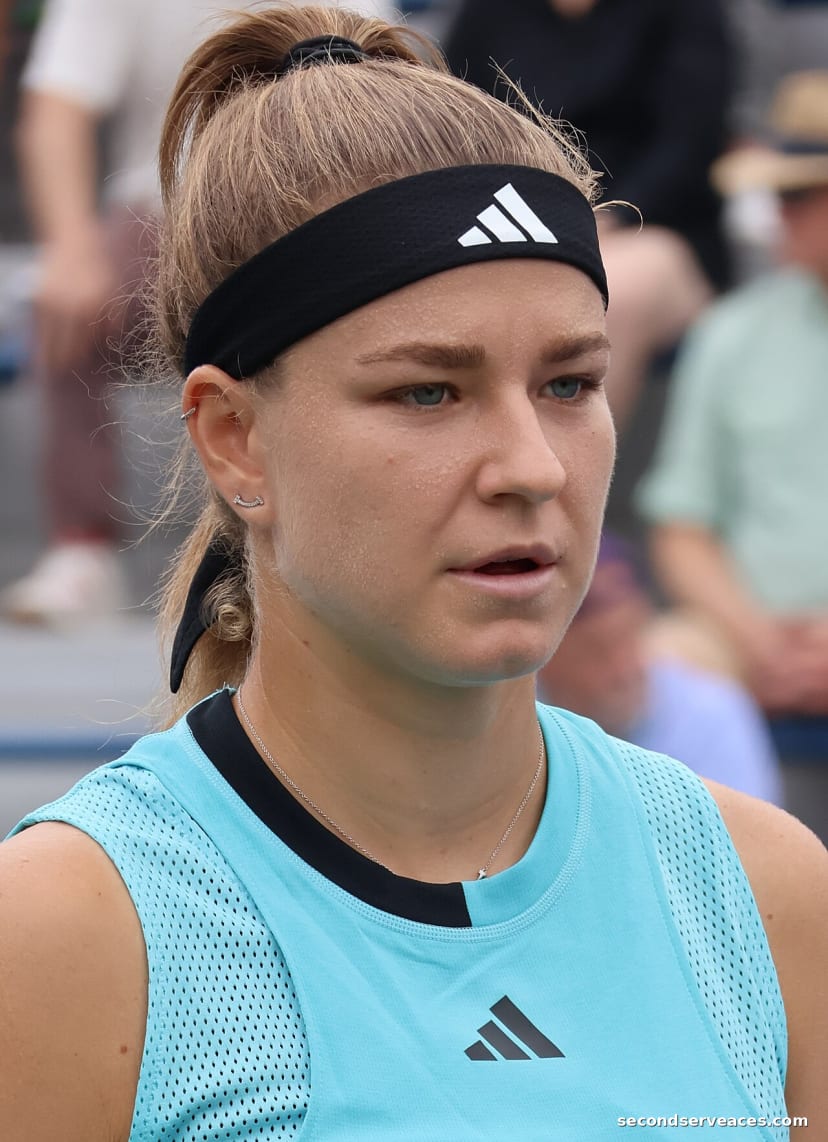
For the players themselves, the transition to Charlotte offers a fascinating shift in preparation and scheduling. Consider world-class competitors like the powerful, quiet Kazakh Elena Rybakina, whose game is built on a foundation of unyielding baseline aggression and a devastating, flat serve. On the fast, predictable indoor surface of the Spectrum Center, Rybakina's heavy groundstrokes and precise service delivery will find an ideal canvas, unbothered by the external elements that sometimes disrupt her timing.
Historically, the late-season calendar has been a war of attrition, with top-tier athletes arriving at the year-end finals physically compromised. The prospect of traveling to a highly accessible, East Coast American city with state-of-the-art recovery facilities is a massive logistical relief. Instead of navigating complex international travel corridors and dramatic time-zone shifts on the eve of the tour's most prestigious non-slam event, players can establish a streamlined, domestic routine.
Ultimately, this move is about elevating the quality of the tennis itself. When elite athletes are spared the physical toll of substandard venues and exhausting travel schedules, the level of play rises exponentially. The kinetic art of elite tennis thrives when the margins of error are minimized, and the WTA's bold play in Charlotte is designed to provide the perfect stage for those microscopic margins to decide the true queen of the court.
Rivalry Matchup & Player Profiles
| Metric | Elena Rybakina |
|---|---|
| Rank | 1 |
| Country | Kazakhstan |
| Age | 27 |
| Height | 6' 0" (1.84 m) |
| Handedness | Right-handed |
| Play Style | Aggressive baseliner |
| Career Titles | 14 |
Elena Rybakina stands as one of the most imposing figures on the modern WTA circuit, utilizing her towering 6'0" frame to dictate play from the absolute first strike. With 14 career titles to her name and a game optimized for fast-playing surfaces, she represents the exact archetype of the modern power player who will benefit immensely from Charlotte's indoor hard-court environment. Her ability to paint the lines with flat, penetrating groundstrokes makes her a perennial threat to capture the season-ending crown.
Simulate Elena Rybakina Match Scenarios
Simulate high-pressure scenarios, score leverage points, and tactical responses for ATP and WTA players.
The Aces Tactical Panel
This report was curated and edited by Bhaskar Goel. Tactical analysis and technical insights were provided by our specialized panel of expert correspondents.
Julian Price
Senior Tactical Correspondent
Stuffy, pedantic British academic and historian specializing in match momentum and historical context.
Elena Cruz
Director of Analytical Research
Data scientist specializing in court surface physics and movement patterns.
Bhaskar
The Editor & Fan
Passionate tennis player and site editor bringing everyday amateur insights and relatable fan commentary.
Arthur Vance
Senior Existential Analyst
Deep, eccentric, and DFW-inspired. Models court metaphysics, kinetic beauty, and player psychology.
Leo Sterling
High-Performance Consultant
Hard-nosed ex-trainer from Melbourne with a no-nonsense view on tour fitness.
Related Reports


Quick Answers
When and where will the WTA Tour Finals move in 2027?+
The WTA Tour Finals will move to the Spectrum Center in Charlotte, North Carolina, for a three-year period starting in 2027.
How much is the prize money pool for the WTA Tour Finals in Charlotte?+
The prize money pool for the inaugural edition of the tournament in Charlotte is set at $10 million.
What major administrative change is the WTA making alongside the tournament move?+
The WTA is relocating its global headquarters from St. Petersburg, Florida, to Charlotte, North Carolina, and taking full operational ownership of the season-ending tournament.