The Low-Bounce Leverage: Tatjana Maria’s Slice vs. Maria Sakkari’s High-To-Low Swing
As the WTA Tour shifts to the pristine lawns of London, the tactical contrast between Maria Sakkari and Tatjana Maria presents a fascinating mechanical study. Sakkari leads their head-to-head record 3-1, but her lone defeat came on the grass of Wimbledon in 2022. This surface completely alters the ball's coefficient of friction, reducing the vertical bounce height by up to 30% compared to hard courts. For Sakkari, whose heavy topspin relies on a high contact point, this low-bouncing environment demands immediate mechanical adjustments.
Listen to the Second Serve Podcast
Get our daily AI-synthesized audio briefings and match reviews on the go.
To neutralize Tatjana Maria's signature backspin slice, Sakkari must implement extreme knee bend to drop her center of gravity, maintaining a stable base below the ball's low trajectory. A shorter racket takeback is essential; the traditional loopy swing path must be condensed into a compact, linear strike to prevent late contact on the fast grass. Sakkari's string setup—typically tensioned for high-control topspin—will be tested against Maria's low-skidding balls, which frequently force errors when opponents fail to get their racket face under the ball's equator.
Qualifying Mileage: Veronika Kudermetova’s Three-Set Durability Metrics
Veronika Kudermetova enters the main draw battle-tested, having negotiated the grueling WTA Queen's Club qualifying draw via consecutive three-set victories. Grass-court tennis places unique physical demands on a player's lower kinetic chain. The lack of slide capability forces players to rely on rapid, high-friction deceleration steps. Kudermetova’s ability to win back-to-back deciding sets indicates excellent aerobic conditioning and muscular endurance, particularly in the quadriceps and glutes, which bear the brunt of the constant low-stance recovery movements.
From a technical perspective, Kudermetova's serving efficiency was the key differentiator in her qualifying campaign. Keeping her first-serve percentage high allows her to dictate points early, limiting physical wear-and-tear. On grass, a high-velocity flat serve or a slice variation wide to the ad-court can yield quick free points, saving valuable energy. As she transitions to the main draw, managing her physical recovery and maintaining optimal string tension—often dropped by 1.5 to 2 pounds on slick grass to generate effortless depth—will be critical to sustaining her baseline output.
Baseline Trajectories: Iva Jovic's Flat-Ball Efficiency Against Antonia Ruzic
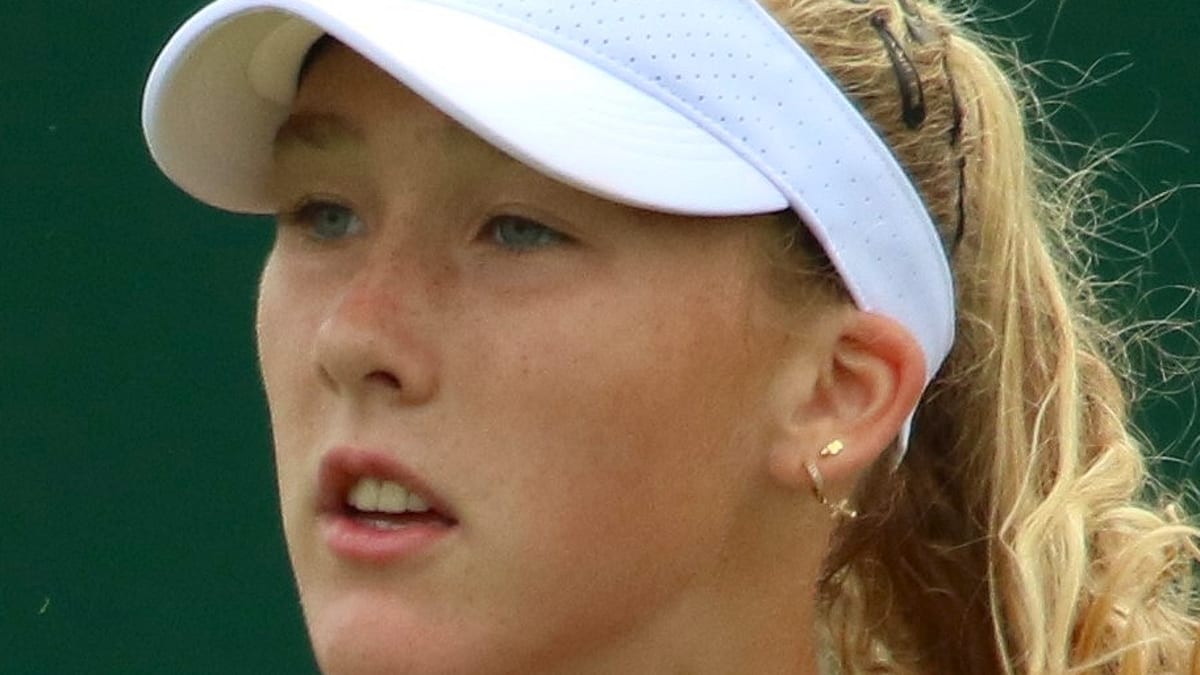
American teenager Iva Jovic makes her highly anticipated transition to grass following a hard-fought loss to Naomi Osaka during the clay swing in Paris. While clay rewards heavy topspin and high clearance over the net, grass demands flat, low-margin trajectories. Jovic's clean, linear groundstrokes are theoretically well-suited to the fast courts of Queen's, but she faces a stern test in Antonia Ruzic. The key for Jovic will be adjusting her footwork; grass requires shorter, choppier adjustment steps before striking the ball, rather than the sliding wide-stance recoveries seen on clay.
This match will likely be decided by first-strike efficiency. Both players must prioritize aggressive return positioning to take time away from the server. Following Mirra Andreeva's recent Grand Slam triumph in Paris, the spotlight on rising young talents has intensified, placing added psychological pressure on Jovic to execute under fast-paced conditions. Ruzic will look to exploit any movement hesitation, making Jovic's lateral recovery speed the ultimate metric of success in this opening-round encounter.
| Player | Grass H2H Record | Key Tactical Attribute | Racket/String Adjustment |
|---|---|---|---|
| Maria Sakkari | 0-1 vs. T. Maria | Compact swing path, deep knee bend | Slightly lower tension for depth |
| Tatjana Maria | 1-0 vs. M. Sakkari | Low-skidding backspin slice | High-tension polyester for slice control |
| Iva Jovic | 0-0 vs. A. Ruzic | Flat, low-margin groundstrokes | Hybrid setup for comfort and speed |
| Veronika Kudermetova | N/A (Qualifying) | First-serve dominance, flat slice wide | Reduced tension to offset muscle fatigue |
Essential Matchday Add-Ons
Tournament-tested accessories and high-frequency consumables every competitive player keeps in their bag.
Tourna Grip Original Dry Feel Overgrip (10-Pack)
4.8 ★ (12,000+ reviews)
The gold standard for sweaty hands. Proprietary dry feel absorbs moisture better as play intensifies.
Luxilon ALU Power 125 Silver String Set
4.9 ★ (3,500+ reviews)
Unrivaled control and spin potential used by over 50% of the ATP Top 100 players.
Babolat Custom Damp Vibration Dampener (2-Pack)
4.7 ★ (4,200+ reviews)
Customizable dampening with removable central O-ring for fine-tuning court feedback and sound.
Penn Championship Extra Duty Tennis Balls (4-Can Pack)
4.7 ★ (8,900+ reviews)
Official ball of USTA League Tennis with extra-duty felt designed for abrasive hard courts.
Analyze Mirra Andreeva vs. Elena Rybakina
Predict tactical adjustments, momentum swings, and serve strategy options for this match-up using our AI simulator.
The Aces Tactical Panel
This report was curated and edited by Bhaskar Goel. Tactical analysis and technical insights were provided by our specialized panel of expert correspondents.
Julian Price
Senior Tactical Correspondent
Stuffy, pedantic British academic and historian specializing in match momentum and historical context.
Elena Cruz
Director of Analytical Research
Data scientist specializing in court surface physics and movement patterns.
Bhaskar
The Editor & Fan
Passionate tennis player and site editor bringing everyday amateur insights and relatable fan commentary.
Arthur Vance
Senior Existential Analyst
Deep, eccentric, and DFW-inspired. Models court metaphysics, kinetic beauty, and player psychology.
Leo Sterling
High-Performance Consultant
Hard-nosed ex-trainer from Melbourne with a no-nonsense view on tour fitness.
Related Reports


Quick Answers
Why did Maria Sakkari lose her last grass-court match against Tatjana Maria?+
Tatjana Maria defeated Sakkari at Wimbledon in 2022 by utilizing a low-skidding backspin slice that disrupted Sakkari's high topspin contact point.
How did Veronika Kudermetova reach the main draw of the Queen's Club Championships?+
Kudermetova advanced through the qualifying draw by securing consecutive three-set victories, showing excellent physical durability on the grass.
What mechanical adjustment must Iva Jovic make when transitioning from clay to grass?+
Jovic must replace her sliding clay-court recovery movements with short, choppy adjustment steps to maintain balance on the slick grass courts.