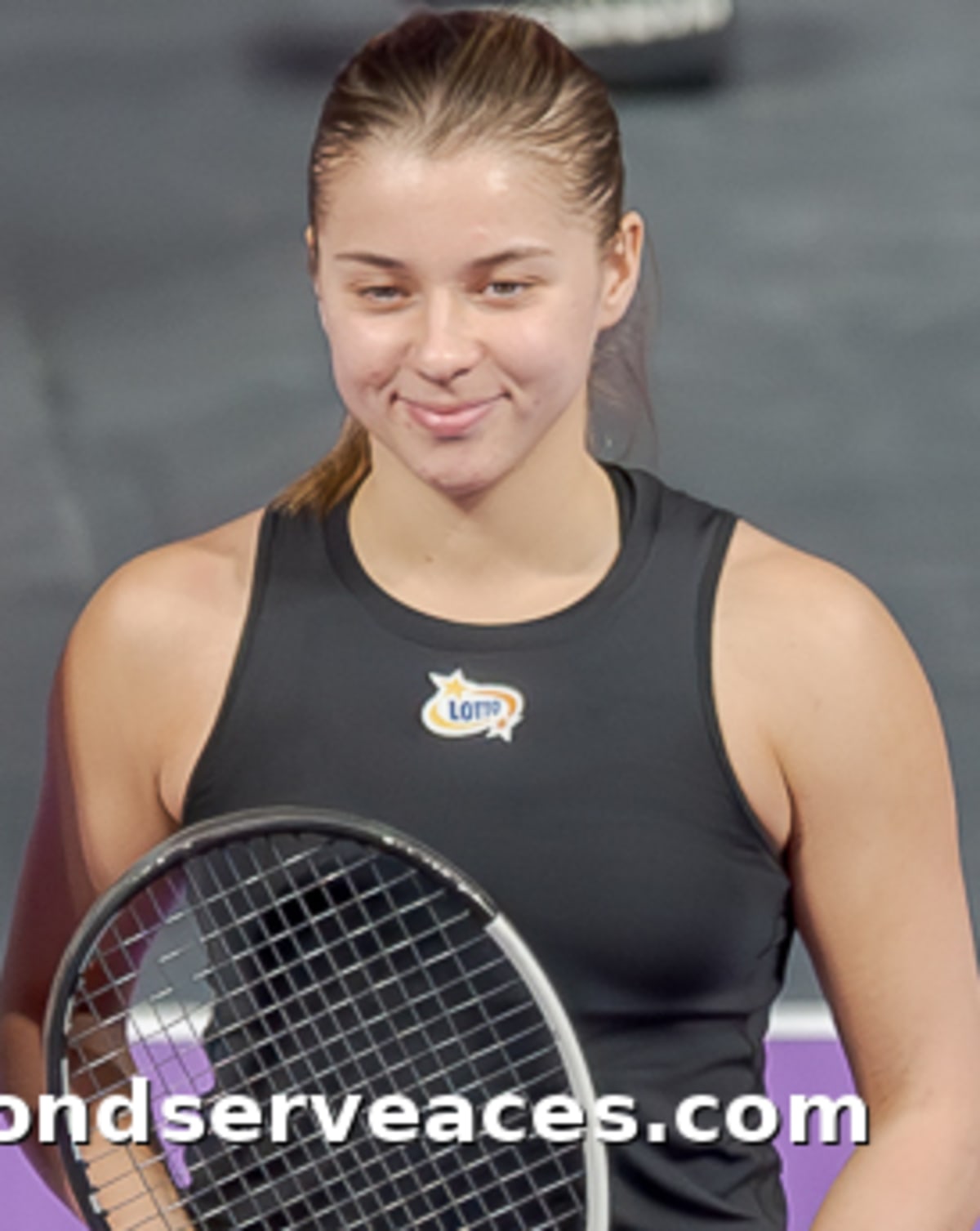
Are you kidding me? We are weeks away from the most prestigious tournament on grass, and the paper-pushers in southwest London are already turning the entry list into a bureaucratic circus. Tennis is supposed to be a meritocracy, but right now, the rules are actively punishing players for playing the best tennis of their lives at the wrong time. It makes me want to throw my racket through a wall.
Listen to the Second Serve Podcast
Get our daily AI-synthesized audio briefings and match reviews on the go.
The Six-Week Entry Freeze Bureaucracy
Let’s look at the facts. Polish standout Maja Chwalinska just put on an absolute masterclass on the clay of Paris, winning nine consecutive matches to storm her way into the French Open final, where she ultimately fell to eighth seed Mirra Andreeva. That spectacular run skyrocketed her from world No. 114 to No. 21 in the official WTA rankings. Under any logical system, a top-25 player is a lock-in seed for a Grand Slam. But not at SW19.
Because of the All England Club's rigid six-week entry cut-off rule, the entry list was locked in long before Chwalinska made her run in Paris. Her newly minted elite ranking is completely ignored on the official paper sheet. This means that instead of being seeded and protected in the draw, she is currently forced to either beg for a wildcard or grind through the brutal, spirit-crushing qualifying rounds at Roehampton. It is an absolute joke that a Grand Slam finalist is treated like an afterthought because of an outdated calendar rule.
This administrative laziness completely undermines the integrity of the draw. If Chwalinska is forced to play qualifying, she will be the most feared and overqualified competitor in the Roehampton field, taking up a spot that should belong to a lower-ranked player trying to make their breakthrough. The Grand Slam committees need to wake up and create a dynamic entry system that respects real-time momentum rather than clinging to dates on a calendar.
The Biomechanical Nightmare of Clay-to-Grass Transitions
Beyond the administrative headache, let’s talk about the physical toll this transition takes on a body. Moving from the sliding red clay of Paris to the slick, low-bouncing lawns of London is the most violent adjustment in tennis. On clay, players rely on long, sliding deceleration patterns. On grass, sliding is a luxury that often leads to torn ligaments. Instead, you have to execute short, choppy adjustment steps, keeping your center of gravity incredibly low to cope with skidding, low-velocity bounces.
Bypassing the warm-up events at Queen's Club or Berlin to rest means players miss out on vital match-play footwork adjustments. Historically, we have seen legendary champions like Novak Djokovic bypass official grass-court warm-up matches entirely and still lift the trophy at Wimbledon, relying on pristine technical efficiency and decades of muscle memory. But for younger players or those returning from injury, trying to skip that adjustment period is an immense physical hazard that often results in early-round exits.
Without those live-match repetitions, players fail to calibrate their movement, leading to slip-and-fall injuries or severe groin strains as they try to plant and push on a surface that demands vertical stability. If Chwalinska is forced to play three rounds of qualifying on the worn-out, slippery lawns of Roehampton, she will face double the physical wear-and-tear before she even steps foot on the pristine courts of the main venue. It is a biomechanical nightmare waiting to happen.
The Queen's Club Doubles Calamity
Then we have the saga of the ultimate competitor, Serena Williams. She chose June 2026 to make her return to the lawn courts, partnering with 19-year-old Victoria Mboko in doubles at Queen's Club. It was a move that captured the tennis world's attention, representing a bridge between generations. But instead of building momentum, the campaign ended in absolute disaster in the quarter-finals.
During their match, Mboko suffered a devastating knee injury, forcing the tandem to withdraw. This unfortunate turn of events did not just halt their tournament run; it completely derailed Mboko's entire grass-court season, as we detailed in our coverage of the MCL injury at Queen's that halted Victoria Mboko's grass campaign. For Serena, it was a massive setback, robbing her of the competitive reps she desperately needed to find her footing on the grass.
Serena has tried this doubles-first approach before, notably in past seasons like Serena Williams' partnership with Karolina Muchova in Berlin doubles. But without a healthy partner and with zero singles matches under her belt, her physical readiness for the brutal movement of grass-court singles is a massive question mark. You cannot fake grass-court movement; if you aren't 100% sure of your footing, the lawn will expose you instantly.
The Mid-June All England Club Judgment Day
The fate of both Chwalinska and Williams now rests entirely in the hands of the All England Club committee. The formal announcement for the 2026 singles and doubles wildcards is scheduled for the week beginning June 15, 2026. This is where the backroom politics of tennis take center stage, and frankly, I hate seeing athletic merit decided by a committee in suits over tea and biscuits.
Will they do the right thing and grant Chwalinska direct entry, or will they waste wildcards on local British players who haven't won a match outside of their own zip code? And what about Serena? Her legacy demands a spot, but with zero singles matches and an aborted doubles campaign, is it fair to other grinding competitors? The committee has a history of using wildcards to boost star power, previously awarding entries to past champions like Venus Williams and Tatjana Maria.
But there is a fine line between celebrating legacy and maintaining the competitive integrity of the draw. When the committee convenes on June 15, they aren't just handpicking names—they are directly impacting the fairness of the most prestigious tournament on earth. If they lock out Chwalinska and protect underperforming players, it will be a stain on the tournament before the first ball is even struck.
Analyze Maja Chwalinska vs. Serena Williams
Predict tactical adjustments, momentum swings, and serve strategy options for this match-up using our AI simulator.
The Aces Tactical Panel
This report was curated and edited by Bhaskar Goel. Tactical analysis and technical insights were provided by our specialized panel of expert correspondents.
Julian Price
Senior Tactical Correspondent
Stuffy, pedantic British academic and historian specializing in match momentum and historical context.
Elena Cruz
Director of Analytical Research
Data scientist specializing in court surface physics and movement patterns.
Bhaskar
The Editor & Fan
Passionate tennis player and site editor bringing everyday amateur insights and relatable fan commentary.
Arthur Vance
Senior Existential Analyst
Deep, eccentric, and DFW-inspired. Models court metaphysics, kinetic beauty, and player psychology.
Leo Sterling
High-Performance Consultant
Hard-nosed ex-trainer from Melbourne with a no-nonsense view on tour fitness.
Related Reports
Quick Answers
Why does Maja Chwalinska need a wildcard for Wimbledon despite being ranked No. 21?+
Due to Wimbledon's six-week entry cut-off rule, Chwalinska's recent rise in the WTA standings from No. 114 to No. 21 was not reflected before the entry list locked, meaning she must receive a wildcard or play qualifying.
What happened during Serena Williams' doubles comeback at Queen's Club in June 2026?+
Serena Williams partnered with 19-year-old Victoria Mboko, but they were forced to withdraw in the quarter-finals after Mboko suffered a severe knee injury.
When will the Wimbledon 2026 wildcard decisions be officially announced?+
The All England Club will formally decide and announce its singles and doubles wildcards during the week beginning June 15, 2026.