The grass of the All England Club is thinning at the baselines, and the tactical demands of the surface are shifting from raw power to delicate low-ball management. As we cross into the business end of the first week, the draw presents a fascinating mix of established heavyweights adjusting their footing and grass-court specialists looking to exploit their natural comfort on this slick turf.
Listen to the Second Serve Podcast
Get our daily AI-synthesized audio briefings and match reviews on the go.
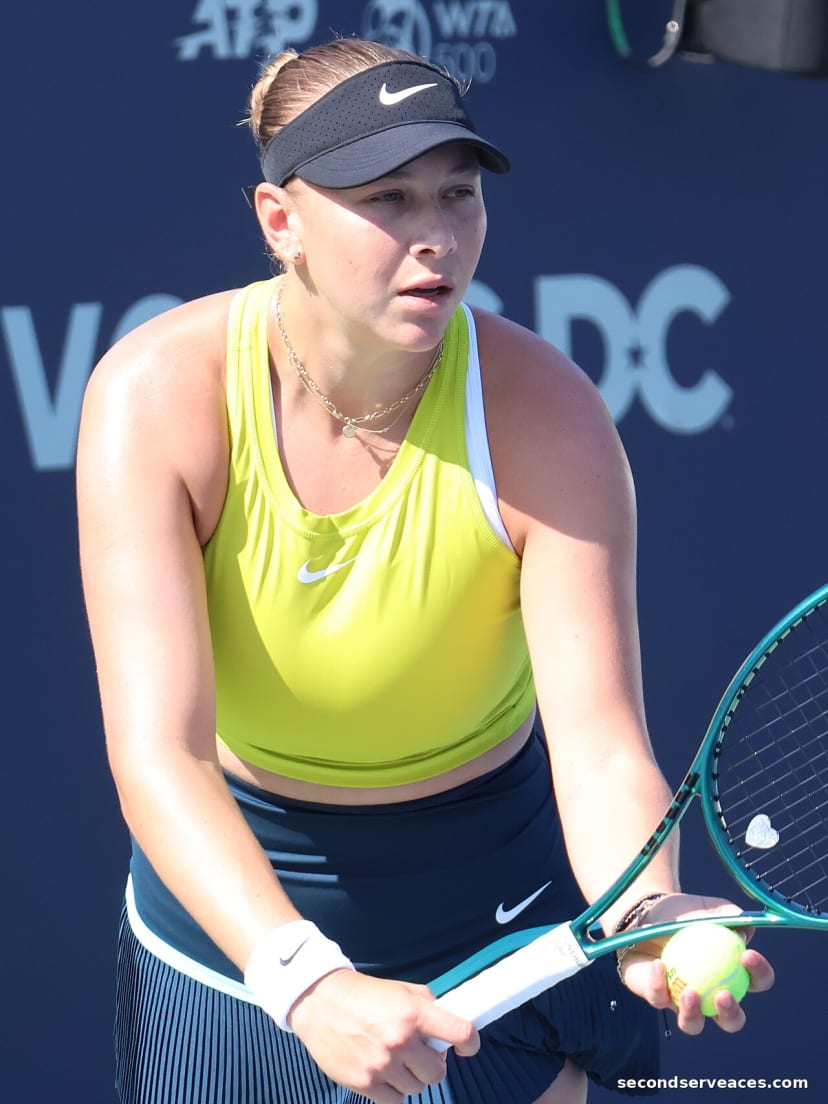
After a highly competitive opening few days, including standout performances we tracked in Amanda Anisimova's victory over Sofia Kenin, the tactical focus shifts to court positioning and return depth. On grass, the margin for error shrinks to millimeters, making early-strike tennis the ultimate currency for survival.
Swiatek's Adjusted Takeback Against Eala's Flat Counter-punching
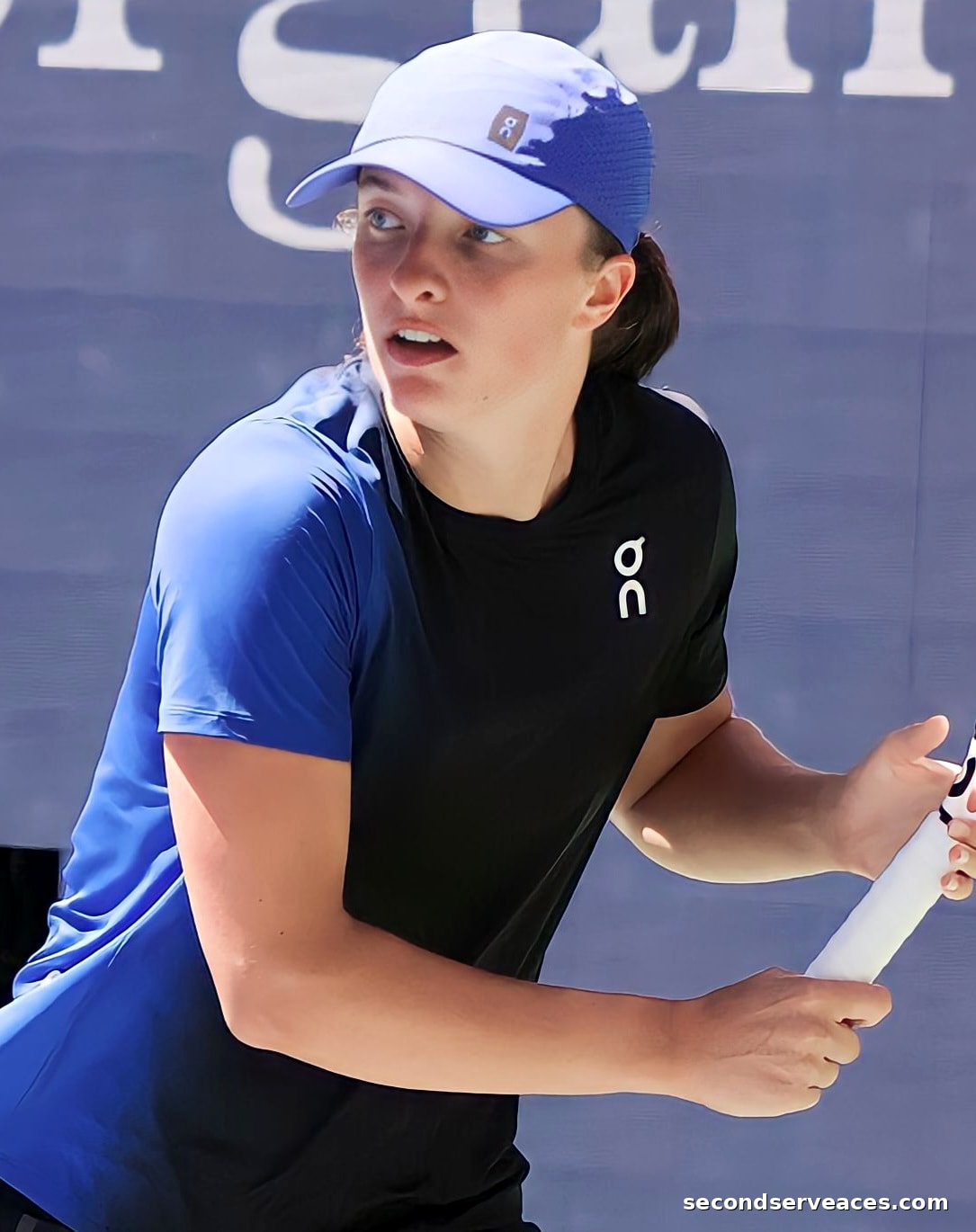
Iga Swiatek enters her third-round clash against the ascending Alexandra Eala with a clear tactical blueprint. Having successfully dismantled former finalist Karolina Pliskova in the second round, Swiatek demonstrated a crucial adjustment in her forehand preparation. By shortening her backswing, the World No. 1 mitigated the erratic, low-bouncing balls that typically disrupt her western-grip extreme topspin. According to official data from the WTA Tour, Swiatek's ability to take the ball on the rise has drastically improved her efficiency on grass.
Eala presents a different mechanical challenge. The young prospect relies on extremely flat, linear groundstrokes that skid low off the turf. To counter this, Swiatek must maintain an incredibly low center of gravity, utilizing active footwork to prevent Eala from rushing her backhand wing. Look for Swiatek to use heavy, deep body serves to jam Eala on the return, preventing the underdog from dictating the center of the court with her aggressive first-strike style.
The tactical key to this matchup lies in the first three shots of each rally. If Swiatek can establish her crosscourt forehand early, she will force Eala into defensive lateral movement, a scenario where the Polish star's superior athletic coverage becomes an insurmountable obstacle. Eala's best path to an upset lies in taking risks on her second-serve return, attacking Swiatek's kick serve before it can jump above shoulder height.
Navarro's Low-Slice Mastery Meets Kostyuk's Athletic Defense
Emma Navarro has quietly built a formidable reputation on natural turf, thanks in large part to her exceptional continental-grip slice and short-angled volleys. Facing Marta Kostyuk on Day 6, Navarro carries the immense psychological advantage of having recorded two straight-set grass-court victories against the Ukrainian in their past encounters. Navarro's game is built for this surface; she stays incredibly low through her contact point and rarely beats herself with unforced errors.
Kostyuk, conversely, thrives on explosive movement and high-risk shotmaking. To break Navarro's rhythm, Kostyuk will need to step inside the baseline and take the ball out of the air. However, Navarro's ability to keep her backhand slice virtually skimming the grass makes it incredibly difficult for opponents to generate clean upward leverage. This tactical dynamic was highlighted in our analytical preview of Wimbledon favorites and predictions.
To reverse her fortunes against Navarro, Kostyuk must improve her first-serve percentage, which has fluctuated wildly in her opening matches. If Navarro is allowed to consistently look at second serves, her aggressive inside-out forehand return will quickly push Kostyuk into defensive corners, neutralizing her athletic counter-punching before the rally even begins.
Samsonova's Power Baseline Game Clashes with Bouzkova's Grass Streak
The matchup between Liudmila Samsonova and Marie Bouzkova is a classic contrast of offensive weight versus defensive resilience. Samsonova holds a narrow 3-2 head-to-head lead over Bouzkova, largely due to her ability to blow opponents off the court when her flat, aggressive groundstrokes find the lines. On grass, Samsonova's first serve is a lethal weapon, frequently netting her free points and short third-shot putaways.
However, Bouzkova enters this contest riding a wave of confidence, carrying an impressive seven-match winning streak on grass. The Czech player is a master of redirection, using her opponent's pace against them and sliding into defensive positions with remarkable balance. According to historical match statistics on the official Wimbledon portal, Bouzkova excels at extending rallies beyond the five-shot threshold, where Samsonova's error rate historically begins to climb.
For Samsonova to progress, she must exercise tactical patience. Going for low-percentage winners early in the rally will play directly into Bouzkova's hands. Samsonova needs to utilize heavy topspin to push Bouzkova behind the baseline before unleashing her flat, down-the-line forehand. If Bouzkova can drag Samsonova into protracted, physical baseline exchanges, her defensive consistency will likely wear down the powerful ninth seed.
Noskova's Direct Depth Against the Rising Contenders
Linda Noskova, seeded ninth at the tournament, has shown immense poise in her transition to the grass courts this season. Following a hard-fought victory over the tenacious Camila Osorio, Noskova has proven that her compact strokes and flat trajectory are highly effective on low-bouncing surfaces. She does not possess the raw, explosive power of Samsonova, but her timing and clean ball-striking allow her to redirect pace with minimal effort.
As the draw narrows, Noskova's ability to defend her second serve will be tested. Against Osorio, her second-serve win percentage hovered just below fifty percent, a metric that elite returners will ruthlessly exploit. To protect this vulnerability, Noskova must rely on wide, slicing serves in the deuce court to open up the open side of the court for her favorite inside-out forehand drive.
With several high-profile seeds already exiting the tournament, the opportunity for a deep run is palpable for players like Noskova and her peers. Staying disciplined on return games and maintaining a high first-serve percentage will be the ultimate deciding factors as the pressure of the second week begins to mount at SW19.
What Iga Swiatek Plays With
Tecnifibre Tempo 298 Iga
Tecnifibre Razor Code 1.25
Tecnifibre Pro Contact Overgrip
Analyze Iga Swiatek vs. Alexandra Eala
Predict tactical adjustments, momentum swings, and serve strategy options for this match-up using our AI simulator.
The Aces Tactical Panel
This report was curated and edited by Bhaskar Goel. Tactical analysis and technical insights were provided by our specialized panel of expert correspondents.
Julian Price
Senior Tactical Correspondent
Stuffy, pedantic British academic and historian specializing in match momentum and historical context.
Elena Cruz
Director of Analytical Research
Data scientist specializing in court surface physics and movement patterns.
Bhaskar
The Editor & Fan
Passionate tennis player and site editor bringing everyday amateur insights and relatable fan commentary.
Arthur Vance
Senior Existential Analyst
Deep, eccentric, and DFW-inspired. Models court metaphysics, kinetic beauty, and player psychology.
Leo Sterling
High-Performance Consultant
Hard-nosed ex-trainer from Melbourne with a no-nonsense view on tour fitness.
Related Reports

Quick Answers
Who did Iga Swiatek defeat to reach her match against Alexandra Eala?+
Iga Swiatek defeated former finalist Karolina Pliskova in the second round of the tournament to set up her clash with Alexandra Eala.
What is Emma Navarro's head-to-head grass-court record against Marta Kostyuk?+
Emma Navarro has recorded two straight-set victories on grass against Marta Kostyuk in their previous matchups.
How long is Marie Bouzkova's current grass-court winning streak?+
Marie Bouzkova enters her matchup against Liudmila Samsonova riding an impressive seven-match winning streak on grass.